
Axles are crucial components of vehicles that play a significant role in the functioning and movement of automobiles. They are responsible for supporting the weight of the vehicle and transmitting power from the engine to the wheels. Axles also allow the wheels to rotate smoothly, enabling the vehicle to move forward or backward. There are various types of axles used in vehicles, each with its own specific features and applications. In this article, we will explore the four different axle types, their characteristics, and their uses.
1. Dead Axle
A dead axle, also known as a lazy axle or solid axle, is a type of axle that does not rotate. It is primarily used to support the weight of the vehicle and does not contribute to power transmission. Dead axles are commonly found in trailers, non-driven wheels of heavy-duty trucks, and some off-road vehicles.
One of the main benefits of a dead axle is its simplicity. Since it does not require any power transfer, it is a relatively straightforward and cost-effective design. Dead axles are also known for their durability and ability to handle heavy loads. However, they do not provide any torque to the wheels, which limits their use in situations where power transmission is required.
2. Drive Axle
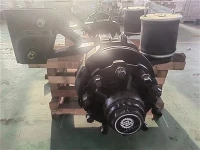
A drive axle, as the name suggests, is responsible for delivering power from the engine to the wheels. It is commonly found in rear-wheel drive vehicles and some four-wheel drive vehicles. The drive axle connects the differential to the wheels, enabling the transfer of torque and rotation.
There are two types of drive axles: live axle and independent suspension. In a live axle system, both wheels on the axle are connected by a solid beam, which means that the movement of one wheel directly affects the other. Live axles are commonly used in heavy-duty trucks and off-road vehicles due to their ability to handle rough terrains and heavy loads.
On the other hand, independent suspension systems have individual suspensions for each wheel, allowing them to move independently. This design improves vehicle stability, handling, and comfort. Independent suspension drive axles are typically found in passenger cars, sports cars, and modern SUVs.
3. Tandem Axle
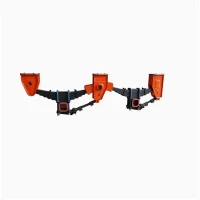
A tandem axle refers to a set of two or more axles arranged in tandem, meaning they are positioned one after the other. This axle configuration is commonly used in heavy-duty trucks, buses, and trailers. Tandem axles enable the distribution of weight over a larger surface area, improving vehicle stability and load capacity.
One of the main advantages of tandem axles is their ability to carry significantly heavier loads compared to single axles. The weight is spread out over multiple axles, reducing the pressure on each axle and minimizing damage to roads and infrastructure. Tandem axles also provide better traction due to the increased weight distribution.
4. Steering Axle
A steering axle, also known as a front axle, is responsible for controlling the direction of the vehicle. It is typically found in front-wheel drive vehicles and some four-wheel drive vehicles. The steering axle connects the front wheels to the steering mechanism, allowing them to turn left or right.
In front-wheel drive vehicles, the steering axle also plays a crucial role in power transmission, as it delivers torque from the engine to the wheels. This configuration provides good traction and stability, especially in slippery or uneven road conditions.
Steering axles can have different types of suspension systems, such as MacPherson strut or double-wishbone suspension. These systems contribute to the vehicle''s handling, comfort, and stability. The design of the steering axle is essential for precise steering control and ensuring the vehicle''s safety.
Conclusion
In conclusion, axles play a crucial role in the functionality of vehicles. The four main types of axles are dead axles, drive axles, tandem axles, and steering axles. Dead axles support the weight of the vehicle but do not rotate, while drive axles transfer power from the engine to the wheels. Tandem axles are used in heavy-duty vehicles to improve stability and load capacity, and steering axles control the direction of the vehicle. Understanding the different types of axles is essential for vehicle design, maintenance, and overall performance.