

Hey there! As a supplier of German equalizing beams, I often get asked whether these nifty pieces of equipment can be used in railway applications. Well, let's dive right into it and explore this question together.
First off, let's talk a bit about what a German equalizing beam is. A German Equalizing Beam is a key component in German Style Suspension. It's designed to distribute the load evenly across multiple axles of a vehicle. In the context of trailers, it helps to improve the stability and ride quality by ensuring that each axle bears an appropriate share of the weight.
Now, when it comes to railway applications, the requirements are quite different from those of trailers. Railways operate under a set of unique conditions. The tracks provide a relatively smooth and guided path, but the loads can be extremely heavy, and the dynamic forces acting on the train are complex.
One of the main advantages of a German equalizing beam in a trailer setup is its ability to adapt to uneven road surfaces. It allows the axles to move independently to some extent, which helps in maintaining traction and reducing wear on the tires. In a railway environment, however, the tracks are designed to be as level as possible. So, the need for this kind of independent axle movement is not as critical.
But that doesn't mean that a German equalizing beam has no place in railway applications. Let's consider the load - distribution aspect. In a train, just like in a trailer, it's important to distribute the load evenly across the axles. A well - designed equalizing beam could potentially help in achieving this. For example, in freight trains where heavy and unevenly distributed loads are common, an equalizing beam could prevent excessive stress on individual axles, which in turn could reduce the risk of axle failure and increase the overall lifespan of the train's running gear.
Another factor to consider is the dynamic forces during acceleration, deceleration, and cornering. Trains experience significant lateral and longitudinal forces during these maneuvers. A German equalizing beam might be able to dampen some of these forces and provide a more stable ride. By allowing for a certain degree of flexibility between axles, it could help in reducing the impact of these forces on the train's structure.
However, there are also some challenges. The railway industry has very strict safety and performance standards. Any new component, including a German equalizing beam, would need to undergo rigorous testing to ensure that it meets these standards. The materials used in a typical German equalizing beam for trailers might not be sufficient to withstand the high - stress conditions in a railway environment. Specialized alloys and heat - treatment processes might be required to enhance the beam's strength and durability.

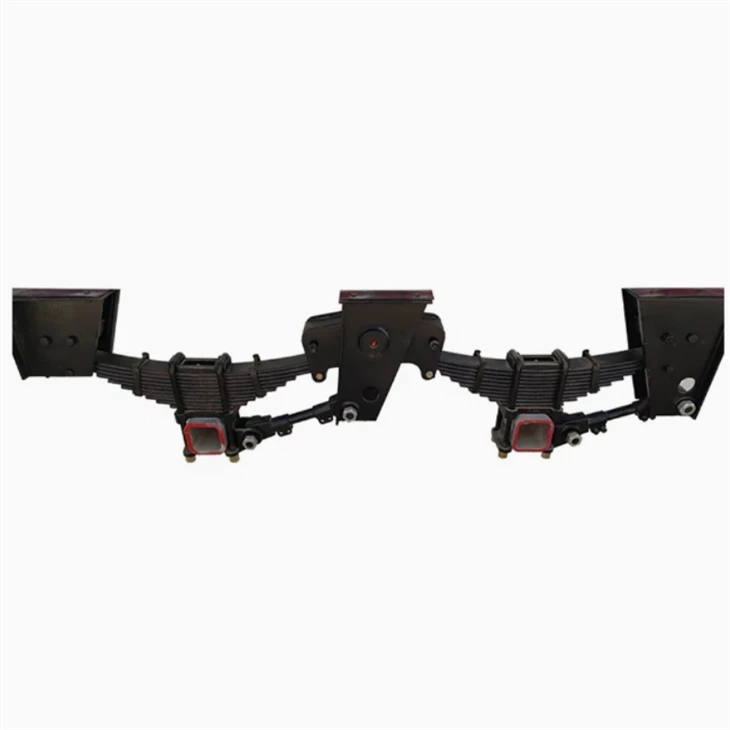
The design of the German Type Middle Bracket, which is often used in conjunction with the equalizing beam in trailer suspensions, would also need to be re - evaluated. In a railway application, the mounting points and the way the bracket interacts with the rest of the train's structure would need to be carefully engineered to ensure proper functionality.
Let's take a look at some real - world examples. In some experimental railway projects, engineers have explored the use of innovative suspension systems similar to those used in trailers. These systems aim to improve the ride quality and reduce maintenance costs. While not exactly the same as a German equalizing beam, they show that there is interest in adapting trailer - style suspension concepts to railways.
Now, let's talk about the potential benefits in more detail. If a German equalizing beam can be successfully integrated into a railway system, it could lead to cost savings. By reducing the wear and tear on axles and wheels, the maintenance intervals could be extended. This means less downtime for the trains, which is crucial for the efficiency of the railway network.
In terms of safety, a better - distributed load and a more stable ride could reduce the risk of derailments. Derailments can be extremely costly, both in terms of property damage and potential loss of life. So, any improvement in safety is a significant advantage.
But we can't ignore the challenges. As I mentioned earlier, the testing and certification process for railway components is very strict. It would take a lot of time and resources to develop a German equalizing beam that meets all the necessary standards. And there's also the issue of compatibility with existing railway infrastructure. Retrofitting an equalizing beam into an existing train design might be difficult and expensive.
Despite these challenges, I believe that there is potential for a German equalizing beam in railway applications. With the right research and development, it could be adapted to meet the unique requirements of the railway industry.
If you're in the railway industry and are interested in exploring the possibility of using a German equalizing beam in your projects, I'd love to have a chat. We can discuss the technical details, the potential benefits, and how we can work together to make this a reality. Whether you're looking to improve the performance of your freight trains or enhance the ride quality of your passenger trains, we might have a solution for you.
In conclusion, while a German equalizing beam has been primarily used in trailer applications, there are valid reasons to consider its use in railways. The load - distribution and stability - enhancing features could offer significant benefits, but there are also challenges that need to be overcome. If you're curious about how we can address these challenges and bring this innovative technology to the railway sector, don't hesitate to reach out. Let's start a conversation and see where it takes us!
References
- Railway Engineering textbooks for general knowledge on railway loads and dynamic forces.
- Trailer suspension design manuals for understanding the working principles of German equalizing beams.


