

Hey there! As an axle supplier, I've seen firsthand how crucial proper axle weight distribution is for all sorts of vehicles. Whether it's a big rig on the highway, a construction vehicle on a job site, or a recreational vehicle hitting the road for a vacation, getting that weight distribution right can make a world of difference. So, let's dive into how you can optimize axle weight distribution.
Why Axle Weight Distribution Matters
First off, why should you even care about axle weight distribution? Well, for starters, it's all about safety. When the weight on your axles isn't evenly distributed, it can lead to all sorts of problems. Uneven weight can cause excessive wear and tear on your tires, leading to blowouts and other tire-related issues. It can also put extra stress on your suspension system, which can lead to costly repairs down the road.
Another reason is performance. A vehicle with proper axle weight distribution will handle better, brake more effectively, and be more fuel-efficient. This is because the weight is evenly spread across the axles, allowing the tires to maintain better contact with the road surface.
Understanding Axle Capacity
Before you can start optimizing your axle weight distribution, you need to understand your axle's capacity. Each axle is designed to carry a certain amount of weight, and exceeding this capacity can be extremely dangerous. You can usually find the axle capacity information in your vehicle's owner's manual or on a sticker located on the driver's side door jamb.
It's important to note that the total weight capacity of your vehicle is not just the sum of the axle capacities. You also need to consider the Gross Vehicle Weight Rating (GVWR), which is the maximum weight your vehicle can safely carry, including the weight of the vehicle itself, passengers, cargo, and any towing equipment.

Calculating Axle Weights
Once you know your axle capacity, the next step is to calculate the weight on each axle. You can do this using a weigh scale. There are several types of weigh scales available, including portable scales that you can use at home or on the go.
To calculate the weight on each axle, simply drive your vehicle onto the weigh scale and record the weight. Make sure to weigh each axle separately to get an accurate reading. You can then compare these weights to your axle capacity to see if you're within the safe range.
Optimizing Axle Weight Distribution
Now that you know your axle capacity and the weight on each axle, it's time to start optimizing the weight distribution. Here are some tips to help you do that:
1. Rearrange Your Cargo
One of the easiest ways to optimize axle weight distribution is to rearrange your cargo. Try to distribute the weight evenly across the vehicle, making sure not to overload any one area. For example, if you're loading a trailer, place heavier items towards the front and center of the trailer, and lighter items towards the back.
2. Use Weight Distribution Hitches
If you're towing a trailer, a weight distribution hitch can be a great tool for optimizing axle weight distribution. A weight distribution hitch helps to distribute the weight of the trailer more evenly across the towing vehicle's axles, reducing the strain on the rear axle and improving handling.
3. Consider Axle Upgrades
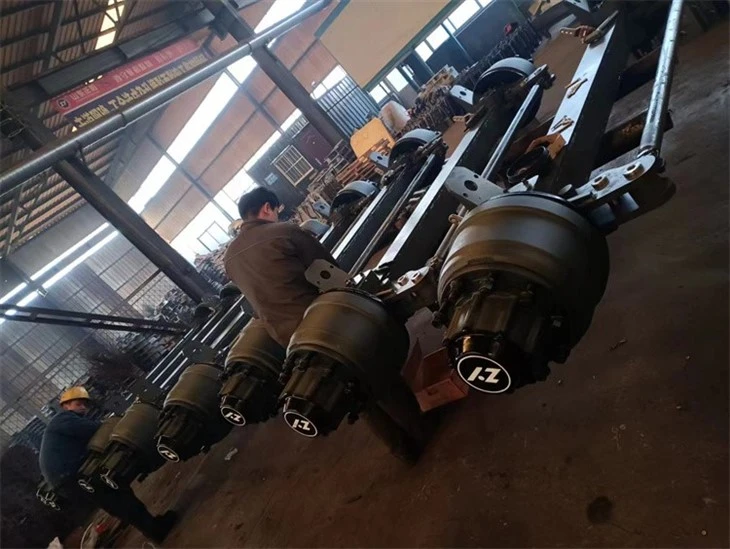
If you find that you're consistently exceeding your axle capacity, you may want to consider upgrading your axles. As an axle supplier, I offer a wide range of axles to suit different needs and applications. For example, our Drum Brake Bridge is a great option for heavy-duty applications, while our Hydraulic Steering Axle provides excellent maneuverability.
4. Check Your Tire Pressure
Proper tire pressure is essential for optimizing axle weight distribution. Underinflated tires can cause the weight to be unevenly distributed across the axles, while overinflated tires can reduce traction and increase the risk of a blowout. Make sure to check your tire pressure regularly and keep it at the recommended level.
Special Considerations for Different Vehicles
The process of optimizing axle weight distribution can vary depending on the type of vehicle you have. Here are some special considerations for different types of vehicles:
Trucks and Trailers
Trucks and trailers are often used to carry heavy loads, so proper axle weight distribution is especially important. When loading a truck or trailer, make sure to distribute the weight evenly across the axles and avoid overloading the rear axle. You may also want to consider using a weight distribution hitch to help distribute the weight more evenly.
Recreational Vehicles (RVs)
RVs are designed for long trips and often carry a lot of equipment and supplies. To optimize axle weight distribution in an RV, make sure to distribute the weight evenly across the axles and avoid placing too much weight in the rear of the vehicle. You may also want to consider using a sway control device to help improve handling.
Construction Vehicles
Construction vehicles are typically used in rough terrain and carry heavy loads, so proper axle weight distribution is crucial for safety and performance. When operating a construction vehicle, make sure to follow the manufacturer's guidelines for loading and unloading, and avoid overloading the axles. You may also want to consider using a Disc Brake Axl for better braking performance.
Conclusion
Optimizing axle weight distribution is an important part of vehicle maintenance and safety. By understanding your axle capacity, calculating axle weights, and following the tips outlined in this blog, you can ensure that your vehicle is operating safely and efficiently.
If you have any questions about axle weight distribution or need help choosing the right axle for your vehicle, don't hesitate to reach out. As an axle supplier, I'm here to help you find the best solution for your needs. Whether you're looking for a Drum Brake Bridge, a Hydraulic Steering Axle, or a Disc Brake Axl, I've got you covered.
Contact me today to start a conversation about your axle needs and let's work together to optimize your vehicle's performance and safety.
References
- Vehicle Owner's Manuals
- Federal Motor Carrier Safety Administration (FMCSA) Regulations
- Tire Manufacturer's Guidelines


