

Leaf spring trailer suspensions have long been a staple in the trailer industry, renowned for their simplicity, durability, and cost - effectiveness. As a trailer suspension supplier, I've witnessed firsthand the widespread use of leaf spring suspensions across various applications. However, like any technology, they come with their fair share of disadvantages. In this blog post, I'll delve into the drawbacks of leaf spring trailer suspensions to provide a comprehensive understanding for potential buyers.
1. Limited Ride Comfort
One of the most significant disadvantages of leaf spring trailer suspensions is their relatively poor ride comfort. Leaf springs are essentially stacks of curved metal strips that work by flexing under load. While they are effective at supporting heavy weights, they lack the ability to absorb shock and vibrations as efficiently as some other suspension systems.
When a trailer equipped with a leaf spring suspension travels over uneven terrain, the rigid nature of the leaf springs transfers a significant amount of the road's irregularities directly to the trailer and its contents. This can result in a bumpy and jarring ride, which is not only uncomfortable for the driver but can also cause damage to delicate cargo. For example, in the transportation of fragile goods such as electronics or glassware, the constant jolting can lead to breakage and product loss.
In contrast, modern suspension systems like air suspensions or torsion bar suspensions are designed to isolate the trailer from road shocks more effectively. Air suspensions use compressed air to adjust the ride height and stiffness, providing a smoother and more controlled ride. Torsion bar suspensions, on the other hand, use a torsion bar to twist and absorb shock, offering better shock - absorption capabilities compared to leaf springs.
2. Limited Articulation
Articulation refers to the ability of a suspension system to allow the wheels to move independently of each other. In a leaf spring trailer suspension, the leaf springs are typically mounted between the axle and the trailer frame in a relatively rigid manner. This limits the amount of articulation that the suspension can achieve.
When a trailer encounters uneven ground, such as a pothole or a large rock, the lack of articulation can cause the wheels to lose contact with the ground. This not only reduces traction but also increases the stress on the suspension components and the trailer frame. For off - road applications or trailers that frequently travel on rough terrain, this limitation can be a major drawback.
For instance, in a situation where one wheel hits a large obstacle, the leaf spring suspension may not be able to adjust quickly enough to keep all wheels firmly on the ground. This can lead to a loss of control and an increased risk of accidents. In comparison, some independent suspension systems offer greater articulation, allowing each wheel to move up and down independently, which helps to maintain traction and stability on uneven surfaces.
3. Maintenance Requirements
Leaf spring trailer suspensions require regular maintenance to ensure their proper functioning. Over time, the leaf springs can wear out, become rusty, or develop cracks. The shackles and bushings that connect the leaf springs to the trailer frame and the axle also need to be inspected and replaced periodically.
The maintenance process for leaf spring suspensions can be time - consuming and labor - intensive. It often involves disassembling parts of the suspension system, cleaning the components, lubricating the moving parts, and replacing any worn - out parts. Additionally, if the leaf springs are not properly maintained, they can lose their ability to support the load effectively, which can lead to premature failure of the suspension system.
In contrast, some other suspension systems, such as air suspensions, have fewer moving parts and require less frequent maintenance. Air suspensions are also easier to diagnose and repair, as they often come with built - in sensors and diagnostic tools that can quickly identify any issues.
4. Weight
Leaf spring trailer suspensions are relatively heavy compared to some other types of suspension systems. The leaf springs themselves are made of thick metal strips, and the additional components such as the shackles, bushings, and mounting hardware add to the overall weight of the suspension.

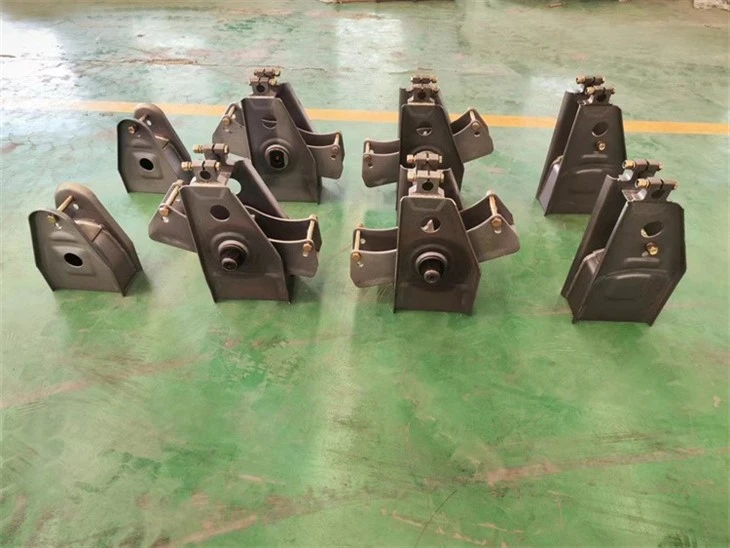
The extra weight of the leaf spring suspension can have several negative impacts. Firstly, it reduces the payload capacity of the trailer. Since the trailer has a limited gross vehicle weight rating (GVWR), the weight of the suspension system eats into the available payload space. This means that less cargo can be carried on the trailer, which can be a significant drawback for businesses that rely on transporting large volumes of goods.
Secondly, the additional weight increases the fuel consumption of the towing vehicle. The engine has to work harder to pull the heavier trailer, resulting in higher fuel costs over time. In today's environmentally - conscious and cost - sensitive market, this is a factor that cannot be ignored.
5. Limited Adjustability
Leaf spring trailer suspensions offer limited adjustability. Once the leaf springs are installed, their stiffness and load - carrying capacity are essentially fixed. It is difficult to make significant adjustments to the suspension characteristics without replacing the leaf springs or modifying the suspension system.
This lack of adjustability can be a problem in situations where the trailer's load requirements change frequently. For example, if a trailer is used to transport different types of cargo with varying weights, a leaf spring suspension may not be able to adapt to these changes effectively. In such cases, the trailer may either be over - sprung (the leaf springs are too stiff for the load) or under - sprung (the leaf springs are too soft for the load), which can affect the ride quality and the safety of the trailer.
In contrast, air suspensions offer a high degree of adjustability. The ride height, stiffness, and load - carrying capacity of an air suspension can be easily adjusted by simply adding or removing air from the air bags. This allows the trailer to be optimized for different load conditions, improving both the ride comfort and the payload capacity.
6. Noise and Vibration
Leaf spring trailer suspensions can generate a significant amount of noise and vibration during operation. As the leaf springs flex and rub against each other, they produce a rattling or clunking sound. The vibrations from the road are also transferred more directly to the trailer frame, which can cause additional noise.
The noise and vibration can be a nuisance for the driver, especially on long - distance trips. It can also be a concern for the cargo, as excessive vibration can cause damage to sensitive items. In addition, the noise can be a problem in residential areas or other noise - sensitive environments.
Some modern suspension systems are designed to minimize noise and vibration. For example, torsion bar suspensions and air suspensions use different mechanisms to absorb shock and reduce the transfer of vibrations, resulting in a quieter and more comfortable ride.
Conclusion
While leaf spring trailer suspensions have been a reliable choice for many years, they do come with several disadvantages. The limited ride comfort, articulation, adjustability, and the high maintenance requirements, weight, and noise issues can make them less suitable for certain applications.
As a trailer suspension supplier, we understand the importance of providing our customers with the best possible suspension solutions. That's why we also offer a range of alternative suspension systems, including Light Duty Suspension, which can address some of the drawbacks of leaf spring suspensions.
If you're in the market for a trailer suspension and are concerned about the disadvantages of leaf spring suspensions, we encourage you to contact us for a detailed discussion. Our team of experts can help you evaluate your specific needs and recommend the most suitable suspension system for your trailer. Whether you're looking for a suspension system that offers better ride comfort, higher payload capacity, or easier maintenance, we have the solutions to meet your requirements.
References
- "Trailer Suspension Systems: A Comprehensive Guide" - Industry Publication
- "Advancements in Trailer Suspension Technology" - Research Paper
- "Comparative Analysis of Different Trailer Suspension Types" - Technical Report


