

Air suspension systems have revolutionized the automotive and heavy - machinery industries in recent decades. As an air suspension supplier, I've witnessed firsthand how this technology has transformed vehicle performance and comfort. In this blog, I'll delve into the impact of air suspension on suspension geometry, explaining how it changes the game in terms of handling, ride quality, and overall vehicle dynamics.
Understanding Suspension Geometry
Before we discuss the impact of air suspension, it's crucial to understand what suspension geometry is. Suspension geometry refers to the arrangement and orientation of the various components in a vehicle's suspension system, such as control arms, struts, and links. These components work together to determine how the wheels move relative to the vehicle body. Key aspects of suspension geometry include camber, caster, toe, and ride height.
Camber is the angle of the wheel relative to the vertical axis when viewed from the front or rear of the vehicle. Positive camber means the top of the wheel tilts outward, while negative camber means the top of the wheel tilts inward. Caster is the angle of the steering axis relative to the vertical axis when viewed from the side of the vehicle. Toe refers to the angle at which the wheels point either towards or away from each other when viewed from above. Ride height is the distance between the vehicle's chassis and the ground.
How Air Suspension Works
Air suspension systems use air springs instead of traditional coil or leaf springs. These air springs are essentially rubber bellows filled with compressed air. By adjusting the air pressure in the bellows, the ride height and stiffness of the suspension can be controlled. The air pressure is regulated by an air compressor, which pumps air into or out of the air springs as needed.
Impact on Ride Height
One of the most significant impacts of air suspension on suspension geometry is its ability to adjust ride height. Unlike traditional suspension systems with fixed ride heights, air suspension allows for dynamic changes in ride height. This adjustability can have several benefits.
For example, in off - road vehicles, the ride height can be increased to provide more ground clearance when traversing rough terrain. This helps to prevent the vehicle's undercarriage from scraping against rocks or other obstacles. On the other hand, when driving on highways, the ride height can be lowered to reduce aerodynamic drag, improving fuel efficiency and high - speed stability.
The ability to adjust ride height also affects other aspects of suspension geometry. When the ride height is changed, the camber, caster, and toe angles can all be altered. For instance, lowering the ride height can sometimes increase negative camber, which can improve cornering grip on paved roads. However, improper adjustment of ride height can lead to uneven tire wear and poor handling.
Influence on Camber and Caster
Air suspension can also have a direct impact on camber and caster angles. Since the air springs can change the position of the wheels relative to the vehicle body, they can modify these critical angles.
In high - performance vehicles, air suspension can be used to optimize camber angles during cornering. When the vehicle is turning, the air suspension can adjust the camber of the outer wheels to a more negative angle. This increases the contact patch of the tires with the road surface, improving grip and reducing the risk of skidding.
Caster angles can also be affected by air suspension. A proper caster angle is essential for steering stability and self - centering of the steering wheel. By adjusting the ride height and the position of the suspension components, air suspension can fine - tune the caster angle to enhance steering performance. For example, increasing the caster angle can improve straight - line stability but may require more effort to turn the steering wheel. Air suspension allows for a balance between these two factors.
Effect on Toe Angle
Toe angle is another important aspect of suspension geometry that can be influenced by air suspension. The toe angle affects tire wear and vehicle handling. If the wheels are not properly aligned in terms of toe, the tires will wear unevenly, reducing their lifespan and increasing the risk of a blowout.
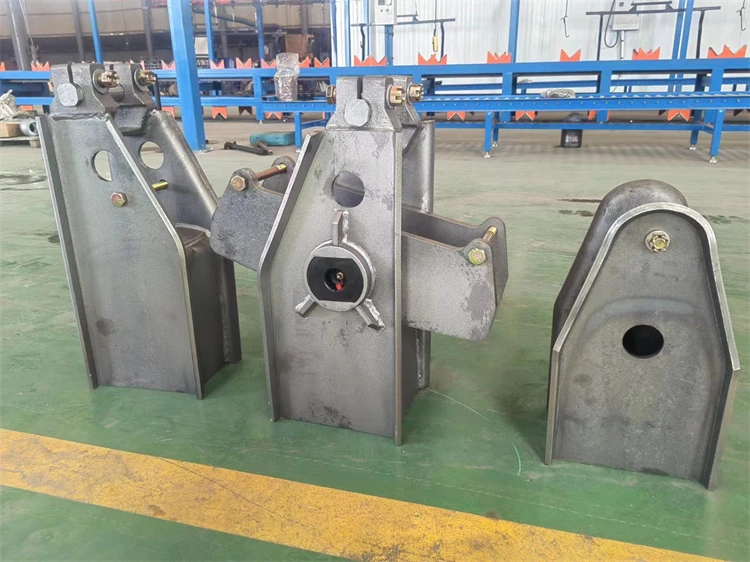
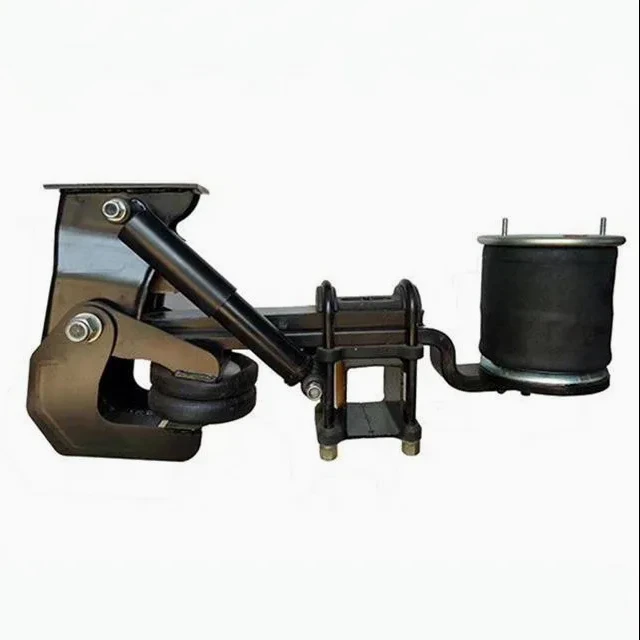
Air suspension can help maintain proper toe angles under different driving conditions. When the vehicle is loaded or unloaded, the weight distribution changes, which can potentially affect the toe angle. With air suspension, the system can detect these changes and adjust the position of the suspension components to keep the toe angle within the optimal range.
Advantages in Heavy Machinery and Trailers
In the heavy - machinery and trailer industry, air suspension offers unique advantages in terms of suspension geometry. For heavy machinery, the ability to adjust ride height is crucial for working in different environments. For example, a construction vehicle may need a higher ride height when operating on uneven ground at a construction site. You can learn more about [Heavy Machinery Suspension](/trailer - suspension/air - suspension/heavy - machinery - suspension.html) on our website.
Trailers also benefit significantly from air suspension. Air suspension can help maintain a more level ride, especially when the trailer is loaded unevenly. This is important for the safety and stability of the trailer. The [Air Suspension With Guide Arm](/trailer - suspension/air - suspension/air - suspension - with - guide - arm.html) is a popular choice for trailers as it provides better control over suspension geometry and improves overall handling.
Moreover, the [Lifting Air Suspension](/trailer - suspension/air - suspension/lifting - air - suspension.html) is useful for trailers that need to be raised or lowered for loading and unloading purposes. This type of air suspension can adjust the ride height quickly and precisely, ensuring efficient operation.
Challenges and Considerations
While air suspension offers many benefits in terms of suspension geometry, there are also some challenges and considerations. One of the main challenges is the complexity of the system. Air suspension systems require more components, such as air compressors, valves, and sensors, compared to traditional suspension systems. This complexity can increase the cost of manufacturing and maintenance.
Another consideration is the reliability of the system. Since air suspension relies on compressed air, there is a risk of air leaks, which can lead to a loss of ride height control. Regular maintenance and inspection are necessary to ensure the proper functioning of the air suspension system.
Conclusion
In conclusion, air suspension has a profound impact on suspension geometry. Its ability to adjust ride height, camber, caster, and toe angles provides numerous benefits in terms of vehicle performance, comfort, and safety. Whether it's a high - performance sports car, an off - road vehicle, or a heavy - duty trailer, air suspension can optimize suspension geometry for different driving conditions.
As an air suspension supplier, we are committed to providing high - quality air suspension systems that offer the best possible performance and reliability. If you are interested in learning more about our products or have any questions regarding air suspension and its impact on suspension geometry, we invite you to contact us for a procurement discussion. Our team of experts is ready to assist you in finding the perfect air suspension solution for your needs.
References
- Gillespie, T. D. (1992). Fundamentals of Vehicle Dynamics. Society of Automotive Engineers.
- Milliken, W. F., & Milliken, D. L. (1995). Race Car Vehicle Dynamics. SAE International.
- Heisler, H. (1999). Vehicle and Engine Technology. Butterworth - Heinemann.


