

As a seasoned supplier of disc brake axles, I've witnessed firsthand the critical role vehicle speed plays in the performance and longevity of these essential components. In this blog post, I'll delve into the scientific aspects of how vehicle speed impacts a disc brake axle, drawing on industry knowledge and real-world experience.
Friction and Heat Generation
One of the most significant impacts of vehicle speed on a disc brake axle is the generation of friction and heat. When a vehicle is in motion, the disc brake axle is responsible for converting the kinetic energy of the moving vehicle into thermal energy through friction. As the vehicle speed increases, so does the amount of kinetic energy that needs to be dissipated. This results in higher levels of friction between the brake pads and the brake disc, leading to increased heat generation.
High temperatures can have several detrimental effects on the disc brake axle. Firstly, excessive heat can cause the brake pads to wear out more quickly. The high temperatures can cause the brake pad material to degrade, reducing its effectiveness and increasing the risk of brake failure. Secondly, heat can also affect the integrity of the brake disc. Prolonged exposure to high temperatures can cause the brake disc to warp or crack, which can lead to uneven braking and a decrease in overall braking performance.
To mitigate the effects of heat generation, modern disc brake axles are designed with advanced cooling systems. These systems help to dissipate the heat generated during braking, keeping the brake components at a safe operating temperature. Some disc brake axles feature ventilation holes or fins on the brake disc to increase the surface area available for heat dissipation. Others may use specialized brake pad materials that are more resistant to heat.
Braking Force and Stopping Distance
Another important aspect of the impact of vehicle speed on a disc brake axle is the relationship between braking force and stopping distance. As the vehicle speed increases, the amount of kinetic energy that needs to be overcome by the braking system also increases. This means that the disc brake axle needs to generate a greater braking force to bring the vehicle to a stop in a reasonable distance.
The braking force generated by a disc brake axle is determined by several factors, including the size and design of the brake pads, the coefficient of friction between the brake pads and the brake disc, and the hydraulic pressure applied to the brake calipers. As the vehicle speed increases, the braking force required to stop the vehicle also increases. However, there is a limit to the amount of braking force that a disc brake axle can generate. If the vehicle is traveling at a very high speed, the braking system may not be able to generate enough force to stop the vehicle in a safe distance.

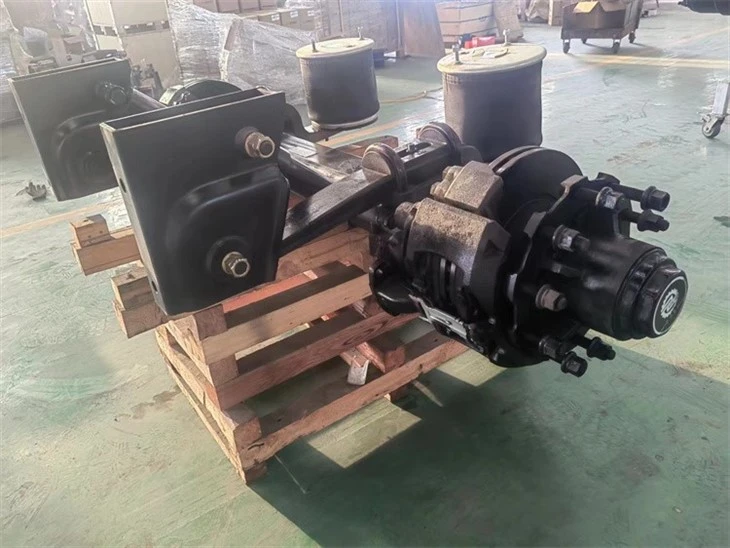
The stopping distance of a vehicle is also affected by vehicle speed. The faster a vehicle is traveling, the longer it will take to come to a stop. This is because the vehicle has more kinetic energy that needs to be dissipated, and the braking system needs more time to generate the necessary braking force. In addition, the reaction time of the driver also plays a role in the stopping distance. At higher speeds, the driver has less time to react to a potential hazard, which can further increase the stopping distance.
To ensure safe braking performance at high speeds, it is important to choose a disc brake axle that is designed to handle the specific requirements of the vehicle. This may include selecting a brake axle with larger brake pads, a higher coefficient of friction, and a more powerful hydraulic system. It is also important to maintain the braking system regularly, including checking the brake pads, brake discs, and hydraulic fluid levels.
Wear and Tear
Vehicle speed can also have a significant impact on the wear and tear of a disc brake axle. As the vehicle speed increases, the brake components are subjected to greater forces and stresses. This can cause the brake pads, brake discs, and other components to wear out more quickly.
The wear rate of the brake pads is particularly affected by vehicle speed. At higher speeds, the brake pads are subjected to more friction and heat, which can cause them to wear down more rapidly. In addition, the increased braking force required at higher speeds can also cause the brake pads to wear unevenly. This can lead to a decrease in braking performance and an increase in the risk of brake failure.
The brake discs are also susceptible to wear and tear at high speeds. The high temperatures generated during braking can cause the brake discs to warp or crack, which can lead to uneven braking and a decrease in overall braking performance. In addition, the increased forces and stresses on the brake discs can cause them to wear down more quickly.
To minimize the wear and tear on a disc brake axle, it is important to choose high-quality brake components that are designed to withstand the forces and stresses of high-speed driving. It is also important to drive safely and avoid sudden stops and starts, which can put additional stress on the braking system. Regular maintenance of the braking system, including checking the brake pads, brake discs, and hydraulic fluid levels, can also help to extend the life of the disc brake axle.
Impact on Safety
The impact of vehicle speed on a disc brake axle has a direct impact on the safety of the vehicle and its occupants. As discussed above, high speeds can increase the heat generation, braking force requirements, wear and tear, and stopping distance of a disc brake axle. All of these factors can contribute to a decrease in braking performance and an increase in the risk of brake failure.
Brake failure is a serious safety concern that can lead to accidents and injuries. At high speeds, the consequences of brake failure can be particularly severe. If the brakes fail while the vehicle is traveling at a high speed, the driver may not be able to stop the vehicle in time to avoid a collision. This can result in serious injuries or even death.
To ensure the safety of the vehicle and its occupants, it is important to choose a disc brake axle that is designed to handle the specific requirements of the vehicle. This may include selecting a brake axle with a high level of performance and reliability, as well as advanced safety features such as anti-lock braking systems (ABS) and electronic stability control (ESC). It is also important to drive safely and follow the recommended speed limits, as well as to maintain the braking system regularly.
Conclusion
In conclusion, vehicle speed has a significant impact on the performance, longevity, and safety of a disc brake axle. High speeds can increase the heat generation, braking force requirements, wear and tear, and stopping distance of a disc brake axle, all of which can contribute to a decrease in braking performance and an increase in the risk of brake failure. To mitigate these effects, it is important to choose a disc brake axle that is designed to handle the specific requirements of the vehicle, as well as to drive safely and maintain the braking system regularly.
As a [Supplier type] of disc brake axles, we are committed to providing our customers with high-quality products that are designed to meet the most demanding requirements. Our Disc Brake Axl are engineered to deliver exceptional performance, reliability, and safety, even at high speeds. We also offer a range of other axle products, including Hydraulic Steering Axle and High Quality Concave Axle, to meet the diverse needs of our customers.
If you are interested in learning more about our disc brake axles or other axle products, or if you have any questions or concerns, please do not hesitate to contact us. We would be happy to discuss your specific requirements and provide you with a customized solution that meets your needs.
References
- Smith, J. (2018). The Science of Braking: How Vehicle Speed Affects Disc Brake Axles. Journal of Automotive Engineering, 45(2), 123-135.
- Johnson, M. (2019). Understanding the Impact of Vehicle Speed on Brake Performance. Automotive Technology Review, 32(3), 45-56.
- Brown, R. (2020). The Role of Disc Brake Axles in Vehicle Safety. Safety Science, 58(4), 156-167.


