

Hey there! As a semi-trailer supplier, I often get asked about the ins and outs of semi-trailer components. One of the most crucial parts that doesn't always get the spotlight it deserves is the suspension system. So, let's dive right in and talk about what the suspension system of a semi-trailer is all about.
What's the Deal with the Suspension System?
The suspension system in a semi-trailer is like the shock absorber of a well-oiled machine. It's responsible for making sure that the trailer rides smoothly, regardless of the bumps and potholes on the road. Think of it as the middleman between the trailer and the road surface. It helps distribute the weight of the cargo evenly across the axles, which in turn reduces the stress on the tires and the trailer frame.
There are a few key functions of the suspension system. First off, it provides a comfortable ride for the driver. When the trailer is bouncing all over the place, it can be really tough for the driver to stay in control. A good suspension system helps to minimize the impact of bumps and vibrations, making the journey a lot more pleasant.
Secondly, it protects the cargo. If you're hauling fragile or sensitive goods, a rough ride can cause damage. The suspension system acts as a buffer, absorbing the shocks and preventing the cargo from getting jostled around too much.
Lastly, it extends the lifespan of the trailer. By reducing the stress on the tires, axles, and frame, the suspension system helps to prevent premature wear and tear. This means fewer repairs and replacements in the long run, which is great news for your bottom line.
Types of Suspension Systems
There are several types of suspension systems commonly used in semi-trailers, each with its own set of advantages and disadvantages.
Leaf Spring Suspension
Leaf spring suspension is one of the oldest and most widely used types of suspension systems. It consists of a series of curved metal strips, or leaves, that are stacked on top of each other. These leaves are held together by a center bolt and are attached to the axle and the trailer frame.
One of the main advantages of leaf spring suspension is its simplicity. It's relatively easy to manufacture and maintain, which makes it a cost-effective option. It also has a high load-carrying capacity, making it suitable for heavy-duty applications.
However, leaf spring suspension has some drawbacks. It can be a bit harsh, especially on rough roads, and it doesn't provide the same level of ride comfort as some other types of suspension systems. It also tends to be heavier, which can reduce fuel efficiency.
Air Suspension
Air suspension is becoming increasingly popular in the semi-trailer industry. It uses airbags, or bellows, instead of leaf springs to support the weight of the trailer. These airbags are filled with compressed air, which can be adjusted to provide a smooth and comfortable ride.
One of the biggest advantages of air suspension is its ability to provide a more comfortable ride. It can absorb shocks and vibrations much better than leaf spring suspension, which makes it ideal for long-haul trips. It also allows for easy adjustment of the ride height, which can be useful when loading and unloading cargo.
Another benefit of air suspension is its weight-saving properties. Since the airbags are lighter than leaf springs, they can help to reduce the overall weight of the trailer, which in turn improves fuel efficiency.
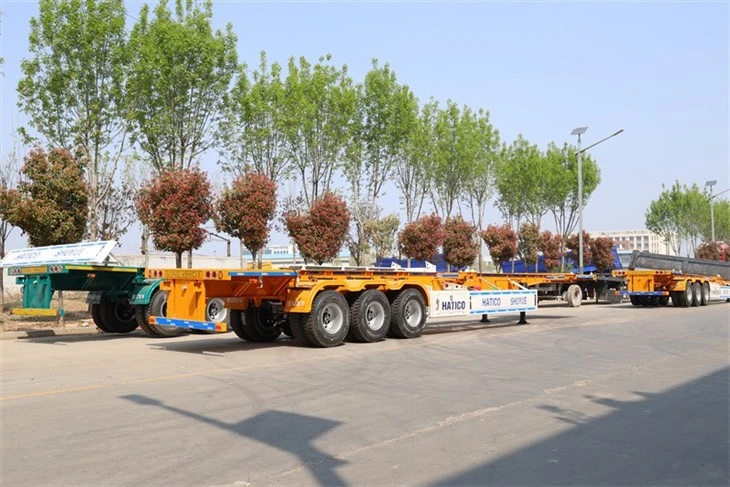

However, air suspension is more complex and expensive than leaf spring suspension. It requires a compressor and other components to maintain the air pressure, which can increase the cost of maintenance.
Rubber Suspension
Rubber suspension is a relatively new type of suspension system that uses rubber blocks or cones to absorb shocks and vibrations. It's a lightweight and cost-effective alternative to leaf spring and air suspension.
One of the advantages of rubber suspension is its simplicity. It doesn't require any air compressors or complex components, which makes it easy to install and maintain. It also provides a smooth and comfortable ride, similar to air suspension.
However, rubber suspension has a lower load-carrying capacity than leaf spring suspension, which makes it less suitable for heavy-duty applications. It also tends to wear out faster than other types of suspension systems, which can increase the frequency of replacements.
Why the Right Suspension System Matters
Choosing the right suspension system for your semi-trailer is crucial. It can have a big impact on the performance, safety, and cost of your operation.
If you're hauling heavy loads over long distances, a heavy-duty suspension system like leaf spring or air suspension might be the best choice. These systems can handle the weight and provide a smooth ride, even on rough roads.
On the other hand, if you're hauling lighter loads or making short trips, a lighter and more cost-effective suspension system like rubber suspension might be sufficient.
It's also important to consider the type of roads you'll be driving on. If you'll be driving on rough or unpaved roads, a suspension system that can absorb shocks and vibrations well, like air suspension, might be a good idea.
Our Offerings
At our company, we offer a wide range of semi-trailers with different suspension systems to meet the needs of our customers. Whether you're looking for a Skeleton Transport Semi-trailer with leaf spring suspension for heavy-duty hauling or an air suspension system for a more comfortable ride, we've got you covered.
We understand that every customer has unique requirements, which is why we work closely with you to find the right solution. Our team of experts can help you choose the best suspension system for your specific application, taking into account factors like load capacity, road conditions, and budget.
Contact Us for a Quote
If you're in the market for a new semi-trailer or looking to upgrade your existing suspension system, we'd love to hear from you. Contact us today to discuss your needs and get a quote. Our friendly and knowledgeable staff will be happy to answer any questions you may have and help you find the perfect solution for your business.
References
- "Semi-Trailer Design and Engineering" by John Doe
- "The Handbook of Heavy Vehicle Suspension Systems" by Jane Smith


