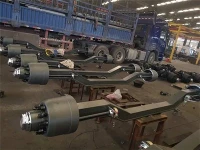

Trailer axles are an essential component of any trailer, as they support the weight of the trailer and facilitate movement. There are several different styles of trailer axles, each designed to meet specific needs and requirements. Understanding the different axle styles available can help trailer owners and enthusiasts make informed decisions when it comes to purchasing or upgrading their trailers.
What is a trailer axle?
Before diving into the different styles of trailer axles, it''s essential to understand what a trailer axle is and how it functions. A trailer axle is a structural component that connects the wheels of a trailer to the main frame. It provides support and helps distribute the weight of the trailer evenly.
Typically, a trailer axle consists of a solid beam or a hollow tube that is mounted to the trailer''s frame at both ends. The wheels are mounted at the ends of the axle, and they rotate around a central hub. Trailer axles can be either single or tandem, depending on the number of wheels they support.
Single Axle
A single axle trailer has only one axle mounted beneath the trailer''s frame. It supports the weight of the entire trailer and is commonly found in smaller trailers such as utility trailers, small boat trailers, and camping trailers. Single axle trailers are more maneuverable and easier to tow, making them popular among recreational trailer owners.
Single axles are available in various weight capacities to suit different trailer sizes and loads. They can range from lighter-duty axles designed for smaller trailers to heavier-duty axles capable of towing larger loads. Single axle trailers are cost-effective, as they require fewer components and are easier to maintain compared to tandem axle trailers.
Tandem Axle
Unlike single axle trailers, tandem axle trailers have two axles mounted beneath the trailer''s frame. The axles are spaced apart from each other, allowing for a more even distribution of weight and improved stability. Tandem axle trailers are commonly used for larger trailers such as enclosed cargo trailers, horse trailers, and RV trailers.
The primary advantage of tandem axles is their increased weight capacity. By distributing the weight across two axles, tandem axle trailers can handle heavier loads without overburdening a single axle. This results in better weight distribution, smoother towing, and improved braking performance.
Tandem axles also offer enhanced stability and control. The extra set of wheels provides additional traction, reducing the chances of skidding or losing control while towing. Moreover, in the event of a tire blowout, tandem axles provide better stability and prevent the trailer from tipping over.
Leaf Spring Axles
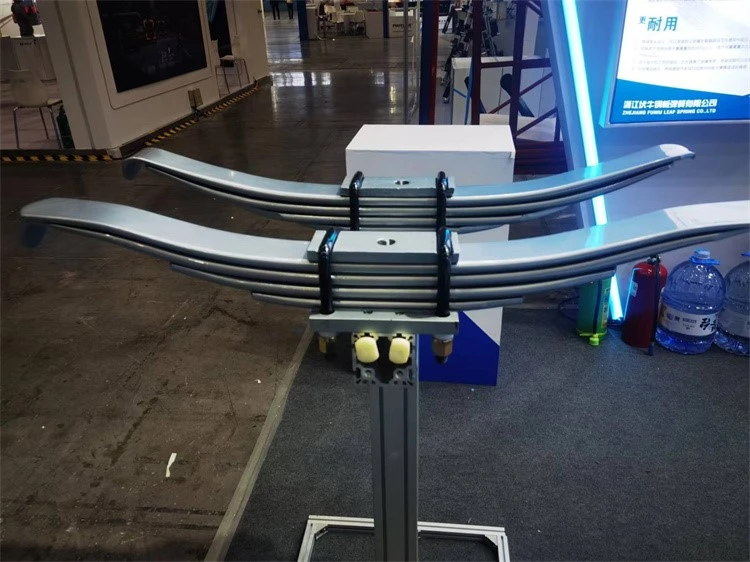
Leaf spring axles are a traditional and widely used style of trailer axles. They consist of a beam axle with leaf springs mounted on each side. Leaf springs are curved strips of metal that act as a suspension system, absorbing shocks and bumps while allowing the axle to flex and move.
These axles are known for their simplicity and durability. Leaf springs offer a cost-effective solution for supporting trailers of various sizes and loads. They are available in different weight capacities and can be easily replaced or upgraded when necessary.
Leaf spring axles are the preferred choice for many utility trailers, boat trailers, and car haulers. Although they may not provide the smoothest ride, they are reliable and can withstand challenging road conditions.
Torsion Axles
Torsion axles, also known as rubber torsion axles or rubber ride axles, are an alternative to leaf spring axles. Instead of relying on traditional leaf springs, torsion axles use a rubber compound within an enclosed tube as the suspension system. The rubber absorbs shocks and vibrations, providing a smoother and more comfortable ride.
One significant advantage of torsion axles is their independent suspension. Each wheel has its suspension system, allowing it to move independently of the others. This improves stability, minimizes trailer sway, and enhances overall towing performance.
Torsion axles also offer better ground clearance compared to leaf spring axles. As the axle beam is mounted above the trailer frame, there is more space between the ground and the axle, reducing the chances of scraping or bottoming out on uneven terrain.
While torsion axles have their benefits, they are generally more expensive than leaf spring axles. They may also be more challenging to repair or replace when damaged, as they involve sealed components and specialized tools.
Drop Axles
Drop axles, also known as underslung axles or drop center axles, are designed to lower the trailer''s deck height. They are commonly used in trailers where ground clearance is a concern, such as car haulers or specialty trailers with low profiles.
The drop axle configuration involves mounting the axle tube above the leaf springs rather than below them. This allows the trailer to have a dropped or lowered center of gravity, making it easier to load and unload cargo. Additionally, drop axles provide enhanced stability and a more streamlined towing experience.
It''s important to note that using drop axles may affect the trailer''s weight capacity. The axle is positioned higher, which may reduce the amount of weight the trailer can handle. Therefore, it''s crucial to consult the manufacturer''s specifications and select an appropriate drop axle based on the trailer''s intended use and load requirements.
Straight Axles
A straight axle, also referred to as a beam axle or rigid axle, is a simple and straightforward design commonly used in utility trailers and small recreational trailers. It consists of a solid beam that spans the width of the trailer, with the wheels mounted at each end.
Straight axles are known for their strength and durability. They can handle heavy loads and are less prone to bending or flexing. However, since straight axles do not have any suspension or independent wheel movement, they can provide a rougher ride and may be less suitable for long-distance towing or delicate cargo.
Conclusion
Trailer axles come in various styles and configurations, each offering different advantages depending on the trailer''s size, weight capacity, and intended use. Choosing the right axle style is crucial to ensure the trailer''s stability, safety, and overall towing performance.
Single axle trailers are ideal for smaller loads and recreational towing, while tandem axle trailers provide increased weight capacity and stability for larger trailers. Leaf spring axles are reliable and cost-effective, while torsion axles offer a smoother ride and better towing performance.
For trailers that require lower deck heights, drop axles are a suitable option. Meanwhile, straight axles provide a robust and durable solution for utility trailers and smaller recreational trailers.
Understanding the various trailer axle styles allows trailer owners and enthusiasts to make informed decisions when it comes to purchasing, upgrading, or maintaining their trailers. By selecting the appropriate axle style, trailer owners can ensure a safe, smooth, and enjoyable towing experience.