

As a supplier of lightweight axles, I've had the privilege of witnessing firsthand the diverse needs of different trailer types. The question of whether there are differences in lightweight axles for various trailers is not only relevant but also crucial for anyone in the trailer industry. In this blog, I'll delve into the intricacies of lightweight axles and explore how they vary based on the type of trailer they're designed for.
Understanding Lightweight Axles
Before we dive into the differences, let's first understand what lightweight axles are. Lightweight axles are designed to reduce the overall weight of a trailer without compromising on strength and performance. This reduction in weight can lead to several benefits, including improved fuel efficiency, increased payload capacity, and better handling.
Lightweight axles are typically made from high-strength materials such as aluminum or advanced steel alloys. These materials offer a high strength-to-weight ratio, allowing for a lighter axle design. Additionally, modern manufacturing techniques are used to optimize the axle's structure, further reducing weight while maintaining durability.
Differences in Lightweight Axles for Different Trailer Types
Utility Trailers
Utility trailers are one of the most common types of trailers. They are used for a variety of purposes, from hauling landscaping equipment to transporting small vehicles. Utility trailers are often lightweight themselves, so the axles used in these trailers need to be proportionally lightweight as well.
For utility trailers, lightweight axles are usually designed with a lower weight capacity. They are typically single-axle or tandem-axle setups, depending on the size and intended use of the trailer. These axles are often more compact in design, allowing for a smaller turning radius and better maneuverability.
One of the key features of lightweight axles for utility trailers is their simplicity. They are designed to be easy to install and maintain, making them a popular choice for DIY trailer builders and small businesses. Additionally, these axles often come with basic suspension systems, such as leaf springs, which are cost-effective and reliable.
Horse Trailers
Horse trailers require a different set of considerations when it comes to lightweight axles. The safety and comfort of the horses are of utmost importance, so the axles need to provide a smooth and stable ride.
Lightweight axles for horse trailers are typically designed with a higher weight capacity to accommodate the weight of the horses and any additional equipment. They also often feature advanced suspension systems, such as American-style Suspension Kits, which can help to reduce the impact of bumps and rough roads on the horses.
In addition to suspension, the axles for horse trailers need to be corrosion-resistant. Since horses produce moisture and ammonia, which can corrode metal, the axles are often coated or made from materials that are resistant to rust and corrosion.
RV Trailers
RV trailers, or recreational vehicle trailers, are designed for long-distance travel and provide a comfortable living space for travelers. These trailers require lightweight axles that can handle the weight of the living quarters, appliances, and personal belongings.
Lightweight axles for RV trailers are often designed with a high level of precision and quality. They are typically equipped with advanced braking systems, such as electric or hydraulic brakes, to ensure safe stopping. Additionally, these axles may feature adjustable suspension systems, which can be adjusted to accommodate different road conditions and loads.
Another important consideration for RV trailers is the noise and vibration levels. Lightweight axles for RV trailers are often designed to minimize noise and vibration, providing a more comfortable travel experience for the occupants.
Heavy-Duty Trailers
Heavy-duty trailers, such as those used for transporting construction equipment or large vehicles, require the most robust and reliable lightweight axles. These axles need to be able to handle extremely high weights and provide a stable platform for the load.
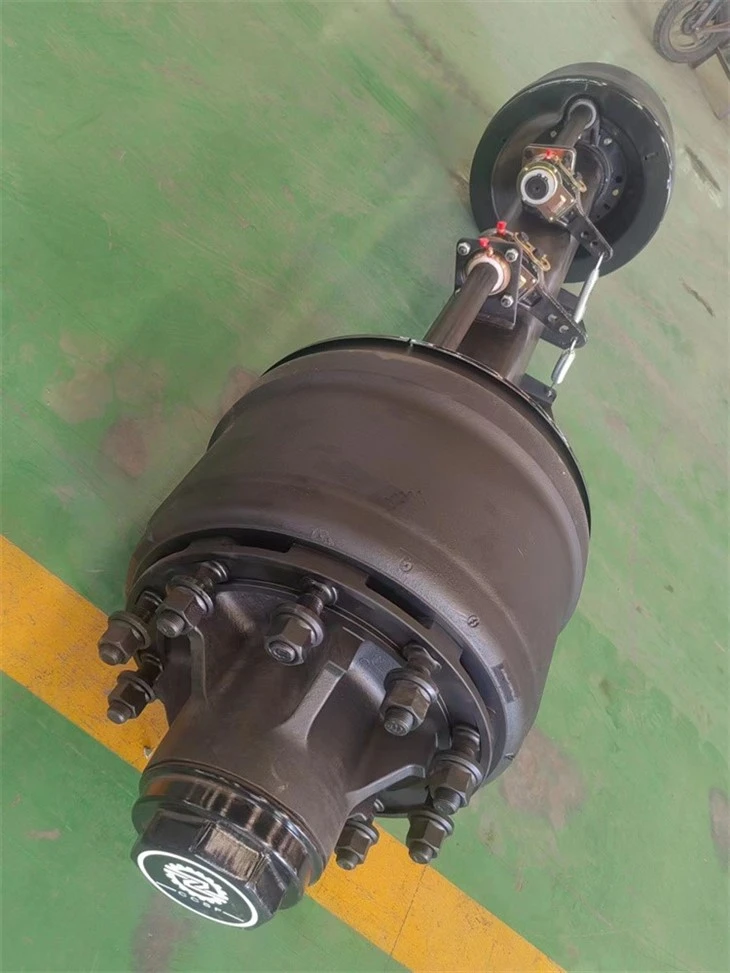
10 Ton Lightweight Axle is an example of an axle designed for heavy-duty trailers. These axles are typically made from high-strength steel alloys and are designed with a large diameter and thick wall thickness to ensure maximum strength.
Heavy-duty trailers often require multiple axles to distribute the weight evenly. The axles are usually connected by a complex suspension system, such as air suspension, which can provide a smooth ride even under heavy loads.
Factors Influencing Axle Design
In addition to the type of trailer, several other factors influence the design of lightweight axles. These include:
Load Capacity
The load capacity of the trailer is one of the most important factors in axle design. The axle needs to be able to support the weight of the trailer and its payload without exceeding its maximum capacity.
Road Conditions
The road conditions that the trailer will be traveling on also play a role in axle design. For trailers that will be traveling on rough or unpaved roads, the axles need to be more durable and have a higher level of shock absorption.
Trailer Size and Shape
The size and shape of the trailer can also affect the axle design. Larger trailers may require multiple axles to distribute the weight evenly, while trailers with a unique shape may require custom-designed axles.
Conclusion
In conclusion, there are indeed significant differences in lightweight axles for different types of trailers. Each type of trailer has its own unique requirements, and the axles need to be designed to meet these requirements.
As a supplier of Lightweight Trailer Axles, I understand the importance of providing high-quality axles that are tailored to the specific needs of each customer. Whether you're building a utility trailer, a horse trailer, an RV trailer, or a heavy-duty trailer, I can offer a range of lightweight axles that will meet your requirements.
If you're in the market for lightweight axles for your trailer, I encourage you to contact me to discuss your specific needs. I can provide you with expert advice and help you choose the right axles for your trailer. Together, we can ensure that your trailer performs at its best and provides a safe and reliable transportation solution.
References
- Smith, J. (2020). Trailer Axle Design and Engineering. Trailer Industry Journal.
- Johnson, A. (2019). The Importance of Lightweight Axles in the Trailer Industry. Transportation Research Quarterly.
- Brown, C. (2021). Advanced Suspension Systems for Trailers. Automotive Engineering Review.


