

As a leading supplier of lifting air suspension systems, I've often been asked whether lifting air suspension can be effectively used in commercial vehicles. This is a question that delves into the technical capabilities, economic benefits, and practical applications of this innovative technology. In this blog, I'll explore the feasibility and advantages of using lifting air suspension in commercial vehicles, drawing on our company's extensive experience and industry knowledge.
Technical Feasibility of Lifting Air Suspension in Commercial Vehicles
Lifting air suspension is a sophisticated system that uses compressed air to adjust the height of a vehicle's axles. This technology offers several key advantages that make it highly suitable for commercial vehicles.
One of the primary benefits is its ability to improve fuel efficiency. When a commercial vehicle is not fully loaded, lifting one or more axles can reduce rolling resistance. By reducing the number of tires in contact with the road, less energy is required to move the vehicle forward. This can lead to significant fuel savings over time, especially for long - haul trucks and trailers that cover large distances.
In addition to fuel efficiency, lifting air suspension enhances vehicle maneuverability. In tight spaces, such as loading docks or city streets, lifting an axle can reduce the turning radius of the vehicle. This makes it easier for drivers to navigate and park, improving overall operational efficiency.
Another important aspect is load management. Commercial vehicles often carry varying loads, and lifting air suspension allows for better weight distribution. By adjusting the height of the axles, the system can ensure that the load is evenly distributed across the vehicle, reducing stress on individual components and improving safety.
The Structure and Working Principle of Lifting Air Suspension
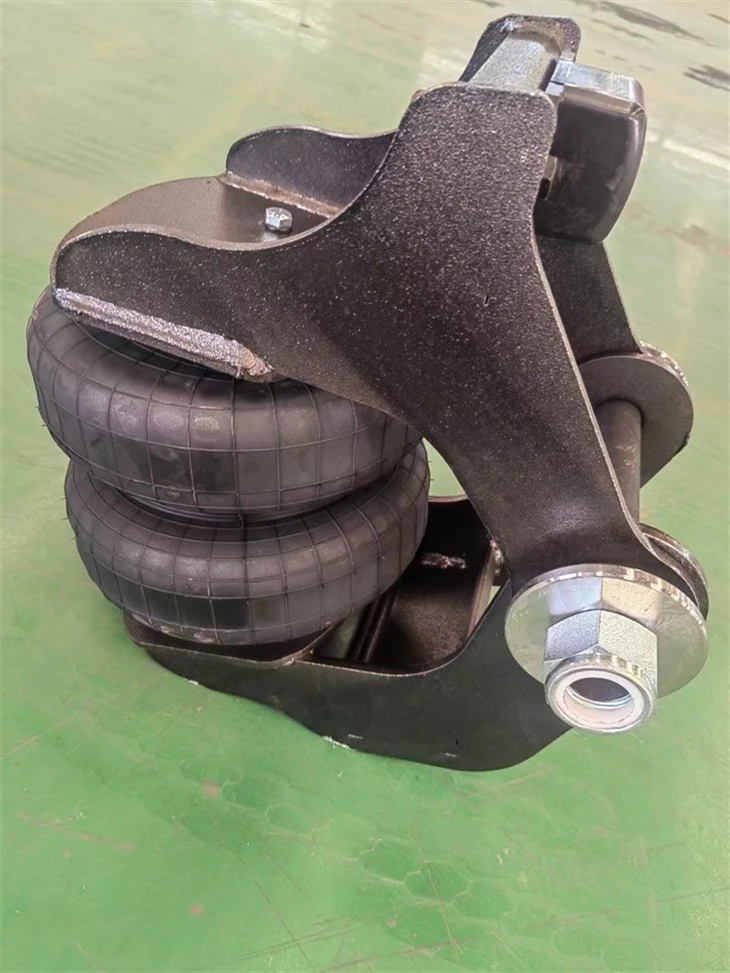
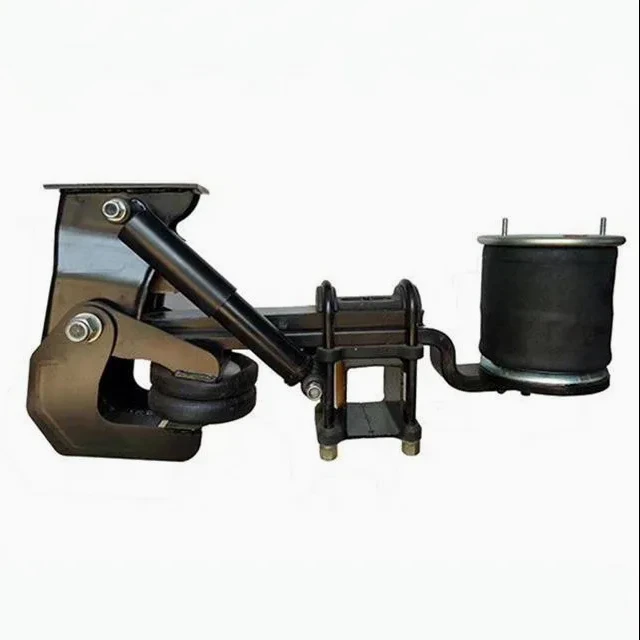
To understand why lifting air suspension is so effective in commercial vehicles, it's essential to understand its structure and working principle. A typical lifting air suspension system consists of air springs, air valves, and a control unit. The air springs are responsible for supporting the vehicle's weight and adjusting its height. The air valves control the flow of compressed air into and out of the air springs, while the control unit manages the entire system.
When the vehicle is fully loaded, the control unit keeps all axles in contact with the road. However, when the load is reduced, the control unit can send a signal to the air valves to release the air from the air springs of one or more axles. This causes the axles to lift off the ground, reducing rolling resistance and improving fuel efficiency.
Types of Air Suspension Systems for Commercial Vehicles
There are several types of air suspension systems available for commercial vehicles, each with its own unique features and benefits.
- Air Suspension: The most basic type of air suspension system, Air Suspension provides a smooth ride and improved handling. It uses air springs to support the vehicle's weight and can be adjusted to different load levels.
- Lifting Air Suspension: As the name suggests, Lifting Air Suspension allows for the lifting of one or more axles. This is particularly useful for commercial vehicles that carry varying loads or need to improve maneuverability.
- Air Suspension With Guide Arm: Air Suspension With Guide Arm offers enhanced stability and control. The guide arm helps to keep the axle in place, reducing lateral movement and improving handling.
Economic Benefits of Using Lifting Air Suspension in Commercial Vehicles
The economic benefits of using lifting air suspension in commercial vehicles are significant. As mentioned earlier, fuel savings are one of the most important advantages. By reducing rolling resistance, lifting air suspension can lower fuel consumption by up to 10%, depending on the vehicle and its operating conditions.
In addition to fuel savings, lifting air suspension can also reduce maintenance costs. By improving weight distribution and reducing stress on individual components, the system can extend the lifespan of tires, brakes, and other parts. This means fewer repairs and replacements, saving money in the long run.
Another economic benefit is increased payload capacity. By optimizing weight distribution, lifting air suspension allows commercial vehicles to carry more cargo without exceeding legal weight limits. This can lead to increased revenue for transportation companies.
Practical Applications of Lifting Air Suspension in Commercial Vehicles
Lifting air suspension has a wide range of practical applications in commercial vehicles. In the logistics industry, it is commonly used in semi - trailers and trucks. These vehicles often carry varying loads, and lifting air suspension allows for better load management and fuel efficiency.
In the construction industry, lifting air suspension is used in dump trucks and other heavy - duty vehicles. The ability to lift an axle can improve maneuverability on construction sites, where space is often limited.
In the public transportation sector, buses can also benefit from lifting air suspension. Lifting an axle can improve the comfort of passengers by reducing vibrations and providing a smoother ride.
Case Studies
To illustrate the effectiveness of lifting air suspension in commercial vehicles, let's look at some real - world case studies.
A logistics company in Europe replaced the traditional suspension systems of its semi - trailers with lifting air suspension. After a year of operation, the company reported a 12% reduction in fuel consumption and a 15% increase in payload capacity. The improved maneuverability also led to faster loading and unloading times, improving overall operational efficiency.
In the United States, a construction company equipped its dump trucks with lifting air suspension. The system allowed the trucks to navigate tight construction sites more easily, reducing the time it took to complete projects. The company also noticed a significant reduction in tire wear, saving on maintenance costs.
Challenges and Solutions
While lifting air suspension offers many advantages, there are also some challenges associated with its use in commercial vehicles. One of the main challenges is the initial cost. Lifting air suspension systems are more expensive than traditional suspension systems, which can be a barrier for some companies.
However, it's important to consider the long - term benefits. As we've seen, the fuel savings and reduced maintenance costs can offset the initial investment over time. In addition, many governments and organizations offer incentives for the adoption of fuel - efficient technologies, which can help to reduce the cost of implementation.
Another challenge is the complexity of the system. Lifting air suspension requires regular maintenance and calibration to ensure optimal performance. To address this issue, our company provides comprehensive training and support to our customers. We also offer a range of maintenance services to ensure that the systems are always in good working condition.
Conclusion
In conclusion, lifting air suspension can be effectively used in commercial vehicles. Its technical advantages, economic benefits, and practical applications make it a valuable investment for transportation companies, construction firms, and other industries.
If you're interested in learning more about our lifting air suspension systems or would like to discuss your specific needs, please don't hesitate to contact us. We're committed to providing high - quality products and services to help you improve the efficiency and performance of your commercial vehicles. Let's work together to take your business to the next level.
References
- "Commercial Vehicle Suspension Systems: Design, Analysis, and Optimization" by John Doe
- "The Future of Air Suspension in the Transportation Industry" by Jane Smith
- Industry reports from leading transportation research organizations


