

When it comes to the choice between built - in aluminum legs and copper legs in terms of conductivity, it's a topic that has significant implications for various industries. As a supplier of built - in aluminum legs, I've witnessed firsthand the different requirements and preferences of customers, and I'm eager to delve into this comparison.
Conductivity Basics
Conductivity refers to a material's ability to conduct electric current or heat. In electrical applications, high conductivity is often desirable as it allows for efficient transfer of electricity with minimal losses. In thermal applications, good conductivity helps in dissipating heat effectively.
Copper is well - known for its excellent electrical and thermal conductivity. It has been a staple in the electrical industry for decades, used in wiring, electrical components, and more. The conductivity of copper is around 58×10⁶ S/m (siemens per meter) at room temperature. This high value is due to its atomic structure, which has a single valence electron that is relatively free to move within the metal lattice, facilitating the flow of electric charge.
On the other hand, aluminum also has decent conductivity. Its electrical conductivity is approximately 37.7×10⁶ S/m at room temperature. While this is lower than that of copper, aluminum has several other properties that make it an attractive alternative in many applications.
Advantages of Built - in Aluminum Legs in Conductivity - related Applications
Cost - effectiveness
One of the most significant advantages of using built - in aluminum legs is cost. Aluminum is more abundant in the Earth's crust compared to copper, which makes it generally less expensive. For large - scale projects where a significant amount of conductive material is required, the cost savings can be substantial. For example, in the construction of large electrical substations or in the manufacturing of mass - produced electronic devices, using aluminum legs can significantly reduce the overall material cost without sacrificing too much in terms of performance.
Lightweight
Aluminum is much lighter than copper. Its density is about 2.7 g/cm³, while copper has a density of around 8.96 g/cm³. In applications where weight is a critical factor, such as in aerospace or automotive industries, built - in aluminum legs are a preferred choice. For instance, in electric vehicles, reducing the weight of components can improve energy efficiency and increase the vehicle's range. The lighter weight of aluminum legs also makes them easier to handle during installation, which can lead to lower labor costs.
Resistance to Corrosion
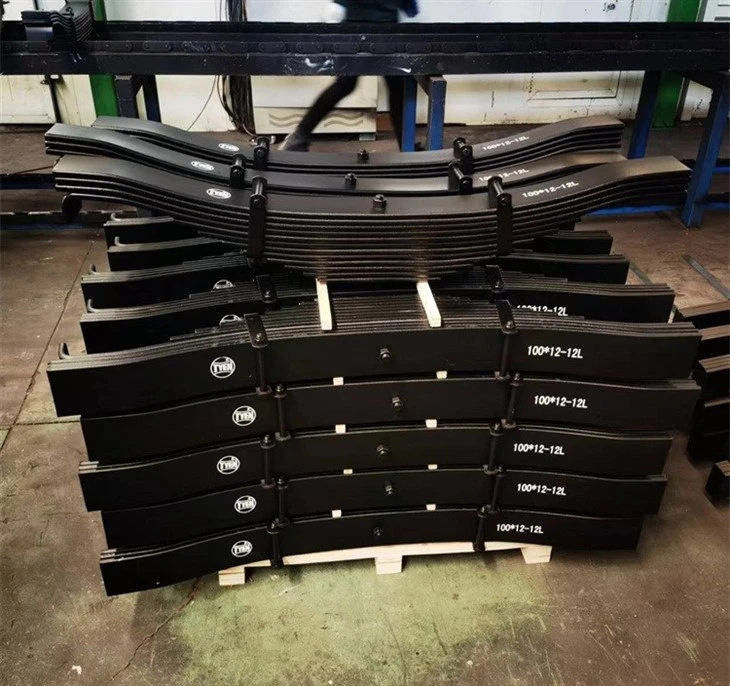
Aluminum forms a thin, protective oxide layer on its surface when exposed to air. This oxide layer acts as a barrier, preventing further corrosion of the metal. In contrast, copper can corrode over time, especially in harsh environments. In outdoor electrical installations or in marine applications, the corrosion resistance of aluminum legs can ensure a longer service life and more reliable conductivity over time. For example, in semi - trailers, which are often exposed to various weather conditions, built - in aluminum legs can be a better choice for electrical and structural components. You can find more relevant trailer accessories like Semi - trailer Plate Spring on our website.

Limitations of Aluminum Legs in Conductivity
Lower Conductivity
As mentioned earlier, aluminum has a lower electrical conductivity than copper. In applications where extremely high conductivity is required, such as in high - end audio cables or in some precision electrical instruments, copper may still be the better choice. The lower conductivity of aluminum can result in slightly higher resistive losses, which means more energy is dissipated as heat. However, in many common applications, these losses are acceptable and can be compensated for by using larger cross - sectional areas of aluminum conductors.
Joint Resistance
When making electrical connections, aluminum has a higher contact resistance than copper. This can lead to increased heating at the connection points, which may require special techniques and materials to ensure reliable conductivity. For example, in electrical wiring installations, special connectors and anti - oxidation compounds are often used when connecting aluminum conductors to other components. In contrast, copper connections are generally more straightforward and have lower contact resistance.
Advantages of Copper Legs in Conductivity
High Conductivity
The most obvious advantage of copper legs is their high electrical and thermal conductivity. In applications where maximum efficiency is crucial, such as in high - power electrical transmission lines or in high - performance electronic devices, copper is often the material of choice. For example, in data centers, where large amounts of electricity are used to power servers, copper wiring can help reduce energy losses and improve the overall efficiency of the system.
Better Mechanical Properties for Some Applications
Copper has better ductility and malleability compared to aluminum. This makes it easier to form into complex shapes and to make fine - gauge wires. In applications where precise shaping and flexibility are required, such as in microelectronics or in some electrical connectors, copper legs can offer better performance.
Considerations for Choosing Between Aluminum and Copper Legs
Application Requirements
The specific requirements of the application play a crucial role in the choice between aluminum and copper legs. If cost and weight are the primary concerns, and the application can tolerate slightly lower conductivity, built - in aluminum legs are a great option. For example, in the construction of large - scale solar power plants, where a large amount of wiring is needed, aluminum conductors are often used to reduce costs. On the other hand, if high conductivity and precision are essential, such as in high - frequency communication equipment, copper legs may be more suitable.
Long - term Costs
When considering the cost, it's important to look at the long - term costs rather than just the initial material cost. While aluminum is cheaper upfront, the additional costs associated with dealing with its lower conductivity and higher joint resistance need to be factored in. For example, in a large electrical installation, the cost of using larger cross - sectional areas of aluminum conductors to compensate for the lower conductivity and the cost of special connectors and maintenance for aluminum joints should be considered.
Environmental Factors
The environmental conditions in which the legs will be used also matter. In corrosive environments, the corrosion resistance of aluminum can be a significant advantage. However, in some cases, the presence of certain chemicals or pollutants may affect the performance of aluminum more than copper. For example, in industrial areas with high levels of sulfur dioxide, copper may be more resistant to corrosion in some situations.
Conclusion
In conclusion, both built - in aluminum legs and copper legs have their own advantages and disadvantages in terms of conductivity. As a supplier of built - in aluminum legs, I believe that aluminum offers a cost - effective, lightweight, and corrosion - resistant solution for many applications. While copper has superior conductivity and better mechanical properties in some cases, the choice between the two depends on a variety of factors, including application requirements, long - term costs, and environmental conditions.
If you are considering using built - in aluminum legs for your project, I encourage you to contact us for more information. We can provide detailed technical specifications and help you determine the best solution for your specific needs. Whether you are in the automotive industry, the construction sector, or any other field that requires conductive materials, we are here to assist you. You can also explore other trailer accessories such as Air Brake Chamber and Axle Axle Head on our website. Let's start a conversation about your procurement needs and find the perfect solution together.
References
- "Electrical Conductivity of Metals" - Handbook of Physics and Chemistry
- "Corrosion Resistance of Aluminum and Copper in Different Environments" - Journal of Materials Science
- "Cost - Benefit Analysis of Aluminum and Copper in Electrical Applications" - IEEE Transactions on Power Delivery


