

Hey there! As an axle supplier, I often get asked about how an axle differential works. It's a pretty cool and important part of a vehicle's drivetrain, so I'm gonna break it down for you in a way that's easy to understand.
Let's start with the basics. When a vehicle is moving in a straight line, both wheels on an axle rotate at the same speed. But things get a bit more complicated when the vehicle turns. You see, the outer wheel has to cover a greater distance than the inner wheel during a turn. If both wheels were forced to rotate at the same speed, it would cause a whole bunch of problems, like tire wear, difficulty in turning, and even damage to the drivetrain.
That's where the axle differential comes in. Its main job is to allow the wheels on an axle to rotate at different speeds while still transmitting power from the engine to the wheels.
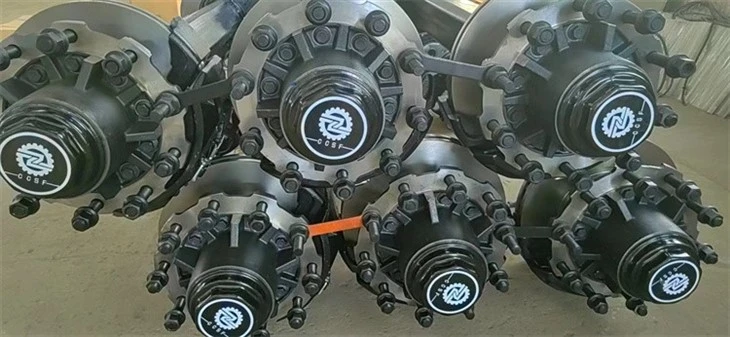
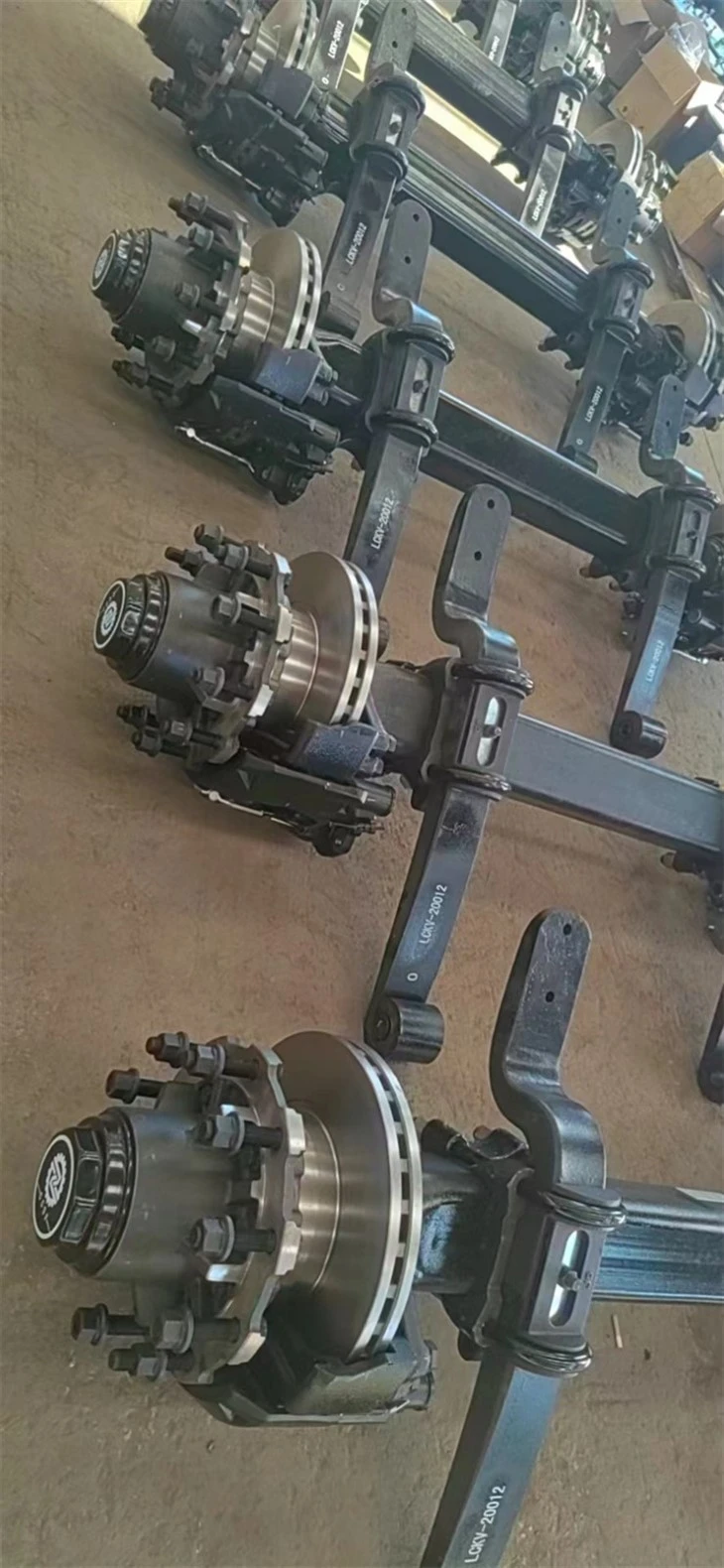
So, how does it actually work? Well, most differentials use a set of gears. The most common type is the open differential. In an open differential, there are three main components: the ring gear, the pinion gears, and the side gears.
The ring gear is connected to the driveshaft, which gets power from the engine. When the engine sends power through the driveshaft, it turns the ring gear. The pinion gears are mounted on a carrier that is attached to the ring gear. These pinion gears mesh with the side gears, which are connected to the axles that go to the wheels.
When the vehicle is going straight, the power from the ring gear is evenly distributed to both side gears. So, both wheels rotate at the same speed. But when the vehicle starts to turn, the outer wheel needs to rotate faster than the inner wheel. The pinion gears start to rotate on their own axes, allowing the side gears to rotate at different speeds. This way, the outer wheel can cover more distance while the inner wheel covers less, making the turn smooth and easy.
However, the open differential has its limitations. One big problem is that if one wheel loses traction, like when it's on ice or in mud, most of the power will go to that wheel. This is because the open differential always tries to equalize the torque between the two wheels. So, if one wheel can't grip the road, it will spin freely, and the other wheel won't get enough power to move the vehicle forward.
To solve this problem, there are other types of differentials, like the limited-slip differential (LSD) and the locking differential.
The limited-slip differential uses clutches or other mechanisms to limit the difference in speed between the two wheels. When one wheel starts to spin too fast, the LSD applies some resistance, forcing more power to go to the wheel with better traction. This helps the vehicle maintain better control and traction in slippery conditions.
The locking differential, on the other hand, can completely lock the two wheels together so that they rotate at the same speed. This is really useful in off-road situations or when maximum traction is needed. You can usually engage or disengage the locking differential manually or automatically, depending on the vehicle.
Now, as an axle supplier, we offer a wide range of axles to meet different needs. For example, we have the Hydraulic Steering Axle. This type of axle uses hydraulic power to assist with steering, making it easier to turn the vehicle, especially in heavy-duty applications.
We also have the Disc Brake Axl and Disc-Brake Axle. Disc brakes are more efficient and reliable than traditional drum brakes. They can provide better stopping power and are less prone to overheating, which is important for safety and performance.
If you're in the market for axles, whether it's for a small car, a big truck, or an off-road vehicle, we've got you covered. Our axles are made with high-quality materials and advanced manufacturing techniques to ensure durability and performance.
We understand that every customer has different requirements. That's why we offer customization options. You can choose the type of differential, the size of the axle, the brake system, and other features according to your specific needs.
If you're interested in our products, don't hesitate to get in touch with us. We'd love to have a chat with you about your axle needs and see how we can help. Whether you're a vehicle manufacturer looking for a reliable axle supplier or an individual looking to upgrade your vehicle, we're here to assist you.
In conclusion, the axle differential is a crucial part of a vehicle's drivetrain. It allows for smooth turns and helps the vehicle perform well in different driving conditions. And as an axle supplier, we're committed to providing high-quality axles with the latest differential technology to meet your needs. So, if you've got any questions or want to start a procurement discussion, just reach out!
References
- Automotive Engineering textbooks
- Industry research papers on drivetrain technology


