

When it comes to the performance and efficiency of vehicles, the axle ratio plays a crucial role. As an axle supplier, I understand the importance of accurately calculating the axle ratio to ensure optimal vehicle operation. In this blog post, I will guide you through the process of calculating the axle ratio and explain its significance in different applications.
Understanding the Axle Ratio
The axle ratio is defined as the ratio of the number of teeth on the ring gear to the number of teeth on the pinion gear in the differential of an axle. This ratio determines how many times the driveshaft rotates for each rotation of the wheels. A higher axle ratio means the driveshaft rotates more times for each wheel rotation, while a lower axle ratio results in fewer driveshaft rotations.
Why is the Axle Ratio Important?
The axle ratio has a significant impact on several aspects of vehicle performance, including:
- Towing and Hauling Capacity: A higher axle ratio provides more torque at the wheels, which is beneficial for towing heavy loads or carrying large payloads. This allows the vehicle to accelerate more easily and maintain speed while under load.
- Fuel Efficiency: A lower axle ratio can improve fuel efficiency by reducing the engine's RPM at a given speed. This is because the engine doesn't have to work as hard to turn the wheels, resulting in less fuel consumption.
- Acceleration: A higher axle ratio can enhance acceleration by providing more torque to the wheels. This is particularly useful for high-performance vehicles or those used in racing applications.
- Top Speed: A lower axle ratio can increase the vehicle's top speed by allowing the engine to operate at a lower RPM. This reduces engine stress and can result in a higher maximum speed.
How to Calculate the Axle Ratio
Calculating the axle ratio is a relatively straightforward process that involves counting the number of teeth on the ring gear and the pinion gear. Here's a step-by-step guide:
- Locate the Differential: The differential is usually located in the center of the axle housing. It contains the ring gear and the pinion gear.
- Remove the Differential Cover: Use a socket wrench to remove the bolts holding the differential cover in place. Carefully remove the cover and set it aside.
- Count the Teeth on the Ring Gear: The ring gear is the large gear that meshes with the pinion gear. Use a tooth counter or a piece of paper to count the number of teeth on the ring gear.
- Count the Teeth on the Pinion Gear: The pinion gear is the smaller gear that drives the ring gear. Count the number of teeth on the pinion gear using the same method as above.
- Calculate the Axle Ratio: Divide the number of teeth on the ring gear by the number of teeth on the pinion gear. The result is the axle ratio.
For example, if the ring gear has 41 teeth and the pinion gear has 11 teeth, the axle ratio would be 41/11, which is approximately 3.73:1.
Using the Axle Ratio Calculator
If you don't want to manually count the teeth on the ring gear and the pinion gear, you can use an axle ratio calculator. There are several online calculators available that allow you to input the number of teeth on the ring gear and the pinion gear and calculate the axle ratio automatically.
Selecting the Right Axle Ratio
The ideal axle ratio for your vehicle depends on several factors, including your driving style, the type of vehicle you have, and the intended use of the vehicle. Here are some general guidelines to help you select the right axle ratio:
- Towing and Hauling: If you plan to tow heavy loads or carry large payloads, a higher axle ratio (e.g., 3.73:1 or 4.10:1) is recommended. This will provide more torque to the wheels and make it easier to tow or haul heavy objects.
- Fuel Efficiency: If fuel efficiency is your primary concern, a lower axle ratio (e.g., 2.73:1 or 3.08:1) is a better choice. This will allow the engine to operate at a lower RPM, resulting in less fuel consumption.
- Acceleration and Performance: If you want to enhance acceleration and performance, a higher axle ratio (e.g., 3.90:1 or 4.30:1) is recommended. This will provide more torque to the wheels and allow the vehicle to accelerate more quickly.
- Top Speed: If you're looking for maximum top speed, a lower axle ratio (e.g., 2.47:1 or 2.73:1) is the way to go. This will allow the engine to operate at a lower RPM, reducing engine stress and increasing the vehicle's top speed.
Our Axle Products
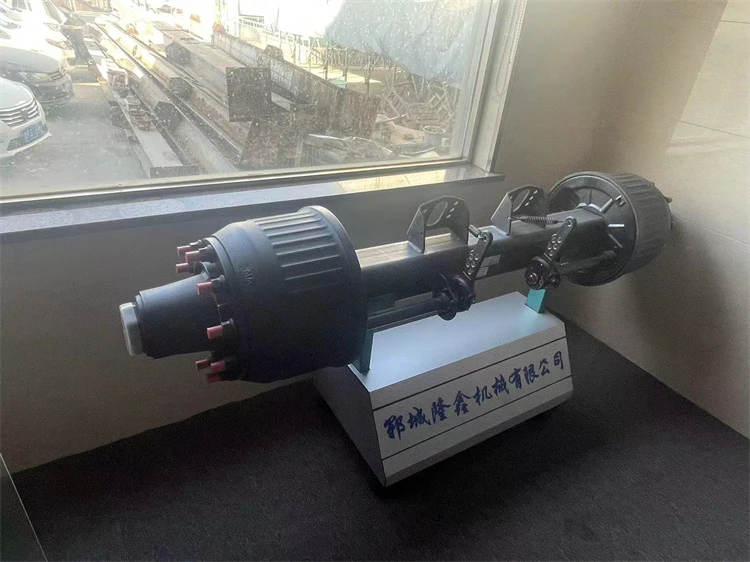
As an axle supplier, we offer a wide range of high-quality axles to meet the needs of different vehicles and applications. Our products include Hydraulic Steering Axle, High Quality German Axle, and Drum Brake Bridge. These axles are designed and manufactured to the highest standards, ensuring reliability, durability, and performance.

Contact Us for Procurement
If you're interested in purchasing axles or have any questions about axle ratios, please don't hesitate to contact us. Our team of experts is available to provide you with personalized advice and assistance. We can help you select the right axle ratio for your vehicle and ensure that you get the best performance and efficiency possible.
References
- "Automotive Chassis Systems" by Tom Denton
- "Vehicle Dynamics: Theory and Application" by Rajesh Rajamani
- "Fundamentals of Vehicle Dynamics" by Thomas D. Gillespie


