

Towing a trailer can be a real game - changer for moving heavy loads, whether you're a business hauling equipment or an individual transporting personal belongings. But here's the thing: the safety of a trailer axle during towing is super crucial. As a trailer axle supplier, I've seen firsthand the importance of getting this right. So, let's dive into how you can ensure your trailer axle stays safe when you're out on the road.
Pre - Towing Checks
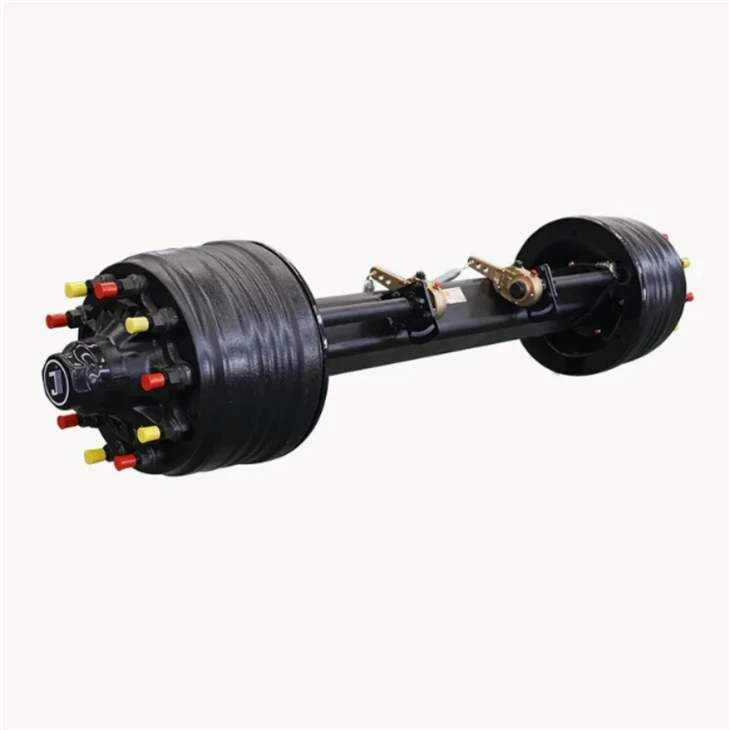
Before you even hook up that trailer, there are a bunch of checks you need to do. First off, take a good look at the axle itself. Inspect it for any visible damage like cracks, bends, or signs of excessive wear. A cracked axle is a ticking time bomb and can lead to a catastrophic failure while towing. If you spot any issues, it's best to replace the axle right away.
Next, check the wheel bearings. These little guys are responsible for letting the wheels spin smoothly. Over time, they can wear out, get dirty, or run out of grease. To check them, you can try to wiggle the wheel. If there's a lot of play, it might mean the bearings are loose or damaged. You can also jack up the trailer and spin the wheel by hand. If it makes a grinding or rough noise, that's a sign the bearings need attention. And don't forget to check the grease levels. Proper lubrication is key to keeping the bearings in good shape.

The tires are another critical part. Make sure they're properly inflated. Under - inflated tires can overheat and increase the risk of a blowout, while over - inflated tires can make the ride bumpy and reduce traction. Check the tire pressure with a reliable gauge and compare it to the recommended pressure, which is usually found on the trailer's placard or in the owner's manual. Also, look at the tire tread. If it's worn down too much, it's time for new tires. You can use the penny test: insert a penny into the tread with Lincoln's head upside down. If you can see the top of Lincoln's head, the tread is too shallow.
Proper Loading
How you load your trailer has a huge impact on the safety of the axle. First, distribute the weight evenly. If you pile all the weight on one side or at the back of the trailer, it can put extra stress on the axle and make the trailer unstable. Try to place heavier items low and in the center of the trailer. This helps keep the center of gravity low, which is important for stability.
Also, don't overload the trailer. Every trailer has a maximum weight capacity, and this includes the weight of the trailer itself, the load, and any additional equipment. Exceeding this capacity can cause the axle to bend or break. You can find the weight capacity on the trailer's placard. If you're not sure how much your load weighs, you can use a scale at a truck stop or a weigh station.
Hitch and Coupling
The hitch and coupling are what connect the trailer to the towing vehicle, and they need to be in top - notch condition. Check the hitch for any signs of wear, like cracks or excessive play. Make sure it's properly attached to the towing vehicle and that the locking mechanism is working correctly.
The coupling on the trailer should also be inspected. It needs to fit snugly onto the hitch ball. There should be no rattling or movement when the trailer is connected. You can do a simple tug test to make sure the connection is secure. After connecting the trailer, give it a good tug to see if it stays firmly attached.
During Towing
Once you're on the road, there are a few things to keep in mind. First, drive at a reasonable speed. High speeds can put more stress on the axle and increase the risk of a blowout or other problems. Follow the speed limits and adjust your speed according to the road conditions. If it's raining, windy, or the roads are rough, slow down.
Also, be gentle when accelerating and braking. Sudden acceleration or hard braking can cause the weight in the trailer to shift, which can put extra stress on the axle. Try to accelerate gradually and brake early to avoid any sudden jolts.
Maintenance and Upgrades
Regular maintenance is essential for keeping the trailer axle safe. Besides the pre - towing checks, you should have the axle inspected by a professional at least once a year. They can check for any hidden issues and make sure everything is in good working order.
If you're in the market for a new trailer axle, we offer a range of high - quality options. Our Lowbed Series Axle is designed for heavy - duty applications and provides excellent stability. The German Style Axle is known for its precision engineering and durability. And if you're looking for a lightweight option, our 10T Lightweight Axle is a great choice.
In conclusion, ensuring the safety of a trailer axle during towing requires a combination of pre - towing checks, proper loading, and careful driving. By following these steps and using high - quality axles, you can reduce the risk of accidents and keep your trailer on the road safely. If you're interested in our trailer axles or have any questions about trailer axle safety, don't hesitate to reach out. We're here to help you make the right choice for your towing needs.
References
- Trailer manufacturer's owner's manuals
- National Highway Traffic Safety Administration (NHTSA) guidelines on towing safety
- Industry standards for trailer axles and components


