

Hey there! If you're in the market for a disc brake axle or just want to know more about how to measure its braking efficiency, you've come to the right place. I'm a supplier of disc brake axles, and I've been in this business for quite a while. Over the years, I've learned a thing or two about what makes a disc brake axle perform well when it comes to braking. Let's dive right in!
What is a Disc Brake Axle?
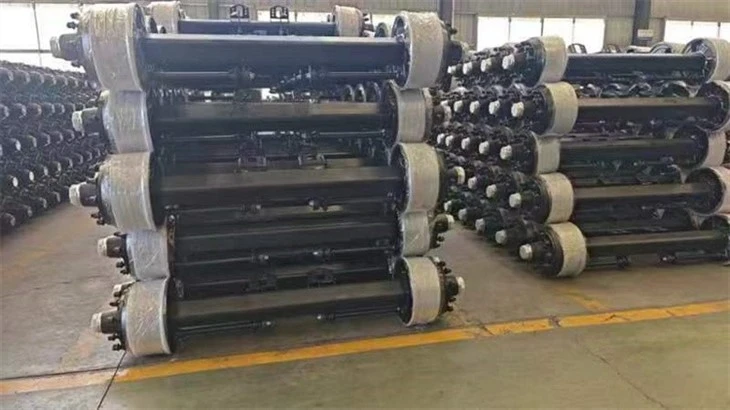
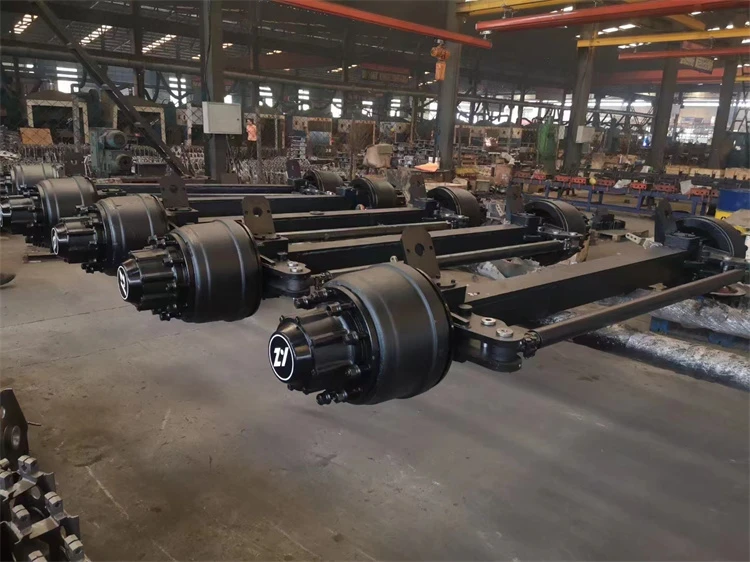
Before we talk about measuring braking efficiency, let's first understand what a disc brake axle is. A disc brake axle is an essential part of a vehicle's braking system. It consists of a disc (usually made of cast iron or a composite material) that rotates with the wheel, and a caliper that straddles the disc. When you step on the brake pedal, hydraulic pressure is applied to the caliper, which squeezes brake pads against the rotating disc. This friction between the pads and the disc slows down or stops the rotation of the wheel, ultimately bringing the vehicle to a halt. Pretty straightforward, right?
Why Measuring Braking Efficiency Matters
As a supplier, I know that ensuring the braking efficiency of my disc brake axles is crucial. For vehicle owners, effective braking is a matter of safety. A poorly performing brake axle can lead to longer stopping distances, which increases the risk of accidents. For commercial vehicles, such as trucks and buses, it can also impact operational efficiency and cost. For example, if a truck has to use more fuel to compensate for inefficient brakes, it's not only bad for the environment but also hits the bottom line. So, measuring braking efficiency helps both me as a supplier and my customers make sure that the product is up to par.
Factors Affecting Braking Efficiency
There are several factors that can affect the braking efficiency of a disc brake axle. Understanding these factors is the first step in measuring efficiency accurately.
Friction Material
The type of friction material used in the brake pads is one of the most important factors. Different materials have different friction coefficients, which determine how much stopping power the brakes can generate. For example, ceramic brake pads are known for their high friction and low wear, while semi-metallic pads offer good performance at a lower cost.
Brake Pad Temperature
The temperature of the brake pads also plays a significant role. As the brakes are applied repeatedly, the pads heat up. High temperatures can cause the friction material to degrade, a phenomenon known as brake fade. This reduces the braking force and can lead to a dangerous situation. Keeping an eye on the pad temperature is essential for maintaining optimal braking efficiency.
Disc Condition
The condition of the brake disc is another crucial factor. A warped or worn disc can cause uneven braking, which affects the overall efficiency. Cracks or grooves on the disc surface can also reduce the contact area between the pads and the disc, leading to less effective braking.
Hydraulic System
The hydraulic system that operates the caliper needs to be in good condition. Any leaks, air bubbles, or blockages in the system can prevent the caliper from applying the right amount of pressure to the pads. This can result in weak or inconsistent braking.
Methods of Measuring Braking Efficiency
Dynamometer Testing
One of the most accurate ways to measure braking efficiency is through dynamometer testing. A dynamometer, or "dyno" for short, is a device that can simulate real-world driving conditions and measure the force applied by the brakes. The disc brake axle is mounted on the dyno, and a series of tests are performed. The dyno measures the torque generated by the brakes as they are applied at different speeds and loads. This data is then used to calculate the braking efficiency. It's a comprehensive and reliable method, but it requires specialized equipment and a controlled environment.
Deceleration Testing
Another common method is deceleration testing. This involves measuring the deceleration rate of a vehicle when the brakes are applied. A decelerometer, which is a device that measures acceleration and deceleration, is used for this purpose. The vehicle is driven at a certain speed, and then the brakes are applied firmly. The decelerometer records the rate at which the vehicle slows down. This data can be used to calculate the braking efficiency. Deceleration testing is relatively simple and can be done on the road or on a test track. However, it's important to ensure that the testing conditions are consistent to get accurate results.
Brake Force Measurement
Brake force measurement is also a widely used method. Specialized sensors can be installed on the caliper to measure the force applied by the brakes. These sensors can provide real-time data on the braking force, which can be used to evaluate the efficiency of the disc brake axle. This method is useful for continuous monitoring of the brakes during normal operation.
Real-World Examples
Let me share a real-world example from my experience. One of my customers, a small trucking company, was experiencing issues with their braking system. They noticed that their trucks were taking longer to stop, especially when carrying heavy loads. After some investigation, we found that the brake pads were worn out and the discs were slightly warped. We replaced the pads and resurfaced the discs. To measure the improvement in braking efficiency, we conducted a deceleration test before and after the repairs. The results showed a significant increase in the deceleration rate, indicating that the braking efficiency had improved. The customer was happy with the outcome, and they were able to operate their trucks more safely and efficiently.
Now, a Quick Mention of Related Products
If you're interested in other types of axles, I also have some great options to offer. Check out my Drum Brake Bridge, which is a reliable alternative for some applications. For those looking for high - quality components, my High Quality German Axle is a top - notch choice. And if you need a steering axle with excellent performance, take a look at my Hydraulic Steering Axle.
Conclusion
Measuring the braking efficiency of a disc brake axle is essential for ensuring safety, performance, and cost - effectiveness. By understanding the factors that affect efficiency and using the right measurement methods, we can provide high - quality products that meet the needs of our customers. Whether you're a vehicle owner, a mechanic, or a fleet manager, I hope this blog has given you some useful insights into how to assess the performance of disc brake axles.
If you're in the market for a disc brake axle or have any questions about braking efficiency, I'd love to hear from you. Feel free to reach out, and we can start a discussion about how I can provide you with the best product for your needs. Together, we can make sure that your vehicles have the safe and reliable braking performance they deserve.
References
- Smith, J. (2018). Handbook of Automotive Brakes. Automotive Publishing Inc.
- Jones, R. (2020). Braking System Design and Testing. Transportation Technology Press.


