

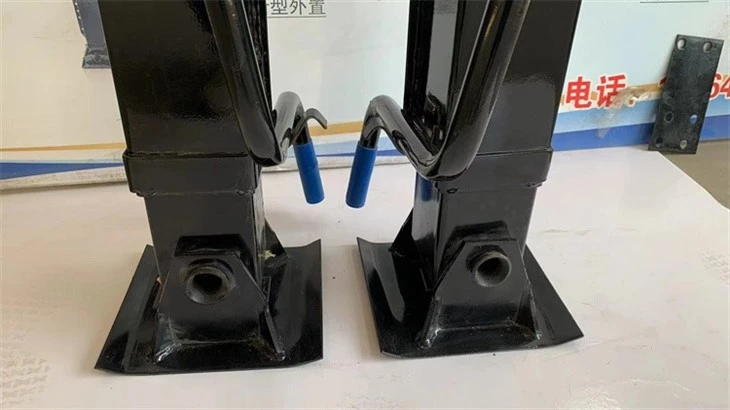
Hey there! As a supplier of linkage legs, I've seen my fair share of leg - related issues that can crop up. Linkage legs are super important parts, especially when it comes to trailers and heavy - duty equipment. They help in providing stability and support, but just like any other mechanical component, they're prone to injuries or damages. So, let's dig into how we can prevent these linkage leg injuries.
First off, regular inspections are a must. You can't just install the linkage legs and forget about them. I mean, it's like buying a car and never checking the oil or the tires. Over time, wear and tear are inevitable. You need to look for signs of corrosion, cracks, or any loose parts. A simple visual check can go a long way. Make it a habit to inspect the linkage legs at least once a month, or more frequently if they're used in harsh conditions.
Another key aspect is proper lubrication. Linkage legs have moving parts, and friction is the enemy here. Without sufficient lubrication, these parts can start to grind against each other, leading to premature wear and potential damage. Use a high - quality lubricant that's suitable for the type of linkage legs you have. Apply it according to the manufacturer's recommendations. Some people think that more lubrication is always better, but that's not true. Too much can attract dirt and debris, which can also cause problems.
Now, let's talk about the environment where the linkage legs are used. Harsh environments can really take a toll on them. For example, if the legs are constantly exposed to saltwater, they're at a high risk of corrosion. In such cases, consider using protective coatings. There are special coatings available in the market that can act as a barrier between the metal and the corrosive elements. This can significantly extend the lifespan of the linkage legs.
When it comes to loading and unloading, proper techniques are crucial. Overloading is a common cause of linkage leg injuries. Each set of linkage legs has a maximum weight capacity, and you should never exceed it. It's like trying to fit a square peg in a round hole. If you put too much weight on the legs, they can bend, break, or even collapse. Always check the weight of the load and make sure it's within the limits. Also, distribute the weight evenly. Uneven weight distribution can put extra stress on one side of the legs, leading to damage.

Training is also an important factor. If the people using the equipment with linkage legs aren't properly trained, they're more likely to make mistakes that can cause injuries. Provide comprehensive training on how to operate the equipment, how to handle the linkage legs, and what to do in case of emergencies. A well - trained operator is less likely to cause damage to the legs.
Let's also consider the quality of the linkage legs themselves. As a supplier, I can't stress enough the importance of buying from a reputable source. High - quality linkage legs are built to last. They're made from better materials and are designed with precision. Cheaper, low - quality legs may seem like a good deal at first, but they'll end up costing you more in the long run due to frequent replacements and repairs.
Now, I want to mention some related products that can complement the use of linkage legs and also help in preventing injuries. For example, Single Point Suspension can provide better stability. It works in tandem with the linkage legs to ensure that the load is evenly distributed and the equipment remains balanced.
Built in Support Legs are another great addition. They can offer additional support when needed, especially during maintenance or when the main linkage legs are under extra stress.
And don't forget about Axle Brake Pads. Good brakes are essential for safe operation. If the brakes aren't working properly, it can lead to sudden stops or movements that can cause damage to the linkage legs.
In conclusion, preventing linkage leg injuries requires a combination of regular inspections, proper lubrication, attention to the environment, correct loading techniques, training, and using high - quality products. By following these steps, you can ensure that your linkage legs last longer and perform better.
If you're interested in purchasing high - quality linkage legs or any of the related products I mentioned, feel free to reach out. We're here to help you find the best solutions for your needs and make sure your equipment operates safely and efficiently.
References
- Industry standards and guidelines for trailer components
- Manufacturer's manuals for linkage legs and related products
- Research on mechanical component durability and maintenance


