

Hey there! As a bogie suspension supplier, I've spent a ton of time diving into the ins and outs of these crucial components. Today, I'm gonna break down the differences between bogie suspensions in passenger cars and commercial vehicles.
Let's start with the basics. A bogie suspension is a key part of a vehicle's undercarriage. It's responsible for supporting the vehicle's weight, providing a smooth ride, and ensuring proper handling. But the way it does this can vary a lot depending on whether it's in a passenger car or a commercial vehicle.
Design and Purpose
When it comes to passenger cars, the main goal of the bogie suspension is to offer a comfortable ride. Passengers expect a smooth, quiet journey, and the suspension plays a huge role in delivering that. Car manufacturers focus on minimizing vibrations and shocks, so the suspension is designed to be more compliant. This means it can absorb bumps and irregularities on the road easily, without transferring too much of that movement to the cabin.
On the other hand, commercial vehicles have a different set of priorities. These vehicles are often used for transporting goods or people in large numbers, so durability and load - carrying capacity are the top concerns. Commercial vehicle bogie suspensions are built to handle heavy loads day in and day out. They need to be robust enough to withstand the stress of long - distance travel and the weight of the cargo or passengers they carry.
Load Capacity
One of the most obvious differences between the two is the load capacity. Passenger cars typically carry a relatively light load. Even when fully loaded with passengers and their luggage, the total weight is usually much less compared to commercial vehicles. For example, a typical family sedan might have a maximum load capacity of around 500 - 700 kilograms, including the weight of the passengers.

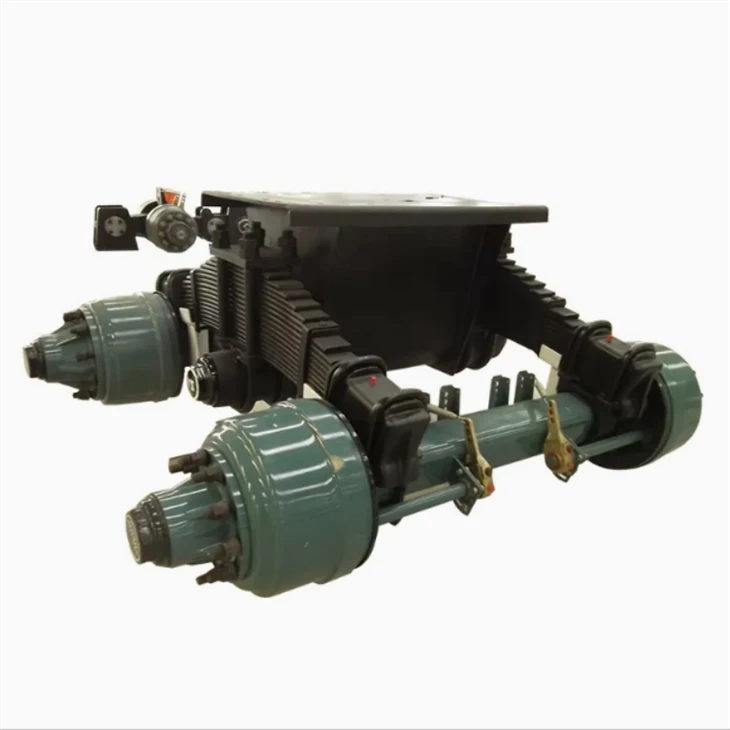
Commercial vehicles, however, are designed to carry much heavier loads. A medium - duty truck can carry loads ranging from 5 to 15 tons, while heavy - duty trucks can handle loads of 20 tons or more. This means that the bogie suspension in commercial vehicles needs to be much stronger and more rigid. The springs and shock absorbers are designed to support these heavy weights without bottoming out or losing their effectiveness.
Suspension Geometry
The suspension geometry also differs significantly between passenger cars and commercial vehicles. In passenger cars, the suspension is often designed to optimize handling and cornering performance. The geometry is set up to keep the tires in contact with the road surface as much as possible, especially during turns. This helps improve traction and stability, making the car safer and more enjoyable to drive.
Commercial vehicles, on the other hand, have a different focus. Their suspension geometry is more about maintaining a stable ride under heavy loads. Since they are often carrying large amounts of cargo, the suspension needs to prevent excessive body roll and keep the vehicle level. This is important for safety, as a stable vehicle is less likely to tip over, especially when making turns or driving on uneven roads.
Types of Suspension Systems
There are also differences in the types of suspension systems used. Passenger cars commonly use independent suspension systems. Independent suspension allows each wheel to move up and down independently of the others. This provides a smoother ride and better handling, as the movement of one wheel doesn't affect the others. For example, a MacPherson strut suspension is a popular choice in many passenger cars. It's simple, lightweight, and offers good performance.
Commercial vehicles, however, often use non - independent suspension systems. A common type is the leaf spring suspension. Leaf springs are made up of multiple layers of metal strips stacked on top of each other. They are very strong and can handle heavy loads well. Another option is the air suspension system, which is becoming more popular in commercial vehicles. Air suspension offers a more adjustable ride height and can provide a smoother ride, especially when the vehicle is carrying different loads. You can learn more about Single Point of Suspension which is also an interesting type of suspension system.
Maintenance and Durability
Maintenance requirements are also different. Passenger car bogie suspensions generally require less maintenance. Since they are designed for lighter loads and more comfortable driving conditions, the components don't wear out as quickly. Regular inspections and minor adjustments are usually enough to keep the suspension in good working order.
Commercial vehicle bogie suspensions, on the other hand, need more frequent maintenance. The heavy loads and long - distance driving put a lot of stress on the components. Springs may need to be replaced more often, and shock absorbers may wear out faster. Regular lubrication and alignment checks are also essential to ensure the suspension's performance and safety.
Cost
Cost is another factor. Passenger car bogie suspensions are generally less expensive. The materials used are often lighter and less robust, which reduces the manufacturing cost. Also, since they are mass - produced for a large number of vehicles, the economies of scale come into play, making them more affordable.
Commercial vehicle bogie suspensions, however, are more expensive. The high - strength materials and the complex design needed to handle heavy loads increase the cost. Additionally, the specialized manufacturing processes and the need for quality control add to the overall price.
Impact on the Market
These differences have a significant impact on the market. For passenger car manufacturers, the focus is on innovation and improving the comfort and performance of the suspension. They are constantly looking for new materials and designs to make the ride smoother and more enjoyable.
Commercial vehicle manufacturers, on the other hand, are more concerned with reliability and cost - effectiveness. They need to balance the need for a durable suspension with the cost of production. This often leads to a more conservative approach in terms of design and technology adoption.
Why Choose Our Bogie Suspensions
As a bogie suspension supplier, we understand these differences inside out. Whether you're a passenger car manufacturer looking for a comfortable and high - performance suspension or a commercial vehicle company in need of a durable and reliable solution, we've got you covered. Our team of experts has years of experience in designing and manufacturing bogie suspensions for both types of vehicles.
We use the latest technology and high - quality materials to ensure that our products meet the highest standards. For passenger cars, we focus on creating suspensions that offer a smooth and quiet ride, while for commercial vehicles, we prioritize strength and load - carrying capacity.
If you're in the market for bogie suspensions, we'd love to have a chat with you. We can discuss your specific needs and provide you with a customized solution that fits your requirements and budget. Don't hesitate to reach out and start the conversation about your next bogie suspension purchase.
References
- Automotive Engineering Handbook
- Commercial Vehicle Technology Journal
- Passenger Car Design and Development Reports


