

Hey there! As a trailer suspension supplier, I've seen firsthand the importance of choosing the right springs for trailer suspensions. Trailer suspensions are a crucial part of the overall trailer system, and the type of spring you use can significantly impact the performance, durability, and safety of your trailer. In this blog post, I'm gonna break down the different types of springs used in trailer suspensions to help you make an informed decision.
Leaf Springs
Leaf springs are one of the most common types of springs used in trailer suspensions. They've been around for ages and are known for their simplicity and reliability. A leaf spring consists of several layers of metal strips, or leaves, stacked on top of each other and bolted together. The leaves are usually curved, which gives the spring its ability to flex and absorb shocks.
One of the main advantages of leaf springs is their load-carrying capacity. They can handle heavy loads without much trouble, making them a great choice for trailers that need to haul a lot of weight. They're also relatively inexpensive and easy to maintain. If one of the leaves breaks, you can usually just replace that one leaf instead of the whole spring.
However, leaf springs do have some drawbacks. They can be a bit harsh on rough roads, as they tend to transfer more of the shock to the trailer. This can lead to a bumpier ride and potentially cause damage to the trailer and its contents. Also, they're not as adjustable as some other types of springs, so it can be harder to fine-tune the suspension for different loads.
Coil Springs
Coil springs are another popular option for trailer suspensions. These springs are made of a single piece of metal coiled into a helix shape. When a load is applied, the coil compresses, absorbing the shock and then returning to its original shape.
One of the big benefits of coil springs is their smooth ride. They can provide a more comfortable and stable driving experience compared to leaf springs, especially on rough or uneven roads. They're also more adjustable, which means you can easily change the spring rate to suit different loads or driving conditions.
In addition, coil springs are generally lighter than leaf springs. This can be a big advantage, as it helps to reduce the overall weight of the trailer and improve fuel efficiency.
But coil springs also have their limitations. They typically have a lower load-carrying capacity than leaf springs, so they might not be the best choice for trailers that need to haul extremely heavy loads. They also require more complex mounting systems, which can add to the cost and installation time.
Torsion Springs
Torsion springs are a bit different from leaf and coil springs. Instead of compressing or bending, torsion springs work by twisting. They're usually made of a long, thick rod that's attached to the trailer frame at one end and to a spindle at the other. As the trailer moves over bumps, the rod twists, storing and releasing energy to absorb the shock.
One of the main advantages of torsion springs is their compact design. They take up less space than leaf or coil springs, which can be a big plus for trailers with limited space. They also provide a very smooth and stable ride, as the torsion action helps to cancel out vibrations and jolts.
Torsion springs are also relatively maintenance-free. There are no lubrication points or moving parts that need to be constantly checked and adjusted. This makes them a great choice for trailers that are used in remote or hard-to-reach locations.
However, torsion springs can be more expensive than leaf and coil springs, especially for larger trailers. They're also not as easy to replace or repair, so if something goes wrong, you might need to call in a professional.
Air Springs
Air springs, also known as airbags, are a more modern option for trailer suspensions. These springs use compressed air to support the weight of the trailer and absorb shocks. They consist of a flexible rubber or synthetic bag that's filled with air and mounted between the trailer frame and the axle.
One of the biggest advantages of air springs is their adjustability. You can easily change the air pressure in the bags to adjust the ride height and stiffness of the suspension. This means you can fine-tune the suspension for different loads, road conditions, or driving preferences.
Air springs also provide a very smooth and comfortable ride. They can adapt to changes in the road surface much more quickly than other types of springs, reducing the amount of shock and vibration transferred to the trailer.

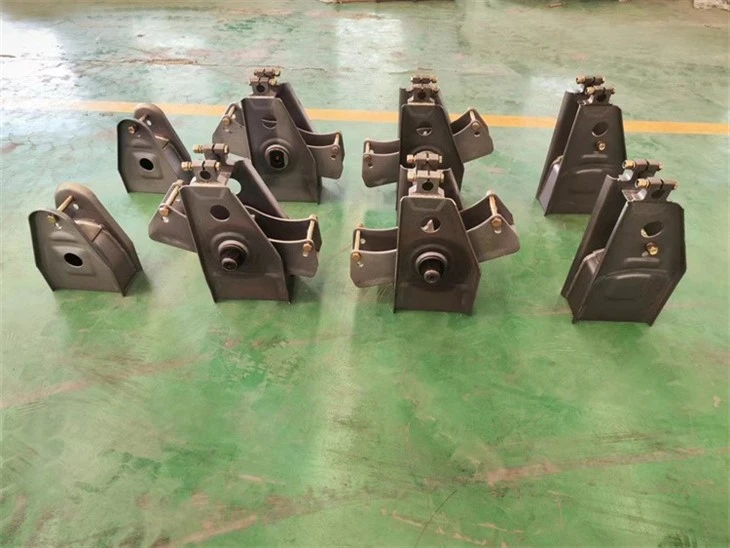
In addition, air springs can help to improve the handling and stability of the trailer. They can evenly distribute the weight of the load, reducing the risk of swaying or fishtailing.
But air springs do have some downsides. They're more complex and expensive than other types of springs, and they require a compressor and other components to maintain the air pressure. They're also more prone to leaks and other failures, so they need to be regularly inspected and maintained.
Choosing the Right Spring for Your Trailer
So, how do you choose the right spring for your trailer? Well, it really depends on a few factors, like the size and weight of your trailer, the type of loads you'll be carrying, and the conditions you'll be driving in.
If you're hauling heavy loads on a regular basis, leaf springs might be a good choice. They're tough and reliable, and they can handle a lot of weight without breaking a sweat.
On the other hand, if you're looking for a smooth and comfortable ride, especially on rough roads, coil springs or air springs might be a better option. They can provide a more cushioned ride and reduce the amount of shock and vibration.
If you have limited space on your trailer or you're looking for a low-maintenance solution, torsion springs could be the way to go. They're compact and easy to take care of, and they still provide a great ride.
Our Light Duty Suspension
If you're in the market for a light-duty trailer suspension, we've got you covered. Check out our Light Duty Suspension options. These suspensions are designed to provide a smooth and reliable ride for smaller trailers, and they come with a range of spring options to suit your needs.
Let's Talk
Choosing the right springs for your trailer suspension is an important decision, and we're here to help. If you have any questions or need more information, don't hesitate to reach out. We can work with you to find the perfect suspension system for your trailer and your specific requirements.
References
- Automotive Suspension Handbook.
- Trailer Design and Engineering Manual.


