

An electronic stability control (ESC) system is a crucial safety feature in modern vehicles, and its relationship with axles is both intricate and significant. As an axle supplier, understanding this relationship is essential for providing high - quality products that meet the safety and performance requirements of the automotive industry.
What is an Electronic Stability Control (ESC) System?
The ESC system is designed to enhance a vehicle's stability and control, especially in challenging driving conditions. It uses a combination of sensors, microprocessors, and hydraulic modulators to detect and reduce loss of traction and skidding. The system continuously monitors various parameters such as wheel speed, steering angle, lateral acceleration, and yaw rate.
When the ESC system detects that the vehicle is not following the driver's intended path, it automatically applies individual brakes to specific wheels and, in some cases, reduces engine power. For example, if a vehicle is starting to oversteer (the rear end is sliding out), the ESC system will apply the brakes to the outer front wheel to help bring the vehicle back in line. Conversely, if understeer occurs (the front end is not turning as much as the driver intends), the system may apply the brakes to the inner rear wheel.
The Role of Axles in Vehicle Dynamics
Axles are fundamental components of a vehicle's drivetrain and suspension system. They serve several key functions. Firstly, axles support the weight of the vehicle, including the body, passengers, and cargo. They transfer the vehicle's weight from the suspension to the wheels, ensuring a stable and balanced ride.
Secondly, axles transmit power from the engine to the wheels. In a front - wheel - drive vehicle, the front axle is responsible for both power transmission and steering. In a rear - wheel - drive vehicle, the rear axle handles power delivery, while the front axle is mainly for steering. In all - wheel - drive or four - wheel - drive vehicles, both the front and rear axles play a role in power transmission.
Axles also influence a vehicle's handling characteristics. The design and construction of axles, such as their length, stiffness, and the type of suspension they are paired with, can affect how a vehicle responds to steering inputs, acceleration, and braking. For instance, a stiffer axle can provide more precise handling but may also result in a harsher ride.
The Relationship between ESC and Axles
The ESC system relies on the proper functioning of axles to operate effectively. The sensors in the ESC system are often located on or near the axles to measure wheel speed accurately. These sensors send data to the ESC control unit, which then makes decisions about when and how to apply the brakes.
The design of the axles can also impact the ESC system's performance. For example, the type of axle suspension affects how the wheels maintain contact with the road surface. A well - designed axle suspension can ensure that the wheels have good traction, which is essential for the ESC system to work optimally. If an axle suspension allows excessive wheel movement or if the wheels lose contact with the road, the ESC system may not be able to accurately detect and correct the vehicle's stability issues.
Moreover, the power transmission capabilities of the axles are closely related to the ESC system. When the ESC system reduces engine power to control stability, it needs to work in harmony with the axles' ability to transfer that reduced power to the wheels. If the axles are not functioning properly, the power transfer may be inconsistent, which can undermine the effectiveness of the ESC system.
Axle Design Considerations for ESC Compatibility
As an axle supplier, we take several factors into account when designing axles to be compatible with ESC systems. One of the key considerations is the integration of wheel speed sensors. We ensure that the axles are designed to accommodate these sensors in a way that allows for accurate and reliable data collection. This may involve creating specific mounting points and protecting the sensors from environmental factors such as dirt, water, and vibrations.
Another important aspect is the stiffness and strength of the axles. Axles need to be strong enough to support the vehicle's weight and transmit power, but they also need to have the right amount of flexibility to work in conjunction with the ESC system. A too - rigid axle may cause the wheels to lose contact with the road more easily, while a too - flexible axle may not provide the necessary stability for the ESC system to operate effectively.
We also pay attention to the compatibility of the axle suspension with the ESC system. The suspension design should allow for smooth wheel movement while maintaining good traction. This may involve using advanced suspension technologies such as independent suspension systems, which can provide better control over each wheel's movement and improve the ESC system's performance.
Our Axle Products and ESC Compatibility
At our company, we offer a wide range of axles that are designed with ESC compatibility in mind. Our High Quality German Axle is known for its precision engineering and durability. It is equipped with high - quality wheel speed sensors and a well - designed suspension system that ensures excellent traction and stability, making it an ideal choice for vehicles with ESC systems.
Our Hydraulic Steering Axle is another product that offers enhanced performance and compatibility with ESC systems. The hydraulic steering mechanism provides smooth and precise steering control, which is crucial for the ESC system to accurately detect and correct the vehicle's path. The axle's design also allows for easy integration of the ESC sensors, ensuring reliable data collection.
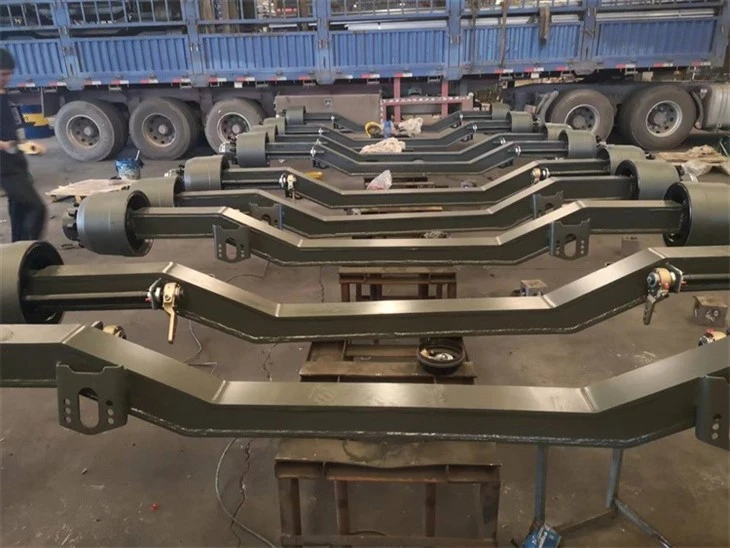
In addition, our High Quality Concave Axle is designed to provide a balance between strength and flexibility. The concave shape of the axle helps to distribute the vehicle's weight evenly, improving traction and stability. This axle is also compatible with ESC systems, as it allows for accurate wheel speed measurement and effective power transmission.
Conclusion
In conclusion, the relationship between an electronic stability control (ESC) system and axles is vital for vehicle safety and performance. The ESC system relies on the proper functioning of axles to detect and correct stability issues, while axles need to be designed to be compatible with the ESC system. As an axle supplier, we are committed to providing high - quality axles that meet the strict requirements of modern ESC systems.
If you are in the market for axles that are compatible with ESC systems, we invite you to contact us for a detailed discussion about your specific needs. Our team of experts is ready to assist you in finding the right axle solutions for your vehicles. We look forward to the opportunity to work with you and contribute to the safety and performance of your automotive products.

References
- Bosch, "Electronic Stability Program (ESP®) - The System for Driving Safety", Bosch Automotive Technology, 2023.
- SAE International, "Vehicle Dynamics and Control", SAE International Handbook, 2022.
- Society of Automotive Engineers, "Fundamentals of Vehicle Dynamics", 2nd Edition, 2012.


