

As a seasoned semi - trailer supplier, I've witnessed firsthand the diverse needs of the transportation industry. Two of the most commonly used types of semi - trailers are dry van semi - trailers and flatbed semi - trailers. Each has its own unique characteristics, advantages, and ideal use cases. In this blog, I'll delve into the differences between these two types of trailers to help you make an informed decision when choosing the right one for your hauling needs.
Structural Design
The most obvious difference between dry van semi - trailers and flatbed semi - trailers lies in their structural design. A dry van semi - trailer is an enclosed box - like structure. It has four walls, a roof, and a floor, creating a fully enclosed space. This design provides protection for the cargo from external elements such as rain, snow, wind, and sunlight. The walls and roof are typically made of materials like aluminum or fiberglass, which are lightweight yet durable.
On the other hand, a flatbed semi - trailer has an open - top design with a flat, horizontal platform. It lacks the enclosed sides and roof that a dry van has. The platform is usually made of steel or aluminum and is supported by a strong frame. This open design allows for easy loading and unloading of cargo from any side, top, or end of the trailer.
Cargo Types
The structural differences between the two trailers directly influence the types of cargo they can carry. Dry van semi - trailers are best suited for transporting goods that need to be protected from the elements. This includes consumer goods such as electronics, clothing, furniture, and food products. The enclosed environment helps maintain the quality of these items during transit, preventing damage from weather conditions, dust, and debris.
Flatbed semi - trailers, due to their open design, are more versatile when it comes to cargo types. They can carry oversized, irregularly shaped, or heavy - duty items that may not fit inside a dry van. Examples of such cargo include construction materials like lumber, steel beams, and concrete pipes, large machinery such as tractors and excavators, and even vehicles like cars and trucks. The open platform allows for easy securement of these large and heavy items using straps, chains, or other fastening methods.
Loading and Unloading
Loading and unloading processes also differ significantly between dry van and flatbed semi - trailers. For dry van semi - trailers, loading and unloading are often done through the rear doors. Specialized equipment such as forklifts or pallet jacks may be used to move the cargo in and out of the trailer. Since the interior space is enclosed, the process may be more time - consuming, especially when dealing with a large volume of goods.
Flatbed semi - trailers offer more flexibility in terms of loading and unloading. Cargo can be loaded from the sides, top, or end of the trailer. Cranes, forklifts, or even ramps can be used depending on the nature of the cargo. For example, large machinery can be lifted onto the flatbed using a crane, while vehicles can be driven onto the trailer using ramps. This flexibility often results in faster loading and unloading times, which can be a significant advantage in time - sensitive operations.
Security
Security is another important aspect to consider. Dry van semi - trailers provide a higher level of security for the cargo. The enclosed design makes it more difficult for unauthorized access compared to flatbed semi - trailers. Additionally, many dry vans are equipped with locking mechanisms on the doors, further enhancing the security of the cargo.
Flatbed semi - trailers, being open, are more vulnerable to theft and damage. However, proper securement of the cargo using straps, chains, and covers can help mitigate these risks. For example, using a tarpaulin to cover the cargo can protect it from theft and also from some environmental factors.
Cost
Cost is a crucial factor in any business decision. In general, dry van semi - trailers tend to be more expensive upfront. The cost of manufacturing an enclosed structure with walls, roof, and doors is higher than that of a simple flatbed platform. However, the long - term cost may be offset by the protection it provides for the cargo, potentially reducing the risk of damage and associated losses.
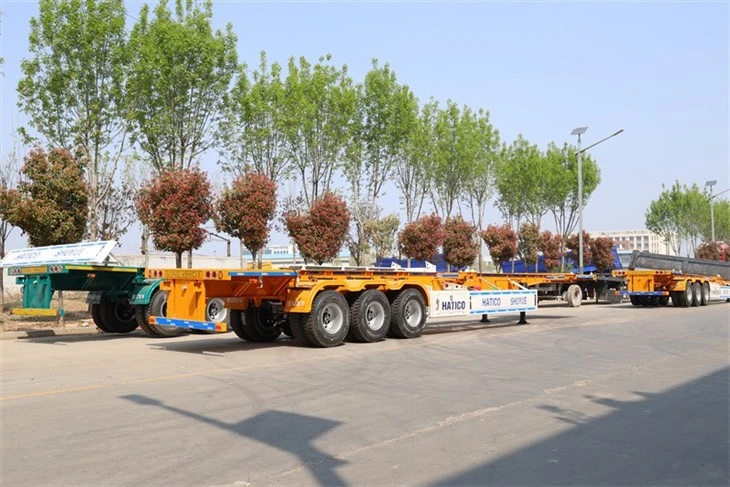

Flatbed semi - trailers are usually more affordable to purchase. Their simpler design results in lower manufacturing costs. However, additional costs may be incurred for securing and covering the cargo, especially if transporting valuable or sensitive items.
Maneuverability
Maneuverability can vary between the two types of trailers. Dry van semi - trailers, with their enclosed structure, may have a slightly larger turning radius due to their overall size and shape. This can make them more challenging to maneuver in tight spaces, such as narrow streets or small loading docks.
Flatbed semi - trailers, being more open and having a simpler design, are often more maneuverable. They can be easier to back into loading areas and navigate through tight spaces, which can be an advantage in urban or congested environments.
Use Cases
The choice between a dry van and a flatbed semi - trailer depends largely on the specific use case. If you are in the business of transporting consumer goods over long distances, a dry van semi - trailer is likely the better choice. The protection it offers for the cargo ensures that it arrives at its destination in good condition, which is crucial for maintaining customer satisfaction.
If your business involves transporting construction materials, heavy machinery, or oversized items, a flatbed semi - trailer is the way to go. Its open design and flexibility in loading and unloading make it ideal for these types of cargo.
Skeleton Transport Semi - trailer
In addition to dry van and flatbed semi - trailers, there is another type of trailer that is worth mentioning: the Skeleton Transport Semi - trailer. This type of trailer is specifically designed for transporting containers. It has a skeletal frame that can securely hold the containers in place. The advantage of a skeleton transport semi - trailer is its ability to quickly load and unload containers, making it a popular choice in the shipping and logistics industry.
Conclusion
In conclusion, the difference between a dry van semi - trailer and a flatbed semi - trailer is vast and multifaceted. Each type has its own set of advantages and disadvantages, and the choice depends on various factors such as cargo type, loading and unloading requirements, security needs, cost, and maneuverability.
As a semi - trailer supplier, I understand the importance of choosing the right trailer for your business. Whether you need a dry van for protecting your consumer goods or a flatbed for hauling heavy and oversized items, I can provide you with high - quality trailers that meet your specific needs. If you're interested in learning more about our semi - trailers or are ready to make a purchase, I encourage you to reach out to me. We can have a detailed discussion about your requirements and find the perfect trailer solution for you.
References
- American Trucking Associations. (2023). Trucking Industry Overview.
- Transport Topics. (2023). Guide to Semi - Trailer Types.


