

When it comes to the world of trailer axles, understanding the difference between a standard and a heavy - duty trailer axle is crucial. As a seasoned trailer axle supplier, I've witnessed firsthand how these two types of axles serve distinct purposes and cater to different customer needs.
Structural Design
Standard trailer axles are designed with a focus on general - purpose use. They are engineered to handle the typical loads that most trailers encounter in day - to - day operations. The beam of a standard axle is usually made of medium - strength steel, which provides sufficient rigidity for normal loads. The shape of the beam is often a simple I - beam or C - beam design, which is cost - effective to manufacture and suitable for a wide range of applications.
On the other hand, heavy - duty trailer axles are built to withstand extreme stress. The beams of heavy - duty axles are typically made from high - strength alloy steels. These steels have a higher yield strength and tensile strength, allowing the axle to carry much heavier loads without deforming. The structural design of heavy - duty axles is also more complex. For example, they may feature reinforced cross - sections or additional bracing to enhance their load - bearing capacity.
Load - Bearing Capacity
The most obvious difference between standard and heavy - duty trailer axles lies in their load - bearing capacity. Standard trailer axles are generally rated for lighter loads, usually ranging from a few thousand pounds to around 10,000 pounds. They are ideal for small to medium - sized trailers such as utility trailers, small boat trailers, and some light - duty cargo trailers.
Heavy - duty trailer axles, however, are designed to handle significantly heavier loads. They can have load ratings of 15,000 pounds or more, and in some industrial applications, they can even support loads exceeding 50,000 pounds. Heavy - duty axles are commonly used in large semi - trailers, lowbed trailers, and other heavy - hauling vehicles. For instance, our Lowbed Series Axle is specifically engineered to meet the high - load requirements of lowbed trailers, which are often used to transport large construction equipment or industrial machinery.
Suspension Compatibility
Standard trailer axles are often paired with simple suspension systems. Leaf spring suspensions are a common choice for standard axles because they are relatively inexpensive and easy to maintain. These suspensions provide a basic level of shock absorption and stability for normal - load trailers.
Heavy - duty trailer axles require more advanced suspension systems to handle the increased weight and stress. Air suspensions are frequently used with heavy - duty axles. Air suspensions offer several advantages, such as better shock absorption, adjustable ride height, and improved stability. They can also help to distribute the load more evenly across the axle, reducing wear and tear. Our German Style Axle is designed to be compatible with high - end air suspension systems, providing a smooth and stable ride even under heavy loads.

Braking Systems
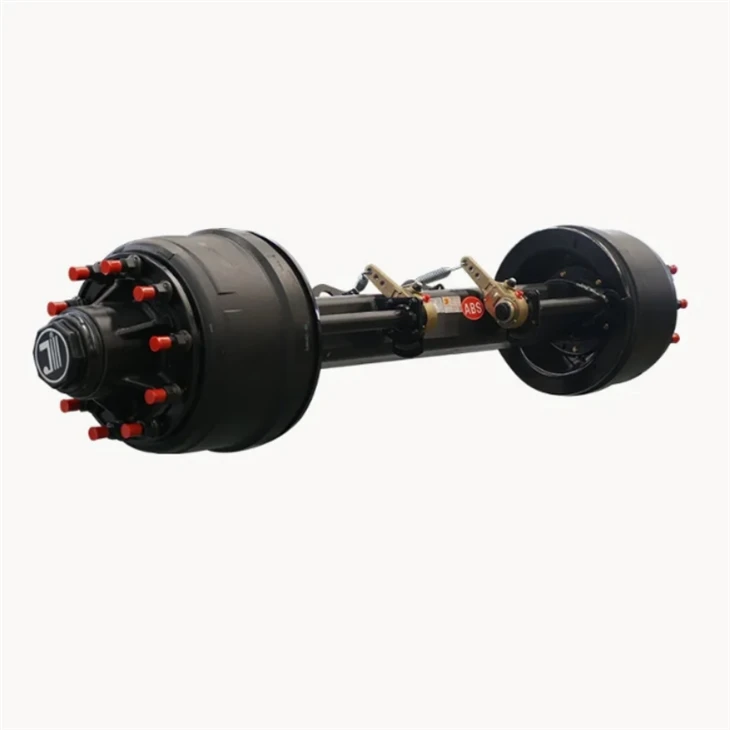
The braking requirements for standard and heavy - duty trailer axles are also different. Standard axles usually come with drum brakes, which are a cost - effective and reliable option for lighter loads. Drum brakes work by pressing brake shoes against the inside of a drum attached to the wheel. They are relatively simple in design and easy to maintain.
Heavy - duty trailer axles often require more powerful braking systems, such as disc brakes. Disc brakes offer better stopping power, especially for heavy - loaded trailers. They work by clamping brake pads onto a rotating disc, which provides more consistent and efficient braking performance. Disc brakes also tend to have better heat dissipation properties, which is important when dealing with heavy loads and long - distance hauling. Our 10T Lightweight Axle is available with high - performance disc brakes to ensure safe and reliable stopping for trailers with heavier payloads.
Durability and Maintenance
Standard trailer axles are built to last under normal operating conditions. However, their components are generally less robust compared to heavy - duty axles. The bearings, seals, and other moving parts of a standard axle may need to be replaced more frequently, especially if the trailer is used frequently or in harsh environments.
Heavy - duty trailer axles are designed for long - term, heavy - use applications. They are built with high - quality materials and precision - engineered components, which means they can withstand more wear and tear. While the initial cost of a heavy - duty axle is higher, the reduced maintenance frequency and longer service life can result in lower overall costs in the long run.
Cost Considerations
The cost of a standard trailer axle is typically lower than that of a heavy - duty axle. This is due to the difference in materials, manufacturing processes, and the complexity of the design. Standard axles are more accessible for customers with budget constraints or those who only need to transport light loads.
Heavy - duty axles, on the other hand, come with a higher price tag. The use of high - strength materials, advanced manufacturing techniques, and more sophisticated components all contribute to the increased cost. However, for businesses or individuals who require the ability to transport heavy loads safely and efficiently, the investment in a heavy - duty axle is often justified.
Application Scenarios
Standard trailer axles are widely used in various light - to - medium - duty applications. They are perfect for weekend warriors who use small trailers to haul camping gear, small boats, or garden equipment. In the commercial sector, they are used in small delivery trailers and some light - industrial applications.
Heavy - duty trailer axles are essential in industries such as construction, mining, and long - haul trucking. In the construction industry, heavy - duty axles are used in trailers that transport large amounts of building materials, heavy machinery, and pre - fabricated structures. In the mining industry, they are used to haul ore and other heavy materials from the mines to processing facilities. Long - haul trucking companies rely on heavy - duty axles to ensure the safe and efficient transportation of large - volume and heavy - weight cargo over long distances.
Making the Right Choice
When choosing between a standard and a heavy - duty trailer axle, it's important to consider your specific needs. First, determine the maximum load that your trailer will need to carry. If you only need to transport light loads on a regular basis, a standard axle will likely suffice. However, if you plan to haul heavy equipment or large amounts of cargo, a heavy - duty axle is the better choice.
You should also consider the frequency of use and the operating conditions. If your trailer will be used frequently or in harsh environments, a heavy - duty axle may offer better durability and reliability. Additionally, think about your budget and long - term cost expectations. While a heavy - duty axle may have a higher upfront cost, it can save you money in the long run through reduced maintenance and longer service life.
As a trailer axle supplier, we are committed to providing our customers with the best - suited axles for their needs. Whether you need a standard axle for a light - duty trailer or a heavy - duty axle for a large - scale hauling operation, we have a wide range of products to choose from. If you have any questions or need assistance in selecting the right trailer axle, please don't hesitate to contact us for a procurement discussion. We look forward to working with you to meet your trailer axle requirements.
References
- Trailer Axle Handbook: A Comprehensive Guide to Axle Design and Application, published by the Trailer Axle Manufacturers Association.
- Engineering Principles of Heavy - Duty Vehicle Axles, a research paper from the Department of Mechanical Engineering at a leading university.
- Industry Standards and Best Practices for Trailer Axles, a report by a recognized industry regulatory body.


