

In the realm of automotive engineering, the quest for enhanced vehicle fuel efficiency is a perpetual journey. Every component of a vehicle plays a role in this pursuit, and among them, axles hold a significant and often under - appreciated position. As an axle supplier, I've witnessed firsthand how these seemingly simple yet crucial parts can have a profound impact on a vehicle's fuel economy.
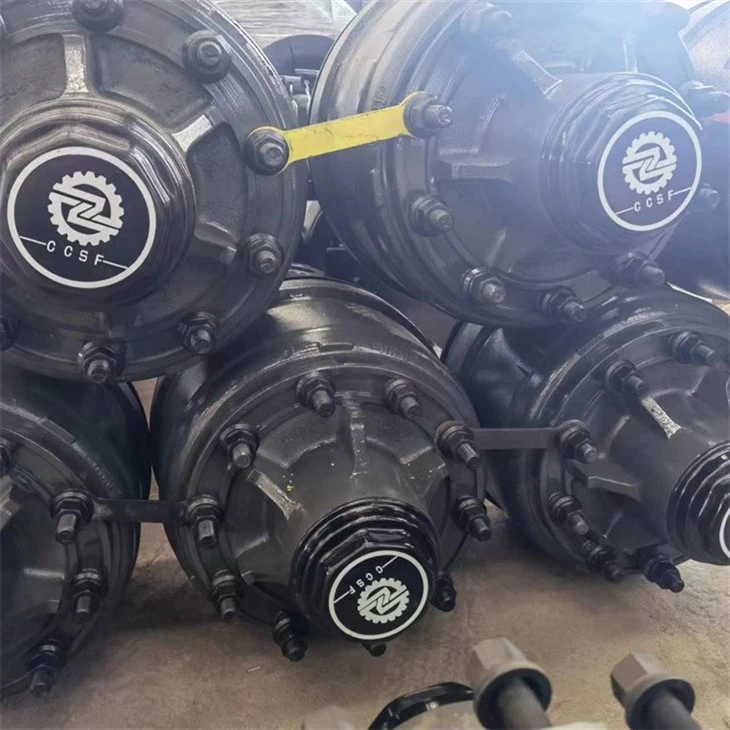

Axles are essentially the central shafts that connect the wheels of a vehicle. They serve multiple purposes, including transmitting power from the engine to the wheels, supporting the weight of the vehicle and its load, and facilitating smooth rotation of the wheels. But how exactly do they relate to fuel efficiency?
Friction and Energy Loss
One of the primary ways axles affect fuel efficiency is through friction. Friction is an inevitable force that opposes motion. In an axle, friction can occur in several places, such as the bearings and the gear systems within the axle assembly. When the engine sends power to the wheels via the axles, any energy lost to friction means that more fuel is required to achieve the same level of performance.
For instance, old - fashioned drum brakes, which are often associated with certain types of axles like the Drum Brake Bridge, can generate a relatively high amount of friction. The brake shoes press against the drum, creating resistance not only when braking but also during normal operation to some extent. This additional resistance forces the engine to work harder, burning more fuel in the process.
On the other hand, modern disc brakes, as seen in Disc Brake Axl, are generally more efficient in terms of friction management. Disc brakes offer better heat dissipation, which means they can maintain more consistent braking performance with less energy loss. This translates into less strain on the engine and, consequently, improved fuel efficiency.
Weight and Fuel Consumption
Axle weight is another critical factor in the fuel - efficiency equation. Heavier axles require more energy to move, which directly correlates to increased fuel consumption. As an axle supplier, we are constantly researching and developing new materials and manufacturing techniques to reduce the weight of our axles without sacrificing strength and durability.
For example, the use of high - strength alloys and advanced composites can significantly reduce the weight of an axle. A lighter axle not only decreases the overall weight of the vehicle but also reduces the rotational mass. Rotational mass is the mass that rotates around an axis, and reducing it can lead to quicker acceleration and deceleration with less energy input.
Hydraulic steering axles, such as the Hydraulic Steering Axle, can also contribute to weight management. These axles are designed to be more compact and lightweight compared to traditional steering systems. By minimizing the weight of the steering component, the vehicle's overall fuel efficiency can be improved.
Axle Design and Aerodynamics
Axle design can also have an impact on a vehicle's aerodynamics, which in turn affects fuel efficiency. The shape and placement of axles can disrupt the smooth flow of air around the vehicle, creating drag. Drag is the force that opposes the motion of the vehicle through the air, and it increases with the square of the vehicle's speed.
A well - designed axle can be integrated into the vehicle's body in a way that minimizes drag. For example, some axles are designed with a streamlined shape to allow air to flow more smoothly around them. Additionally, the positioning of the axle can be optimized to reduce the formation of turbulent air pockets, which can increase drag and fuel consumption.
Gear Ratios and Power Transmission
The gear ratios within an axle assembly are crucial for efficient power transmission. The right gear ratio allows the engine to operate within its optimal power and torque range, which is essential for fuel efficiency. If the gear ratio is too high, the engine will have to work harder at lower speeds, burning more fuel. Conversely, if the gear ratio is too low, the engine may not be able to provide enough power at higher speeds.
As an axle supplier, we work closely with vehicle manufacturers to determine the most appropriate gear ratios for different types of vehicles and driving conditions. By fine - tuning the gear ratios, we can ensure that the power from the engine is transmitted to the wheels in the most efficient way possible, reducing fuel consumption.
Maintenance and Fuel Efficiency
Proper maintenance of axles is also vital for maintaining good fuel efficiency. Axles are subject to wear and tear over time, and if not maintained, this can lead to increased friction, misalignment, and other issues that can negatively impact fuel economy.
Regularly checking and lubricating the bearings in an axle is essential. Bearings that are dry or worn can cause excessive friction, which forces the engine to use more fuel. Additionally, ensuring that the axle is properly aligned is crucial. Misaligned axles can cause uneven tire wear and increased rolling resistance, both of which can lead to higher fuel consumption.
Conclusion
In conclusion, the relationship between axles and vehicle fuel efficiency is multi - faceted. From friction management and weight reduction to aerodynamics and power transmission, axles play a crucial role in determining how much fuel a vehicle consumes. As an axle supplier, we are committed to developing innovative axle solutions that not only meet the performance requirements of vehicles but also contribute to improved fuel efficiency.
If you're in the market for high - quality axles that can enhance your vehicle's fuel efficiency, we invite you to contact us for procurement and further discussions. We have a wide range of axle products, including Drum Brake Bridge, Hydraulic Steering Axle, and Disc Brake Axl, and our team of experts is ready to assist you in finding the perfect solution for your needs.
References
- Bosch Automotive Handbook, 7th Edition
- SAE International's Journal of Automotive Engineering
- "Fundamentals of Vehicle Dynamics" by Thomas D. Gillespie


