

In the intricate web of the global supply chain, semi - trailers play a pivotal and multi - faceted role. As a semi - trailer supplier, I have witnessed firsthand how these vehicles are not just simple transport tools but are integral cogs in the machinery that keeps the supply chain running smoothly.
The Foundation of Freight Movement
At the most basic level, semi - trailers are the workhorses of freight transportation. They are designed to carry a vast array of goods, from consumer products like electronics and clothing to heavy industrial equipment and building materials. The flexibility in their design allows for different types of cargo to be transported efficiently. For instance, a flatbed semi - trailer is ideal for carrying large, bulky items such as construction beams or pre - fabricated modules. On the other hand, a refrigerated semi - trailer, also known as a reefer, is crucial for transporting perishable goods like fresh produce, dairy products, and pharmaceuticals, ensuring that they reach their destination in optimal condition.
The capacity of semi - trailers is another significant factor. They can haul large volumes of goods in a single trip, which is much more efficient than using multiple smaller vehicles. This reduces the number of trips on the road, thereby saving on fuel costs, labor, and reducing the overall carbon footprint. In a supply chain where cost - efficiency and sustainability are becoming increasingly important, this large - scale carrying capacity is a major advantage.

Connecting the Dots in the Supply Chain
Semi - trailers are the connectors between different nodes in the supply chain. They bridge the gap between manufacturers, distribution centers, and retailers. After goods are produced in a factory, they are loaded onto semi - trailers for transportation to a distribution center. Here, the goods are sorted, stored, and then re - loaded onto other semi - trailers for delivery to various retailers or end - users.
This connection is not limited to domestic supply chains. Semi - trailers are also a vital part of international trade. They are often used in conjunction with other modes of transportation such as ships and trains. For example, goods arriving at a port are transferred from a container ship to a semi - trailer for inland transportation. This intermodal transportation system allows for seamless movement of goods across different regions and countries, enabling global trade to thrive.
Just - in - Time Inventory Management
In today's fast - paced business environment, just - in - time (JIT) inventory management has become a popular strategy for many companies. JIT aims to reduce inventory holding costs by having goods arrive at the exact time they are needed in the production process or for sale. Semi - trailers play a crucial role in making JIT possible.
With their ability to provide timely and reliable transportation, semi - trailers ensure that raw materials can be delivered to the production line precisely when they are required. This reduces the need for large warehouses to store excess inventory, saving on storage costs and minimizing the risk of inventory obsolescence. For retailers, semi - trailers enable them to restock their shelves quickly, ensuring that products are always available for customers.
Responsiveness to Market Demands
The supply chain needs to be responsive to changes in market demands. Semi - trailers offer the flexibility to adapt to these changes. For example, during peak shopping seasons like Christmas or Black Friday, retailers may need to increase their inventory levels rapidly. Semi - trailers can be quickly mobilized to transport additional goods from distribution centers to stores.
In addition, semi - trailers can be used to transport goods to new markets or emerging regions. As consumer preferences shift and new markets open up, companies can use semi - trailers to test the waters and introduce their products in these areas. This ability to respond quickly to market dynamics gives companies a competitive edge in the global marketplace.
A Focus on a Specific Type: Skeleton Transport Semi - trailer
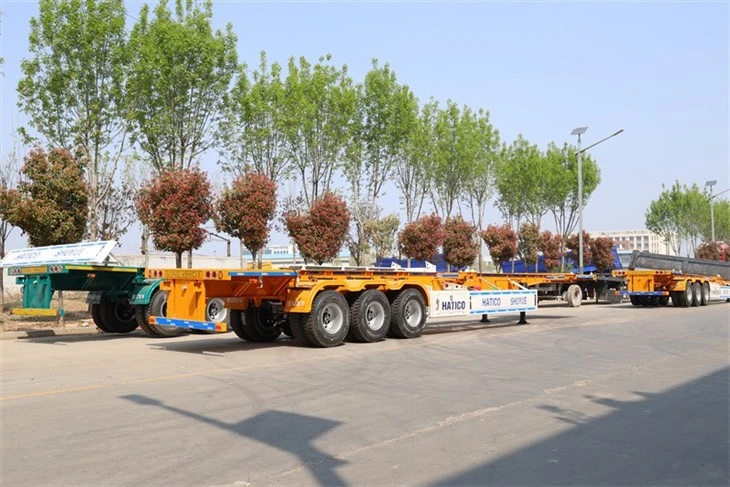
One type of semi - trailer that deserves special mention is the Skeleton Transport Semi - trailer. This type of semi - trailer is specifically designed for transporting containers. It has a lightweight and skeletal frame, which makes it highly efficient for carrying standard shipping containers.
The Skeleton Transport Semi - trailer offers several advantages. Firstly, its lightweight design reduces fuel consumption, which is not only cost - effective but also environmentally friendly. Secondly, it is highly customizable, allowing it to be adapted to different container sizes and transportation requirements. This makes it a popular choice for logistics companies and shipping operators involved in container transportation within the supply chain.
Quality and Reliability in Supply
As a semi - trailer supplier, we understand the importance of providing high - quality and reliable semi - trailers. In the supply chain, any breakdown or delay in transportation can have a significant impact on the entire process. Our semi - trailers are built to the highest standards, using the latest manufacturing techniques and materials.
We conduct rigorous quality control checks at every stage of the production process to ensure that our semi - trailers are durable, safe, and efficient. This commitment to quality gives our customers peace of mind, knowing that their goods will be transported safely and on time.
The Future of Semi - Trailers in the Supply Chain
The role of semi - trailers in the supply chain is likely to evolve in the future. With the advancement of technology, we can expect to see more intelligent and autonomous semi - trailers on the road. These trailers will be equipped with sensors and communication systems that can optimize routes, monitor cargo conditions, and improve safety.
In addition, there will be a greater focus on sustainability. Semi - trailers will be designed to be more energy - efficient, using alternative fuels such as natural gas or electricity. This will not only reduce the environmental impact but also help companies meet their sustainability goals.
Connecting for Business
If you are in the market for high - quality semi - trailers for your supply chain needs, we are here to help. Our team of experts can provide you with detailed information about our products, including specifications, pricing, and customization options. Whether you need a standard semi - trailer or a specialized one like the Skeleton Transport Semi - trailer, we have the solutions to meet your requirements.
Contact us today to start a discussion about how our semi - trailers can enhance the efficiency and effectiveness of your supply chain. Let's work together to build a more seamless and successful supply chain for your business.
References
- Christopher, M. (2016). Logistics & Supply Chain Management. Pearson.
- Bowersox, D. J., Closs, D. J., & Cooper, M. B. (2013). Supply Chain Logistics Management. McGraw - Hill.
- Jacobs, F. R., & Chase, R. B. (2014). Operations and Supply Management: The Core. McGraw - Hill.


