

When it comes to the world of semi trailers, understanding the materials used in their construction is crucial. As a semi trailer supplier, I've had the privilege of witnessing firsthand how different materials impact the performance, durability, and cost of these essential hauling vehicles. In this blog post, I'll delve into the various materials commonly used in semi trailer manufacturing, exploring their properties, advantages, and applications.

Steel: The Traditional Choice
Steel has long been the go - to material for semi trailer construction, and for good reason. It offers a high strength - to - weight ratio, which means it can withstand heavy loads while still being relatively lightweight. There are two main types of steel used: mild steel and high - strength steel.
Mild steel is a cost - effective option that is relatively easy to work with during the manufacturing process. It can be cut, welded, and formed into various shapes, making it suitable for a wide range of semi trailer components. However, it is more susceptible to corrosion than some other materials, so proper coating and maintenance are required to ensure its longevity.
High - strength steel, on the other hand, is stronger and lighter than mild steel. It can handle heavier loads without adding excessive weight to the trailer. This makes it ideal for applications where fuel efficiency and payload capacity are critical. For example, in long - haul transportation, using high - strength steel can significantly reduce the overall weight of the trailer, leading to lower fuel consumption and increased profitability for the operator.
Aluminum: A Lightweight Alternative
Aluminum has gained popularity in semi trailer manufacturing in recent years due to its lightweight nature. Compared to steel, aluminum can be up to 50% lighter, which translates into significant fuel savings over the life of the trailer. Additionally, aluminum is highly resistant to corrosion, eliminating the need for frequent painting and rust prevention treatments.
One of the main advantages of aluminum is its recyclability. At the end of the trailer's life, a large portion of the aluminum can be recycled and reused, making it an environmentally friendly choice. However, aluminum is more expensive than steel, which can increase the initial cost of the semi trailer. Despite this, the long - term savings in fuel and maintenance often offset the higher upfront investment.
Aluminum is commonly used in the construction of tanker trailers, where the weight savings can have a substantial impact on the payload capacity. It is also used in the side panels and roofs of dry van trailers to reduce weight and improve aerodynamics.
Composite Materials: The Future of Semi Trailer Construction
Composite materials, such as fiberglass and carbon fiber, are emerging as promising options for semi trailer manufacturing. These materials offer a unique combination of high strength, low weight, and excellent corrosion resistance.
Fiberglass composites are made by combining glass fibers with a resin matrix. They are relatively easy to mold into complex shapes, which allows for greater design flexibility in semi trailer construction. Fiberglass is also known for its durability and impact resistance, making it suitable for applications where the trailer may be subject to rough handling or harsh environmental conditions.
Carbon fiber composites are even stronger and lighter than fiberglass. They have a very high strength - to - weight ratio, which makes them ideal for high - performance semi trailers. However, carbon fiber is extremely expensive, which has limited its widespread use in the semi trailer industry. As the cost of carbon fiber production continues to decline, it is likely that we will see more carbon fiber - reinforced semi trailers on the road in the future.
Other Materials Used in Semi Trailer Construction
In addition to steel, aluminum, and composites, several other materials play important roles in semi trailer construction.
Wood is still used in some semi trailers, particularly for flooring. Hardwood, such as oak or maple, is often preferred for its strength and durability. However, wood requires regular maintenance to prevent rot and deterioration.
Plastics are also used in various components of semi trailers. For example, plastic liners can be used in tanker trailers to prevent corrosion and contamination of the cargo. Plastic bumpers and fairings are used to improve the trailer's aerodynamics and reduce fuel consumption.
Application of Different Materials in Specific Semi Trailers
Let's take a closer look at how these materials are used in specific types of semi trailers.
Skeleton Transport Semi - trailer
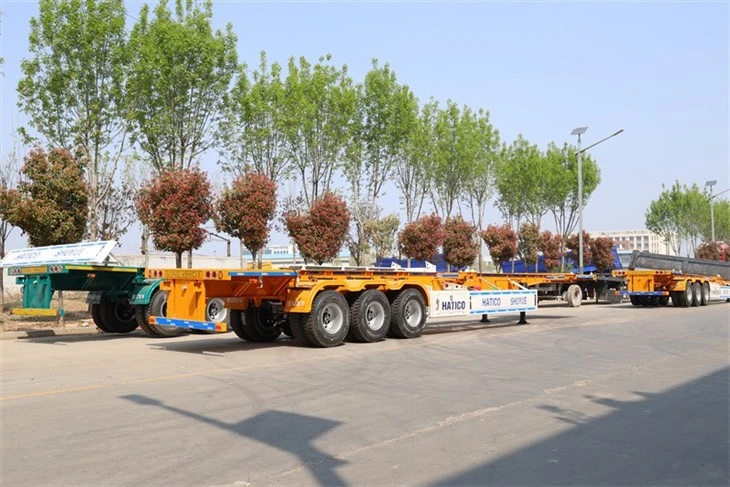
The Skeleton Transport Semi - trailer is designed to carry containerized cargo. For the frame of the skeleton trailer, high - strength steel is commonly used. This ensures that the trailer can handle the heavy weight of the containers, while still remaining relatively lightweight for better fuel efficiency. The cross - members and side rails are often made of steel to provide the necessary structural support.
Some modern skeleton trailers may also incorporate aluminum components, such as the landing gear or the side guards. These aluminum parts help to reduce the overall weight of the trailer, making it more economical to operate.
Dry Van Trailers
Dry van trailers are used to transport general freight. The frame of a dry van trailer is typically made of steel, while the walls and roof can be constructed using a combination of materials. Aluminum is often used for the exterior panels due to its lightweight and corrosion - resistant properties. Fiberglass composites may also be used in the interior lining to provide insulation and protection for the cargo. The flooring of dry van trailers is commonly made of wood or a composite material for strength and durability.
Tanker Trailers
Tanker trailers are used to transport liquids or gases. For transporting non - corrosive liquids, mild steel may be used for the tank. However, for transporting corrosive substances, stainless steel or aluminum is preferred. Stainless steel offers excellent corrosion resistance, while aluminum provides significant weight savings. Composite materials are also being explored for use in tanker trailers due to their corrosion resistance and lightweight nature.
Why Choose the Right Materials for Semi Trailers
As a semi trailer supplier, I always emphasize the importance of choosing the right materials for each application. The choice of materials can have a significant impact on the performance, durability, and cost of the semi trailer.
If you're looking for a cost - effective option with good strength, steel may be the right choice. However, if you're concerned about fuel efficiency and corrosion resistance, aluminum or composite materials may be more suitable. For specialized applications, such as transporting hazardous materials, the choice of materials becomes even more critical.
Contact for Procurement
If you're in the market for a semi trailer, whether it's a Skeleton Transport Semi - trailer or any other type, I encourage you to contact us. Our team of experts can help you select the right materials and design the perfect semi trailer to meet your specific needs. We have a wide range of trailers in our inventory, and we can also customize trailers according to your requirements.
References
- "The Science of Materials in Vehicle Manufacturing" - Automotive Engineering Journal
- "Aluminum in Transportation: Advantages and Applications" - Metals and Alloys Research Institute
- "Composite Materials for Heavy - Duty Vehicles" - Journal of Composite Structures


