

Are built in support legs compatible with all types of bases?
As a supplier of built - in support legs, this is a question I often encounter from customers. The compatibility of built - in support legs with different types of bases is a critical aspect that can significantly impact the performance and safety of various equipment. In this blog, we will delve deep into this topic, exploring the factors that determine compatibility and providing insights for potential buyers.
Understanding Built - in Support Legs
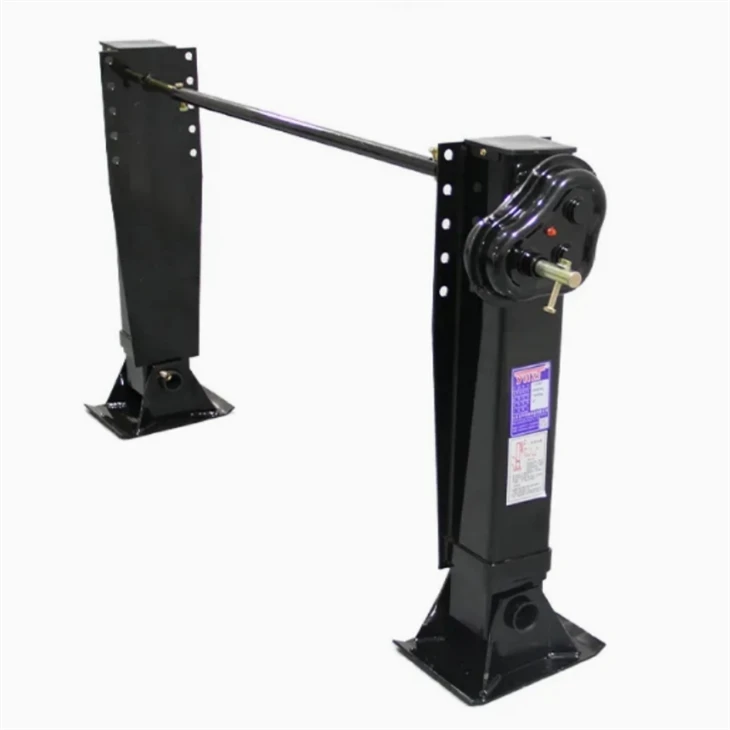
Built - in support legs are designed to provide stability and support to a wide range of structures and equipment. They are commonly used in industries such as transportation, construction, and manufacturing. These support legs are integrated into the design of the equipment, providing a more streamlined and efficient solution compared to external support mechanisms.
The main functions of built - in support legs include distributing the weight of the equipment evenly across the base, preventing tipping or shifting, and ensuring the overall stability of the structure. They are typically made from high - strength materials such as steel or aluminum to withstand heavy loads.
Types of Bases
There are several types of bases that built - in support legs may need to be compatible with.
Flat Bases
Flat bases are the most common type of base. They are simple and straightforward, providing a stable surface for the equipment to rest on. Many standard built - in support legs are designed to work well with flat bases. The flat surface allows for easy installation and ensures that the support legs can make full contact with the base, distributing the load evenly.

Uneven or Irregular Bases
In some cases, the base may be uneven or irregular. This could be due to the nature of the terrain or the design of the installation site. For example, in construction sites, the ground may be rough and uneven. Built - in support legs need to be able to adapt to these conditions. Some support legs come with adjustable features that can compensate for the unevenness, such as telescopic legs or legs with adjustable feet.
Specialized Bases
There are also specialized bases designed for specific types of equipment. For instance, the bases of semi - trailers are designed to meet the unique requirements of transportation. The Semi - trailer Plate Spring is an important component of the semi - trailer base, which provides suspension and shock absorption. Built - in support legs for semi - trailers need to be compatible with these specialized bases to ensure proper functioning and safety.
Factors Affecting Compatibility
Several factors determine whether built - in support legs are compatible with a particular base.
Load Capacity
The load capacity of the support legs and the base must be matched. If the support legs are not capable of handling the weight of the equipment and its load, it can lead to failure. Similarly, if the base cannot support the load transferred by the support legs, it may crack or deform. It is essential to carefully calculate the load requirements and choose support legs and a base with appropriate load - bearing capacities.
Size and Dimensions
The size and dimensions of the support legs and the base are crucial. The support legs must fit properly on the base, both in terms of the footprint and the height. If the support legs are too large or too small for the base, it can affect the stability and functionality of the equipment. For example, if the support legs are too short, they may not be able to provide sufficient support, while if they are too long, they may interfere with other components of the equipment.
Mounting Mechanism
The mounting mechanism of the support legs also plays a role in compatibility. Different bases may require different mounting methods. Some bases may have pre - drilled holes for easy installation, while others may require welding or other forms of attachment. Built - in support legs need to be designed with a mounting mechanism that is compatible with the base.
Compatibility in Different Industries
Let's take a look at how compatibility issues play out in different industries.
Transportation Industry
In the transportation industry, especially for trailers, the compatibility of built - in support legs is of utmost importance. Trailers are often subject to various road conditions and loads. The Landing Gear is a type of support leg commonly used in trailers. It needs to be compatible with the trailer base to ensure safe loading and unloading. If the support legs are not compatible, it can lead to instability during the loading process, which can be dangerous for both the operators and the cargo.
Construction Industry
In the construction industry, equipment such as cranes and scaffolding rely on built - in support legs. The bases in construction sites are often uneven, so the support legs need to be able to adjust to the terrain. Compatibility with the base is essential to prevent the equipment from tipping over, which could cause serious accidents.
Manufacturing Industry
In the manufacturing industry, machinery is often installed on specialized bases. Built - in support legs need to be compatible with these bases to ensure the smooth operation of the machinery. For example, some high - precision manufacturing equipment requires a very stable base, and the support legs must be able to provide the necessary stability.
Ensuring Compatibility
As a supplier of built - in support legs, we take several steps to ensure compatibility.
Customization
We offer customization services to meet the specific needs of our customers. If a customer has a unique base or specific requirements, we can design and manufacture support legs that are tailored to their needs. This may involve adjusting the load capacity, size, or mounting mechanism of the support legs.
Technical Support
Our team of experts provides technical support to our customers. We can help customers determine the compatibility of our support legs with their bases and provide advice on installation and maintenance. We also offer training programs to ensure that our customers can use our products safely and effectively.
Quality Control
We have strict quality control measures in place to ensure that our support legs meet the highest standards. Our products are tested under various conditions to ensure that they are reliable and compatible with different types of bases.
Conclusion
In conclusion, built - in support legs are not compatible with all types of bases. The compatibility depends on several factors, including the type of base, load capacity, size, and mounting mechanism. However, with proper design, customization, and technical support, we can ensure that our built - in support legs can be used effectively with a wide range of bases.
If you are in the market for built - in support legs and have concerns about compatibility with your base, we encourage you to contact us. Our team of experts is ready to assist you in finding the right solution for your needs. Whether you are in the transportation, construction, or manufacturing industry, we can provide you with high - quality support legs that are compatible with your bases. Start a conversation with us today to explore the possibilities of improving the stability and performance of your equipment.
References
- Engineering textbooks on mechanical design and structural stability
- Industry standards and guidelines for support legs and equipment bases
- Case studies from various industries on the use of built - in support legs


