

Can an Axle be Repaired?
As an axle supplier, I often encounter questions from customers regarding the repairability of axles. Axles are crucial components in various vehicles and machinery, playing a vital role in supporting the weight of the vehicle and transmitting power from the engine to the wheels. Understanding whether an axle can be repaired is essential for both cost - effectiveness and the overall performance of the equipment.
Types of Axles and Their Common Issues
There are different types of axles, each with its own set of characteristics and potential problems. For instance, Hydraulic Steering Axle is commonly used in applications where precise steering control is required. These axles are often found in heavy - duty trucks, buses, and some industrial machinery. One of the common issues with hydraulic steering axles is hydraulic fluid leakage. This can occur due to worn - out seals or damaged hoses. Over time, the constant pressure and movement within the hydraulic system can cause these components to deteriorate.
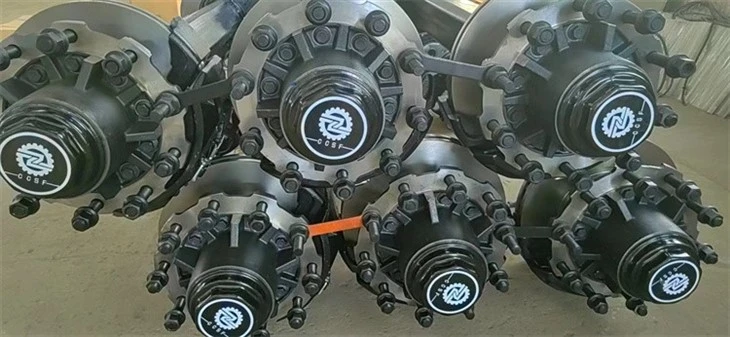
Disc Brake Axl and Disc - Brake Axle are designed to provide efficient braking performance. However, they are also prone to certain problems. Brake pads on disc - brake axles wear out over time, and the rotors can become warped or damaged. If the brake system is not properly maintained, it can lead to reduced braking efficiency and even safety hazards.
Factors Affecting Axle Repairability
The repairability of an axle depends on several factors. Firstly, the extent of the damage is a crucial determinant. Minor damage, such as a small crack in the axle housing or a worn - out bearing, can often be repaired. For example, if a bearing is making noise or showing signs of excessive wear, it can usually be replaced relatively easily. Mechanics can remove the old bearing, clean the axle housing, and install a new bearing. This type of repair is relatively straightforward and can restore the axle to its proper functioning.
On the other hand, severe damage, such as a major crack or a broken axle shaft, may make repair unfeasible. A cracked axle shaft can compromise the structural integrity of the axle, and attempting to repair it may not be safe. In such cases, it is often recommended to replace the entire axle.
The age and type of the axle also play a role. Older axles may have parts that are no longer readily available, which can make repairs more difficult and expensive. Additionally, some high - performance or specialized axles may require specific tools and expertise for repair. If the necessary parts or skills are not accessible, it may be more practical to replace the axle.
Repairing Axles: A Step - by - Step Process
When it comes to repairing an axle, a systematic approach is essential. The first step is a thorough inspection. This involves visually examining the axle for any signs of damage, such as cracks, leaks, or worn - out parts. Specialized tools, such as a magnetic particle inspection machine, can be used to detect hidden cracks in the axle shaft.
Once the damage has been identified, the next step is to disassemble the axle. This requires careful removal of various components, such as the wheels, brake assemblies, and differential. Each part should be labeled and stored properly to ensure correct reassembly.
After disassembly, the damaged parts are either repaired or replaced. As mentioned earlier, worn - out bearings can be replaced, and minor cracks in the axle housing can be welded by a qualified welder. However, it is important to note that welding an axle should be done with extreme caution, as improper welding can weaken the axle and lead to further problems.
Once all the necessary repairs or replacements have been made, the axle is reassembled. This involves carefully installing all the components in the correct order and ensuring proper alignment. After reassembly, the axle is tested to ensure that it is functioning correctly. This may involve a test drive or the use of diagnostic equipment to check for any issues.
Cost Considerations
Repairing an axle can be a cost - effective solution in many cases, especially when compared to the cost of replacing an entire axle. However, the cost of repair can vary significantly depending on the type and extent of the damage. Minor repairs, such as replacing a bearing or a seal, may cost a few hundred dollars. On the other hand, more extensive repairs, such as replacing an axle shaft or a differential, can cost several thousand dollars.
It is also important to consider the long - term costs. A poorly repaired axle may require additional repairs in the future, which can add up over time. Therefore, it is often advisable to have the repair done by a professional with experience in axle repair.
When to Replace Instead of Repair
While repair is a viable option for many axle problems, there are situations where replacement is the better choice. If the axle is severely damaged, as mentioned earlier, replacement is usually the safest and most practical option. Additionally, if the cost of repair is close to or exceeds the cost of a new axle, it may be more economical to replace the axle.
Another factor to consider is the technological advancements in axle design. Newer axles may offer improved performance, durability, and efficiency compared to older models. If a vehicle or machinery is being upgraded or if the existing axle is outdated, replacing it with a newer model can provide long - term benefits.
Conclusion
In conclusion, whether an axle can be repaired depends on a variety of factors, including the extent of the damage, the age and type of the axle, and cost considerations. Minor damage can often be repaired through a systematic process of inspection, disassembly, repair or replacement of parts, and reassembly. However, severe damage may require axle replacement.
As an axle supplier, I am committed to providing high - quality axles and offering expert advice on axle repair and replacement. If you are facing axle - related issues or are in the market for a new axle, I encourage you to contact me for a detailed consultation. I can help you determine the best course of action based on your specific needs and circumstances. Whether it's a Hydraulic Steering Axle, Disc Brake Axl, or Disc - Brake Axle, I have the expertise and products to meet your requirements.
References
- Automotive Axle Handbook: A Comprehensive Guide to Axle Design and Maintenance.
- Journal of Vehicle Engineering: Articles on Axle Repair and Performance.
- Industry Standards for Axle Manufacturing and Repair.


