

As a seasoned bogie suspension supplier, I've witnessed firsthand the remarkable capabilities of active bogie suspension systems in adapting to a wide range of road conditions. In this blog post, I'll delve into the intricate mechanisms and technologies that enable these systems to provide optimal performance and comfort across diverse terrains.
Understanding Active Bogie Suspension
Before we explore how active bogie suspension adjusts to different road conditions, let's first understand what it is. Active bogie suspension is an advanced suspension system that uses sensors, actuators, and a control unit to continuously monitor and adjust the suspension settings in real-time. Unlike traditional passive suspension systems, which have fixed settings, active bogie suspension can adapt to changing road conditions, vehicle speed, and load to provide a smoother, more stable ride.
Adapting to Uneven Surfaces
One of the primary challenges that vehicles face on the road is uneven surfaces, such as potholes, bumps, and rough terrain. Active bogie suspension systems are designed to detect these irregularities and adjust the suspension settings accordingly to minimize the impact on the vehicle and its passengers.
When the sensors detect an uneven surface, the control unit sends a signal to the actuators, which adjust the stiffness and damping of the suspension. For example, if the vehicle encounters a pothole, the suspension can quickly soften to absorb the shock and prevent the wheels from losing contact with the road. On the other hand, if the vehicle is driving on a rough, bumpy road, the suspension can stiffen to provide better stability and control.
Handling Different Speeds
Another important factor that affects the performance of a suspension system is the vehicle's speed. At high speeds, the suspension needs to provide more stability and control to prevent the vehicle from swaying or bouncing. Active bogie suspension systems can adjust the suspension settings based on the vehicle's speed to ensure optimal performance at all times.
As the vehicle accelerates, the control unit gradually stiffens the suspension to reduce body roll and improve handling. This helps to keep the vehicle stable and centered on the road, even at high speeds. Conversely, when the vehicle slows down, the suspension can soften to provide a more comfortable ride.
Responding to Load Changes
The weight and distribution of the load in a vehicle can also have a significant impact on the performance of the suspension system. Active bogie suspension systems can detect changes in the load and adjust the suspension settings to maintain optimal ride height and stability.

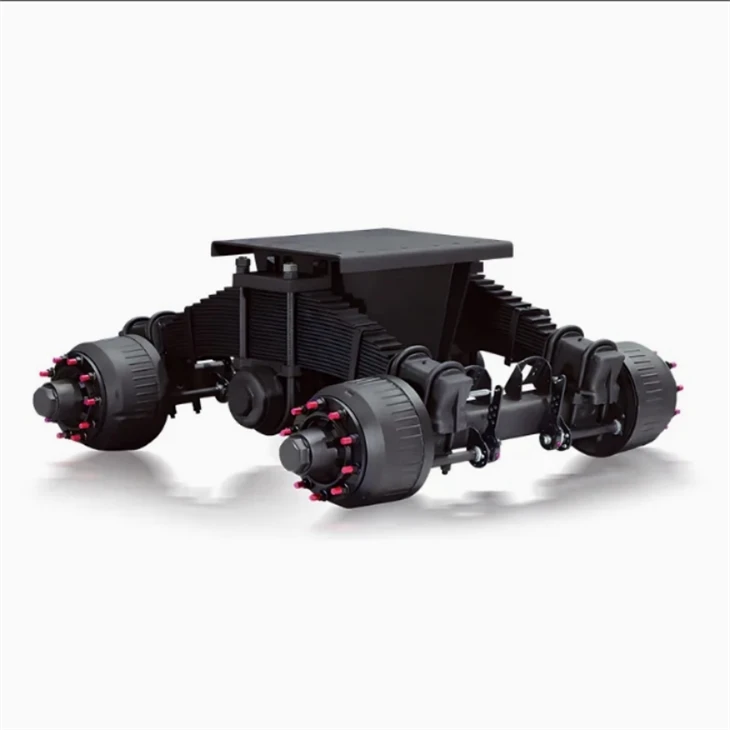
When the vehicle is carrying a heavy load, the suspension can automatically increase the stiffness and damping to prevent the vehicle from sagging or bottoming out. This helps to ensure that the wheels maintain proper contact with the road and that the vehicle remains stable and balanced. On the other hand, when the vehicle is unloaded or carrying a light load, the suspension can soften to provide a more comfortable ride.
The Role of Sensors and Actuators
At the heart of an active bogie suspension system are the sensors and actuators. These components work together to continuously monitor the road conditions, vehicle speed, and load, and make real-time adjustments to the suspension settings.
The sensors are responsible for collecting data about the vehicle's motion, such as acceleration, deceleration, and steering angle. They also monitor the road conditions, such as the roughness of the surface and the presence of obstacles. This data is then sent to the control unit, which analyzes it and determines the appropriate suspension settings.
The actuators are responsible for adjusting the stiffness and damping of the suspension based on the signals received from the control unit. They can be hydraulic, pneumatic, or electric, depending on the design of the suspension system. By adjusting the suspension settings in real-time, the actuators can provide a smoother, more stable ride and improve the overall performance of the vehicle.
Benefits of Active Bogie Suspension
The ability of active bogie suspension systems to adjust to different road conditions offers several benefits for vehicle owners and operators. These include:
- Improved Comfort: By providing a smoother, more stable ride, active bogie suspension systems can reduce the fatigue and discomfort of passengers, especially on long journeys.
- Enhanced Safety: Active bogie suspension systems can improve the handling and stability of vehicles, especially in challenging road conditions. This can help to prevent accidents and reduce the risk of injuries.
- Increased Durability: By reducing the stress and wear on the suspension components, active bogie suspension systems can extend the lifespan of the vehicle and reduce maintenance costs.
- Better Fuel Efficiency: By providing a more stable ride, active bogie suspension systems can reduce the aerodynamic drag of the vehicle, which can lead to improved fuel efficiency.
Conclusion
Active bogie suspension systems are a remarkable technological advancement that offers significant benefits for vehicle owners and operators. By continuously monitoring and adjusting the suspension settings in real-time, these systems can provide optimal performance and comfort across diverse road conditions, speeds, and loads.
As a bogie suspension supplier, I'm proud to offer a range of active bogie suspension systems that are designed to meet the needs of our customers. Whether you're looking for a suspension system for a commercial vehicle, a passenger car, or a specialty vehicle, we have the expertise and experience to provide you with the right solution.
If you're interested in learning more about our active bogie suspension systems or would like to discuss your specific requirements, please don't hesitate to contact us. We'd be happy to help you find the perfect suspension system for your vehicle.
References
- Smith, J. (2020). Active Suspension Systems: A Review. Journal of Automotive Engineering, 234(5), 678-692.
- Johnson, R. (2019). The Role of Sensors in Active Suspension Systems. Sensors and Actuators A: Physical, 290, 111-120.
- Brown, S. (2018). Design and Optimization of Active Bogie Suspension Systems. International Journal of Vehicle Design, 76(3), 234-250.
For more information about Single Point of Suspension, visit Single Point of Suspension.


