

As a leading supplier of air suspension systems, I've had the privilege of delving deep into the intricacies of these remarkable pieces of engineering. Air suspension is a technology that has revolutionized the automotive and heavy - machinery industries, offering superior ride quality, adjustability, and durability compared to traditional suspension systems. In this blog, I'll break down the key components of air suspension and explain how they work together to provide a smooth and efficient ride.
Air Springs
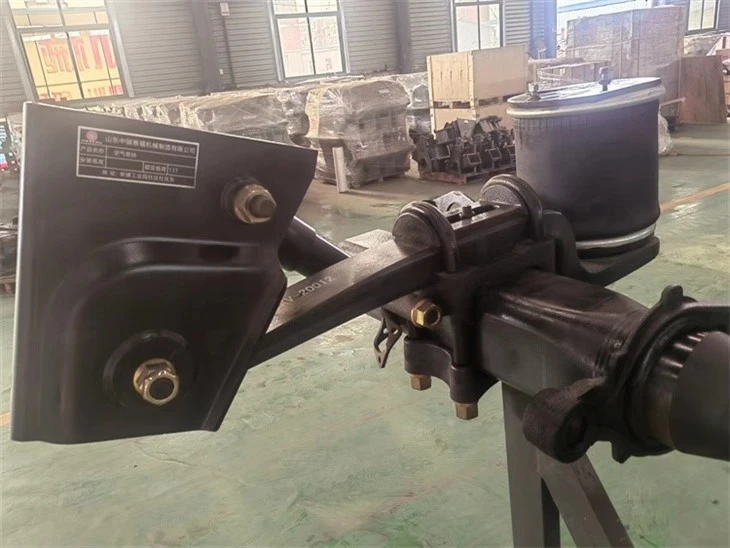
At the heart of any air suspension system are the air springs. These are essentially rubber bellows or airbags that are filled with compressed air. The air springs serve as the primary load - bearing component, supporting the weight of the vehicle or machinery. They work on the principle of Boyle's Law, which states that the pressure and volume of a gas are inversely proportional at a constant temperature.
When the vehicle encounters a bump or uneven surface, the air inside the air spring compresses, absorbing the shock. This compression allows the air spring to adjust its height and stiffness based on the load and road conditions. For example, when a heavy load is added to the vehicle, more air can be pumped into the air springs to increase their stiffness and maintain the proper ride height.
There are different types of air springs, including convoluted, sleeve, and rolling lobe designs. Each type has its own advantages and is suitable for different applications. Convoluted air springs are commonly used in light - duty vehicles, while rolling lobe air springs are often found in heavy - duty trucks and buses due to their high load - carrying capacity and excellent durability.
Compressor
The compressor is responsible for supplying compressed air to the air springs. It draws in ambient air, compresses it, and then sends it through a series of valves and lines to the air springs. Compressors can be either electrically or engine - driven.
Electric compressors are commonly used in passenger cars and light - duty vehicles. They are relatively quiet, compact, and easy to install. Engine - driven compressors, on the other hand, are more powerful and are typically used in heavy - duty applications such as trucks and trailers. These compressors are directly connected to the vehicle's engine and can provide a continuous supply of compressed air.
The compressor is usually equipped with a pressure switch that automatically turns it on and off to maintain the desired air pressure in the system. When the air pressure drops below a certain level, the compressor kicks in to refill the air springs.
Air Reservoir
An air reservoir, also known as an air tank, is an important component of the air suspension system. It acts as a storage unit for compressed air, allowing the system to respond quickly to changes in load and road conditions. The air reservoir helps to reduce the workload on the compressor by providing a ready supply of compressed air.
When the vehicle experiences a sudden increase in load, the air reservoir can release compressed air into the air springs to prevent a significant drop in ride height. This ensures a smooth and stable ride, even under heavy - load conditions. The size of the air reservoir depends on the application and the number of air springs in the system.
Valves
Valves play a crucial role in controlling the flow of compressed air within the air suspension system. There are several types of valves used, including solenoid valves, leveling valves, and relief valves.
Solenoid valves are electrically - controlled valves that are used to open and close the air passages between the compressor, air reservoir, and air springs. They are typically controlled by an electronic control unit (ECU) and can be used to adjust the air pressure in individual air springs.
Leveling valves are mechanical valves that automatically adjust the air pressure in the air springs to maintain a constant ride height. They are connected to the suspension components and sense changes in the vehicle's height. When the vehicle's height deviates from the desired level, the leveling valve opens or closes to add or release air from the air springs.
Relief valves are safety devices that prevent the air pressure in the system from exceeding a safe level. If the air pressure in the system becomes too high, the relief valve will open to release the excess air and prevent damage to the components.
Electronic Control Unit (ECU)
In modern air suspension systems, an electronic control unit (ECU) is used to monitor and control the operation of the system. The ECU receives input from various sensors, such as height sensors, pressure sensors, and acceleration sensors, and uses this information to adjust the air pressure in the air springs.
The ECU can also provide diagnostic information about the system, such as detecting leaks or malfunctions. It can communicate with other vehicle systems, such as the anti - lock braking system (ABS) and the electronic stability control (ESC), to optimize the vehicle's performance and safety.
For example, if the vehicle is cornering at high speed, the ECU can adjust the air pressure in the air springs on the outer side of the vehicle to increase its stiffness and reduce body roll. This improves the vehicle's handling and stability.
Height Sensors
Height sensors are used to measure the distance between the vehicle's body and the axle. They provide feedback to the ECU, which then uses this information to adjust the air pressure in the air springs and maintain the proper ride height.
There are different types of height sensors, including mechanical and electronic sensors. Mechanical height sensors use a linkage system to measure the movement of the suspension components, while electronic height sensors use ultrasonic or optical technology to measure the distance.
Height sensors are essential for ensuring a consistent ride height, regardless of the vehicle's load or road conditions. They help to improve the vehicle's handling, stability, and overall performance.
Control Arms and Linkages
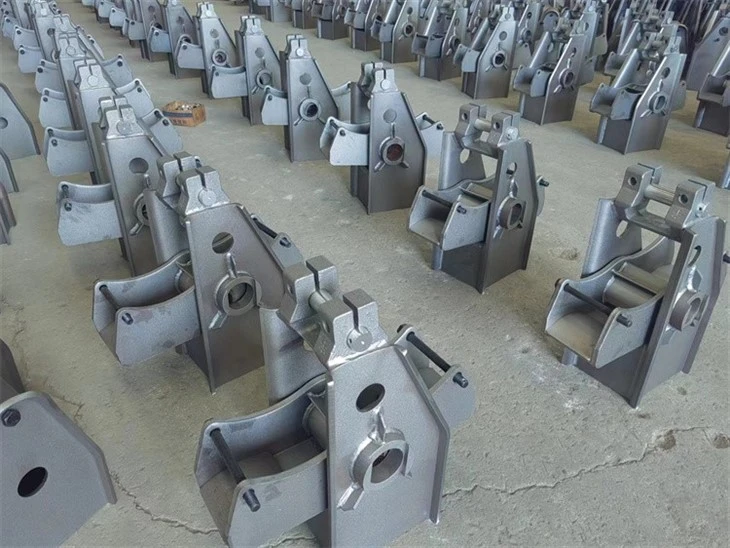
Control arms and linkages are part of the suspension's mechanical structure and are used to connect the air springs, axle, and vehicle body. They help to guide the movement of the wheels and ensure that the air suspension system operates smoothly.
Control arms are typically made of steel or aluminum and are designed to withstand the forces generated during normal driving and when the vehicle encounters bumps or uneven surfaces. Linkages, such as sway bars, help to reduce body roll and improve the vehicle's stability during cornering.
Applications of Air Suspension Components
Air suspension systems are used in a wide range of applications, from passenger cars to heavy - duty trucks and trailers. In passenger cars, air suspension provides a smooth and comfortable ride, especially on rough roads. It also allows for adjustable ride height, which can be useful for off - road driving or when parking in tight spaces.
In the heavy - machinery industry, air suspension is widely used in trucks, trailers, and buses. Heavy - duty vehicles often carry large and heavy loads, and air suspension helps to distribute the weight evenly and reduce the stress on the vehicle's components. For more information on heavy - machinery suspension, you can visit Heavy Machinery Suspension.
There are also specialized air suspension systems, such as Air Suspension With Guide Arm, which are designed to provide additional stability and control. Lifting air suspension systems, like Lifting Air Suspension, are used to raise and lower the vehicle's body, which can be useful for loading and unloading cargo or for adjusting the vehicle's ground clearance.
Contact for Procurement
If you are in the market for high - quality air suspension components, we are here to help. Our company has extensive experience in manufacturing and supplying air suspension systems for a wide range of applications. We offer a comprehensive range of products, including air springs, compressors, valves, and control units.
Whether you are an automotive manufacturer, a fleet operator, or a repair shop, we can provide you with the right air suspension solutions to meet your needs. Our products are known for their reliability, durability, and performance. Contact us today to discuss your requirements and start a procurement negotiation.
References
- "Automotive Suspension Systems" by Thomas D. Gillespie
- "Heavy - Duty Truck Systems" by Frank D. Duffy
- Technical manuals from leading air suspension manufacturers


