

Hey there! I'm part of a bogie suspension supplier team, and I've been knee - deep in the world of bogie suspensions for quite some time. Today, I wanna talk about the differences between bogie suspension in mining vehicles and regular vehicles.
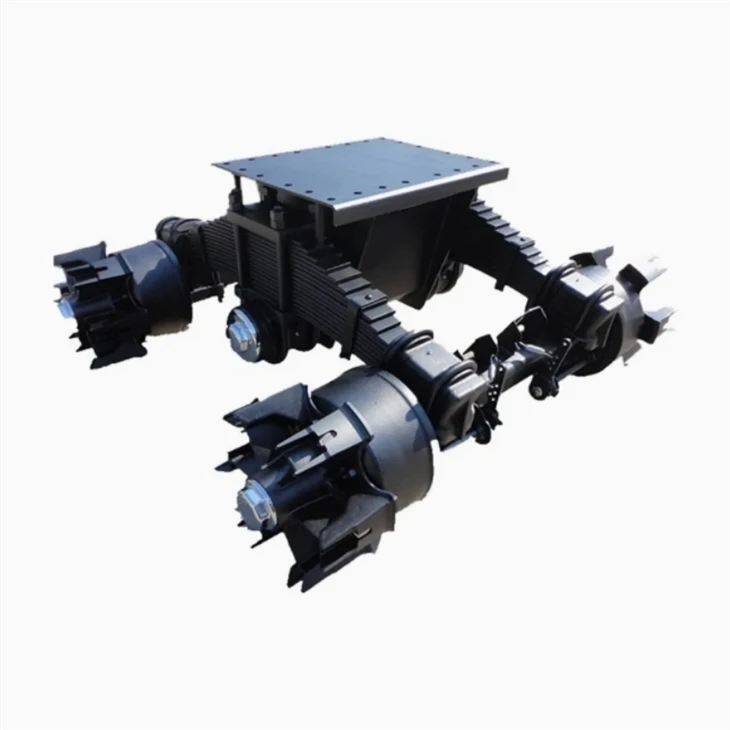
Let's start with the basics. A bogie suspension is a key component in many vehicles. It's responsible for supporting the vehicle's weight, providing a smooth ride, and ensuring proper handling. But when it comes to mining vehicles and regular vehicles, the requirements for bogie suspension are worlds apart.
1. Load - Bearing Capacity
Mining vehicles are like heavy - duty workhorses. They're designed to carry massive loads, sometimes up to hundreds of tons. For example, large mining dump trucks can haul over 400 tons of ore or other materials. This means the bogie suspension in mining vehicles has to be incredibly robust. The springs, axles, and other components are engineered to handle these extreme weights without failing.
On the other hand, regular vehicles, whether they're cars, SUVs, or light - duty trucks, carry much lighter loads. A typical family sedan might have a payload capacity of a few hundred kilograms at most. So, the bogie suspension in regular vehicles doesn't need to be as beefy. The components are smaller and less rugged because they're not subjected to the same kind of stress.
2. Terrain Adaptability
Mining sites are often located in some of the harshest terrains on the planet. There are uneven ground, large rocks, and deep ruts everywhere. The bogie suspension in mining vehicles has to be able to adapt to these conditions. It needs to provide a high level of ground clearance to avoid hitting obstacles. Also, it has to be able to flex and adjust to keep all the wheels on the ground, even when driving over extremely bumpy surfaces. This helps maintain traction and stability, which is crucial when you're moving a huge amount of weight.

Regular vehicles, however, are mainly designed to operate on paved roads or well - maintained dirt roads. The terrain is generally much smoother, and the suspension doesn't need to deal with such extreme variations in surface level. Most regular vehicle suspensions are optimized for a comfortable ride on relatively flat surfaces, with features like shock absorbers tuned to reduce vibrations and bumps on normal roads.
3. Durability and Maintenance
Mining vehicles work in a very tough environment. They're exposed to dust, dirt, and harsh chemicals. The bogie suspension in these vehicles has to be highly durable to withstand these conditions. The materials used are often more resistant to corrosion and wear. For instance, the axles might be made of high - strength steel alloys that can handle the constant abuse.
But even with high - quality materials, the suspension in mining vehicles still requires frequent maintenance. Because of the heavy loads and rough terrain, components can wear out quickly. Regular inspections, lubrication, and part replacements are necessary to keep the suspension in good working order.
In contrast, regular vehicles usually operate in cleaner and less demanding environments. The bogie suspension in regular vehicles has a longer lifespan between maintenance intervals. The parts don't wear out as quickly, and the maintenance procedures are generally less complex.
4. Design Complexity
The bogie suspension in mining vehicles is a complex piece of machinery. It often has multiple axles and sophisticated linkage systems to distribute the weight evenly and provide better stability. Some mining vehicle suspensions use advanced hydraulic or pneumatic systems to adjust the ride height and stiffness depending on the load and terrain.
Regular vehicle suspensions, while still important, are generally less complex. Most cars have a simple independent suspension system that provides a good balance between comfort and handling. There are fewer components and less need for complex control systems.
5. Cost
Given the differences in load - bearing capacity, terrain adaptability, durability, and design complexity, it's no surprise that the cost of bogie suspension for mining vehicles is much higher than that for regular vehicles. The materials, engineering, and manufacturing processes for mining vehicle suspensions are more expensive. Also, the higher maintenance costs over the vehicle's lifespan add to the overall expense.
Regular vehicle suspensions are more affordable. They're mass - produced, and the technology is more standardized, which helps keep the costs down.
Now, I wanna mention a specific type of suspension that might be of interest. Check out Single Point of Suspension. It's a unique design that has its own set of advantages and might be suitable for certain applications, whether in mining or regular vehicles.
If you're in the market for bogie suspension, whether for mining vehicles or regular ones, we're here to help. We've got a wide range of products that can meet your specific needs. Our team of experts can work with you to find the best suspension solution for your vehicles. Whether you need a heavy - duty suspension for a mining truck or a comfortable and reliable suspension for your daily driver, we've got you covered. So, if you're interested in learning more or starting a procurement discussion, don't hesitate to reach out.
References
- Smith, J. (2018). Vehicle Suspension Systems: Design and Analysis. Publisher XYZ.
- Johnson, A. (2020). Mining Vehicle Technology and Engineering. ABC Publications.


