

Hey there! As a supplier of trailer suspensions, I've been getting a lot of questions lately about the ideal camber for a trailer suspension. So, I thought I'd take a moment to break it down and share some insights with you.
First off, let's talk about what camber is. Camber refers to the angle of the wheels relative to the vertical axis when viewed from the front or rear of the trailer. There are three types of camber: positive camber, negative camber, and zero camber. Positive camber means the top of the wheel tilts outward from the trailer, while negative camber means the top of the wheel tilts inward. Zero camber, as the name suggests, means the wheel is perfectly vertical.
So, what's the ideal camber for a trailer suspension? Well, it depends on a few factors, such as the type of trailer, the load it carries, and the driving conditions.
For Light - Duty Trailers
If you're dealing with light - duty trailers, a slight positive camber can be beneficial. Light - duty trailers are often used for carrying smaller loads, like personal items, small boats, or ATVs. A little positive camber (around 1 - 2 degrees) can help with steering response. When the trailer is in motion, the positive camber allows the tire to make better contact with the road surface during turns. This is because as the trailer leans into a turn, the tire flattens out more evenly, improving traction.
If you're in the market for a light - duty suspension, check out our Light Duty Suspension. It's designed to handle these types of trailers with ease and can be adjusted to achieve the right camber for your specific needs.
For Heavy - Duty Trailers
Heavy - duty trailers, on the other hand, usually require a different approach. These trailers carry large and heavy loads, such as construction equipment, livestock, or large amounts of cargo. Negative camber is often preferred in this case. A negative camber of about 1 - 3 degrees can help distribute the weight of the load more evenly across the tire. When a heavy - duty trailer is loaded, the weight can cause the suspension to sag and the wheels to tilt outward. By starting with a negative camber, we can counteract this effect and keep the tires in better contact with the road. This not only improves traction but also reduces tire wear. Uneven tire wear is a common problem in heavy - duty trailers, and the right camber can go a long way in preventing it.
Impact of Driving Conditions
Driving conditions also play a huge role in determining the ideal camber. If you're mostly driving on straight, flat roads, a more neutral camber setting might be suitable. This allows for a smooth and stable ride, with minimal tire wear. However, if you frequently drive on roads with a lot of curves or uneven surfaces, you may need to adjust the camber accordingly.
For example, on roads with a lot of left - hand turns (like in countries where people drive on the right - hand side), a slightly different camber setting on the left and right wheels might be beneficial. The left - hand wheels could have a bit more negative camber to handle the extra stress during those turns.
Adjusting Camber
Now, you might be wondering how to adjust the camber of a trailer suspension. Well, most modern trailer suspensions come with adjustable components. You can use specialized tools to make these adjustments. It's important to note that camber adjustment should be done carefully. If the camber is set too far off, it can lead to a host of problems, such as poor handling, excessive tire wear, and even safety issues.
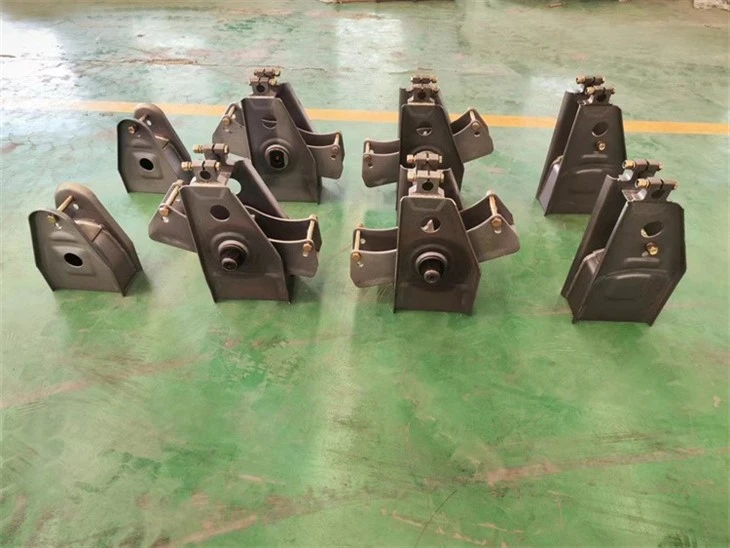
If you're not confident in making these adjustments yourself, it's always a good idea to consult a professional. As a trailer suspension supplier, we also offer support and guidance on camber adjustment. Our team of experts can help you determine the ideal camber for your specific trailer and assist you in making the necessary adjustments.

Importance of Regular Checks
Regularly checking the camber of your trailer suspension is crucial. Over time, the suspension components can wear out, and the camber can change. This can happen due to normal use, hitting potholes, or even just the natural settling of the suspension. By checking the camber regularly, you can catch any issues early on and make the necessary adjustments.
A simple visual inspection can give you an idea of whether the camber is off. Look at the tires from the front or rear of the trailer. If the top of the tire seems to be tilting significantly inward or outward, it's a sign that the camber needs to be checked. You can also measure the camber using a camber gauge, which is a relatively inexpensive tool that can be found at most auto parts stores.
The Cost - Benefit Analysis
Getting the right camber for your trailer suspension is not just about performance; it's also about cost - effectiveness. By having the ideal camber, you can extend the life of your tires. Tires are a significant expense, and reducing premature wear can save you a lot of money in the long run.
In addition, a well - adjusted camber improves the handling of the trailer, making it safer and more comfortable to tow. This can reduce the risk of accidents and make your driving experience more enjoyable.
Conclusion
In conclusion, the ideal camber for a trailer suspension depends on the type of trailer, the load it carries, and the driving conditions. For light - duty trailers, a slight positive camber can be beneficial, while heavy - duty trailers often require negative camber. Regular checks and adjustments are essential to maintain the right camber and ensure optimal performance.
If you're looking for high - quality trailer suspensions and need help determining the ideal camber for your trailer, don't hesitate to get in touch. We're here to assist you in making the best choices for your trailer. Whether you need a new suspension or just some advice on camber adjustment, our team is ready to help. Let's work together to get your trailer running at its best!
References
- Automotive Engineering Handbook, various editions
- Trailer Suspension Manufacturer's Guides
- Research papers on vehicle dynamics and suspension systems


