

What is the weight capacity of a typical trailer axle?
As a supplier of trailer axles, I often get asked about the weight capacity of a typical trailer axle. It's a crucial question, as understanding the weight - bearing capabilities of trailer axles is essential for ensuring safe and efficient transportation. In this blog post, I'll delve into the factors that determine the weight capacity of a trailer axle, typical ranges, and how different types of axles vary in their load - handling abilities.
Factors Affecting the Weight Capacity of a Trailer Axle
1. Material and Design
The material used in the construction of a trailer axle plays a significant role in its weight capacity. High - strength steel is commonly used because of its excellent balance between strength and cost. Axles made from alloy steels can have even higher strength - to - weight ratios, allowing them to carry heavier loads without excessive weight.
The design of the axle also matters. For example, an axle with a larger diameter and wall thickness can generally support more weight. Axles with a solid design are often stronger than those with a hollow design, although hollow axles can be lighter, which is beneficial in some applications where weight reduction is a priority.
2. Axle Type
There are different types of trailer axles, each with its own weight - capacity characteristics.
-
Single Axle Trailers: These are the simplest type of trailer axles. They are commonly used on small trailers, such as utility trailers or small boat trailers. Single axles typically have a lower weight capacity, usually ranging from 1,000 to 3,500 pounds. This is because all the weight is concentrated on one axle, and there is less distribution of the load compared to multi - axle trailers.
-
Tandem Axle Trailers: Tandem axles consist of two axles placed close to each other. They are widely used on medium - sized trailers, such as travel trailers and some cargo trailers. The weight capacity of tandem axle trailers can range from 3,500 to 10,000 pounds or more. The dual axles distribute the load more evenly, reducing the stress on each individual axle and allowing for a higher overall weight capacity.
-
Triple Axle Trailers: As the name suggests, triple axle trailers have three axles. They are commonly found on large trailers, such as heavy - duty cargo trailers and some luxury travel trailers. Triple axle trailers can have a weight capacity of 10,000 pounds or much higher, sometimes exceeding 20,000 pounds. The additional axle further distributes the load, enabling the trailer to carry extremely heavy loads.
3. Suspension System
The suspension system of a trailer is closely related to the axle's weight capacity. A good suspension system helps to absorb shocks and vibrations, ensuring that the load is evenly distributed across the axles. Leaf spring suspensions are a common and cost - effective option. They can handle a moderate amount of weight and are relatively simple to maintain. Air suspensions, on the other hand, are more advanced and can adjust to different load levels. They are often used on high - end trailers with large weight capacities, as they provide a smoother ride and better load - distribution capabilities.
Typical Weight Capacity Ranges of Different Trailer Axles
Light - Duty Axles
Light - duty axles are designed for small trailers that carry relatively light loads. These axles usually have a weight capacity of up to 3,500 pounds. They are commonly used on trailers for personal use, such as small utility trailers for gardening tools or small boat trailers. Our 10T Lightweight Axle is an option for those looking for a lightweight yet reliable axle for lighter - duty applications.
Medium - Duty Axles
Medium - duty axles can handle loads ranging from 3,500 to 10,000 pounds. They are suitable for medium - sized trailers, such as small to medium - sized travel trailers and some commercial cargo trailers. Tandem axle configurations are often used in this category to achieve the desired weight capacity. Our German Style Axle offers excellent performance and durability for medium - duty applications.
Heavy - Duty Axles
Heavy - duty axles are built to carry large loads, typically over 10,000 pounds. These axles are used on large trailers, such as heavy - duty semi - trailers and industrial trailers. Triple axle or multiple - axle configurations are common in heavy - duty applications. Our Lowbed Series Axle is designed to meet the demanding requirements of heavy - duty transportation, providing high weight capacity and reliability.
Importance of Staying Within the Weight Capacity
It's crucial to stay within the weight capacity of a trailer axle. Overloading an axle can have serious consequences. Firstly, it can cause excessive wear and tear on the axle, suspension components, and tires. This can lead to premature failure of these parts, increasing maintenance costs and the risk of breakdowns. Secondly, overloading can affect the handling and stability of the trailer. It can make the trailer more difficult to control, especially during braking and cornering, increasing the risk of accidents.
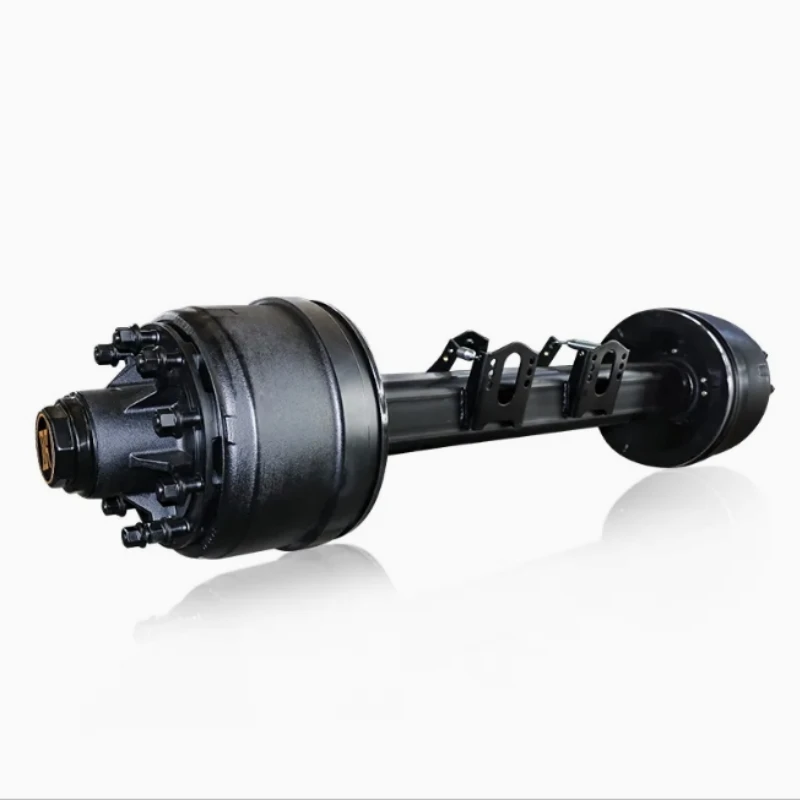

How to Determine the Right Axle for Your Trailer
When choosing a trailer axle, you need to consider several factors. First, determine the maximum weight of the load you plan to carry. This includes the weight of the cargo, the trailer itself, and any additional equipment. Then, consider the type of trailer you have and its intended use. For example, if you have a small utility trailer for occasional use, a light - duty axle may be sufficient. However, if you have a large commercial trailer that will be used frequently to transport heavy loads, a heavy - duty axle is necessary.
It's also a good idea to consult with an expert or a trailer axle supplier. We have years of experience in the industry and can provide you with professional advice on choosing the right axle for your specific needs.
Conclusion
In conclusion, the weight capacity of a typical trailer axle depends on various factors, including material, design, axle type, and suspension system. Light - duty axles can handle up to 3,500 pounds, medium - duty axles range from 3,500 to 10,000 pounds, and heavy - duty axles can carry over 10,000 pounds. It's essential to stay within the weight capacity of the axle to ensure safety and avoid premature wear and tear.
If you're in the market for a trailer axle, whether it's a light - duty, medium - duty, or heavy - duty one, we're here to help. We offer a wide range of high - quality trailer axles that are designed to meet different weight - capacity requirements. Contact us to discuss your needs and start the procurement process. We look forward to working with you to find the perfect trailer axle solution for your transportation needs.
References
- "Trailer Axle Design and Engineering Principles" - A technical guide on trailer axle design and load - bearing capabilities.
- "The Handbook of Trailer Suspension Systems" - A comprehensive resource on trailer suspension and its impact on axle weight capacity.


