

Hey there, folks! As a bogie suspension supplier, I'm super stoked to share with you all how bogie suspension works. It might sound like some high - tech jargon, but trust me, once you get the hang of it, it's pretty cool stuff.
First off, let's understand what a bogie is. In simple terms, a bogie is a framework that holds a set of wheels on a vehicle, mainly trains, trailers, and some heavy - duty trucks. And the bogie suspension system is what keeps that framework and the wheels in harmony with the road or track conditions.

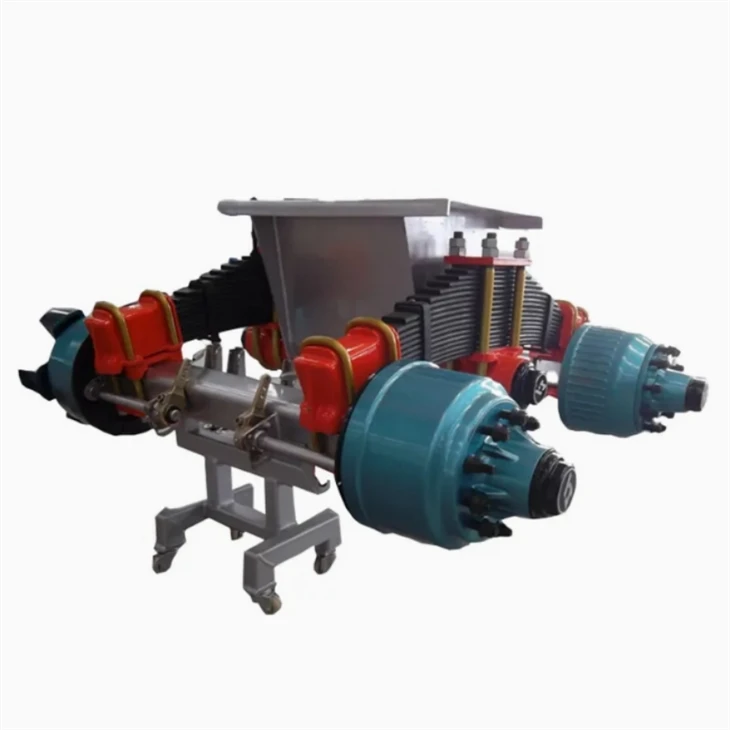
Think of it like your shock absorbers in a regular car. When you drive over a bump, your shock absorbers soak up the impact, making your ride smooth. Similarly, a bogie suspension system deals with the irregularities of the surface the vehicle is traveling on, whether it's a bumpy dirt road or the sometimes - uneven railway tracks.
Now, how does it actually work? Well, at its core, a bogie suspension system uses a combination of springs, dampers, and various linkages. Springs are the primary component that takes on the load. There are different types of springs used in bogie suspensions, such as coil springs, leaf springs, and air springs.
Coil springs are pretty common. They work by compressing and expanding as the wheel hits an obstruction or changes in the load on the vehicle occurs. When a wheel goes over a bump, the coil spring compresses, absorbing the energy of the impact. Then, as the wheel gets past the bump, the spring expands back to its original shape, pushing the wheel back down to the surface.
Leaf springs, on the other hand, are made up of multiple layers of metal strips stacked on top of each other. They are known for their durability and are often used in heavy - duty applications. When the wheel experiences a force, the leaf spring bends, and the layers slide over each other slightly, distributing the load evenly across the spring. This helps in maintaining better stability, especially when the vehicle is carrying a large amount of weight.
Air springs are a bit more advanced. They use compressed air to support the load. You can adjust the air pressure inside the spring, which is great because it allows you to adapt to different load conditions. For instance, if you're hauling a light load, you can reduce the air pressure, and for a heavy load, you can increase it. This adjustability makes air - sprung bogie suspensions ideal for vehicles that need to handle variable loads on a regular basis.
But springs alone aren't enough. That's where dampers come in. Dampers, also known as shock absorbers, control the movement of the springs. Without dampers, the springs would keep bouncing up and down after an impact, making the ride really uncomfortable and also potentially dangerous. Dampers work by converting the kinetic energy of the spring's movement into heat energy. They have a piston inside a cylinder filled with a special fluid. As the spring moves, the piston forces the fluid through small holes, creating resistance. This resistance slows down the spring's movement, making sure that the vehicle remains stable and controlled.
Linkages are another crucial part of the bogie suspension system. They connect the bogie to the vehicle's chassis and help in transferring the forces between different components. There are various types of linkages, such as trailing arms, leading arms, and wishbones. These linkages determine how the wheels move relative to the chassis. For example, a trailing arm linkage allows the wheels to move in a more controlled path when going over bumps, ensuring that the vehicle's alignment remains correct.
One particular type of bogie suspension that I'd like to mention is the Single Point of Suspension. This design is pretty unique. In a single - point suspension, all the forces acting on the bogie are transferred through a single connection point to the vehicle. This simplifies the design and can offer some benefits in terms of weight reduction and ease of maintenance. Since there's only one main point of connection, it's easier to manage the forces and keep track of any wear and tear.
The bogie suspension also has to work in harmony with the braking system. When you apply the brakes on a vehicle, it causes a forward weight transfer. The bogie suspension needs to adapt to this change in weight distribution to maintain stability. The springs and dampers adjust to the increased load on the front wheels (in a forward - braking scenario), preventing the vehicle from nose - diving too much.
In railway applications, the bogie suspension plays an even more critical role. Trains travel at high speeds, and the suspension system needs to ensure a smooth ride for passengers and protect the cargo from damage. Railway bogies are designed to handle the high - speed forces and the constant vibration from the tracks. The springs and dampers are carefully calibrated to deal with the frequency of the track irregularities, which can be different depending on the type of railway line.
For trailers, bogie suspensions are essential for long - haul trips. They need to be robust enough to handle the long hours on the road and the different road conditions encountered. A well - designed bogie suspension can reduce the stress on the trailer's frame and the cargo, leading to less damage and longer - lasting equipment.
Now, you might be thinking, "Why should I choose your bogie suspensions?" Well, as a supplier, we put a lot of effort into research and development. Our bogie suspensions are made with high - quality materials that can withstand the toughest conditions. We have a team of experts who constantly test and improve our designs to make sure they are reliable and efficient.
Whether you're looking for a bogie suspension for a train, a heavy - duty truck, or a trailer, we've got you covered. Our products are designed to meet all your needs, from basic functionality to advanced features like adjustable air springs. And the best part is, we offer great customer service. If you have any questions about installation, maintenance, or any other aspect of our bogie suspensions, our team is always ready to help.
If you're interested in learning more about our bogie suspension products or want to discuss a potential purchase, don't hesitate to reach out. We're more than happy to have a chat and see how we can work together to find the perfect bogie suspension solution for your vehicle.
References:
- Various engineering textbooks on vehicle suspension systems.
- Industry research papers on bogie suspension design and development.


