

Air Suspension
Air suspension is a type of vehicle suspension powered by an electric or engine-driven air pump or compressor. This compressor pumps the air into a flexible bellows, usually made from textile-reinforced rubber. Unlike hydropneumatic suspension, which offers many similar features, air suspension does not use pressurized liquid, but pressurized air. The air pressure inflates the bellows, and raises the chassis from the axle. Air suspension is used in place of conventional steel springs in heavy vehicle applications such as buses and trucks, and in some passenger cars. It is widely used on semi trailers and trains. The purpose of air suspension is to provide a smooth, constant ride quality, but in some cases is used for sports suspension. Modern electronically controlled systems in automobiles and light trucks almost always feature self-leveling along with raising and lowering functions.
Advantages of Air Suspension
Superior ride quality
When healthy, an air suspension provides a smooth, high-quality ride that is unmatched by almost any other type of system. Their adjustable damping allows drivers to feel as if they are gliding over road surfaces even if they’ re filled with cracks and small potholes.
More balanced handling
Air ride systems make adjustments for driving behaviors in addition to changes in the road. They can adjust suspension resistance in situations like cornering, allowing them to compensate for changes in weight distribution, resulting in a car that takes turns without feeling like it’ s leaning to one side or the other.
More even wear and tear
Because air suspension systems can actively respond to changes while driving, they are superior to other systems when it comes to evenly distributing stress on a vehicle’ s components. That leads to more even wear and tear across components, especially those that are part of a car’ s steering and braking systems.
Adjustability
Many air suspensions allow drivers to adjust the ride height from the cockpit. This has many uses, including raising the height for off-road situations or lowering it when driving at higher speeds.
-
 Air SuspensionTrailer air suspension is an advanced suspension system that uses air springs as elastic components to regulate the ground clearance of semi-trailers by forming compressed air through an airAdd to Inquiry
 -
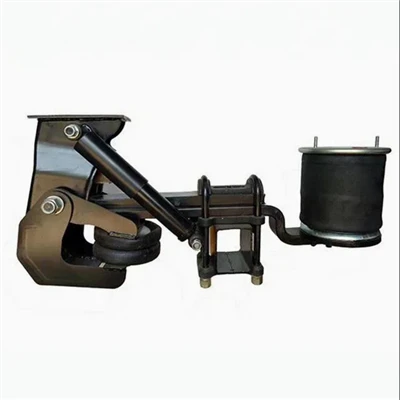 Air Suspension With Guide ArmAn air suspension system with a guiding arm combines the benefits of pneumatic spring technology with mechanical guidance for optimized vehicle performance. This design is commonly used in commercialAdd to Inquiry
 -
 Lifting Air SuspensionOur Lifting Air Suspension is engineered to redefine your driving experience, seamlessly blending enhanced off-road capability with superior on-road comfort. Designed for a wide range of passengerAdd to Inquiry
 -
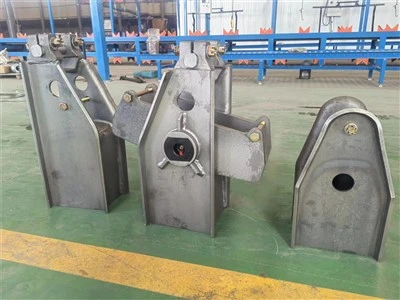 Heavy Machinery SuspensionThe heavy-duty American suspension of trailers is indeed designed to handle the transportation of large amounts of goods or heavy loads, and it has shown significant advantages in scenarios such asAdd to Inquiry


Why Choose Us
Our factory
Located at the foot of the world-renowned Shuibo Liangshan Mountain, the section of National Highway 220 from Jinan to Zhengzhou is a prime location. Our company is a comprehensive production enterprise that integrates processing, manufacturing, and installation. We have strong mechanical processing capabilities, strong technical strength, and complete testing methods.
Our product
Special vehicle accessories such as disc brake axle, drum brake axle, air suspension, mechanical suspension, semi-trailer support leg, traction pin, air storage cylinder, etc.
Production equipment
Xiang Hengmai CNC sawing machine, hydraulic gate type shearing machine, screw compressor, frozen compressed air dryer, open fixed table press, Xuzhou pressure machinery hydraulic press, four column hydraulic press, suspension double gun automatic welding machine, shot blasting cleaning equipment, centrifugal ventilation fan, 2 sets of Dehong environmental protection spraying equipment, 15 sets of secondary protection welding machines, and 1 set of environmental protection centralized welding smoke purification treatment equipment.
Our service
We adhere to the policy of implementing customer needs and expectations, carrying out customer satisfaction work, implementing the goal of quality first, controlling product production and market, timely communicating with customers in case of after-sales issues, and providing solutions.
Over the last decade or so air suspension has become popular in the custom automobile culture: street rods, trucks, cars, and even motorcycles may have air springs. They are used in these applications to provide an adjustable suspension which allows vehicles to sit extremely low, yet be able rise to a level high enough to maneuver over obstacles and inconsistencies on paved surfaces. These systems generally employ small, electric or engine-driven air compressors which sometimes fill an on-board air receiver tank which stores compressed air for use in the future without delay. It is important that the tank is sized for the task and can be calculated using a specific formula involving the compressor output, standard atmospheric pressure and compressed pressure.
High-pressured industrial gas bottles are sometimes used in more radical air suspension setups. Either of these reservoir systems may be fully adjustable, being able to adjust each wheel's air pressure individually. This allows the user to tilt the vehicle side-to-side, front-to-back, in some instances "hit a 3-wheel" or even "hop" the entire vehicle into the air. When a pressure reservoir is present, the flow of air or gas is commonly controlled with pneumatic solenoid valves. This allows the user to make adjustments by simply pressing a momentary-contact electric button or switch.The installation and configuration of these systems varies for different makes and models but the underlying principle remains the same. The metal spring is removed, and an air bag, also referred to as an air spring, is inserted or fabricated to fit in the place of the factory spring. When air pressure is supplied to the air bag, the suspension can be adjusted either up or down.
For vehicles with leaf spring suspension such as pickup trucks, the leaf spring is sometimes eliminated and replaced with a multiple-bar linkage. These bars are typically in a trailing arm configuration and the air spring may be situated vertically between a link bar or the axle housing and a point on the vehicle's frame. In other cases, the air bag is situated on the opposite side of the axle from the main link bars on an additional cantilever member. If the main linkage bars are oriented parallel to the longitudinal (driving) axis of the car, the axle housing may be constrained laterally with either a Panhard rod or Watt's linkage. In some cases, two of the link bars may be combined into a triangular shape which effectively constrains the vehicles axle laterally.
Often, owners may desire to lower their vehicle to such an extent that they must cut away portions of the frame for more clearance. A reinforcement member commonly referred to as a C-notch is then bolted or welded to the vehicle frame in order to maintain structural integrity. Specifically on pickup trucks, this process is termed "notching" because a portion (notch) of the cargo bed may also be removed, along with the wheel wells, to provide maximum axle clearance. For some, it is desirable to have the vehicle so low that the frame rests on the ground when the air bags are fully deflated. Owners generally choose between having their cars 'tuck' their wheels into the arches when their air suspension is fully lowered or alternatively they can choose to go for 'fitment' which in partnership with stretched tyres sees the arch itself fit in between the tyre and rim. Air suspension is also a common suspension upgrade for those who tow or haul heavy loads with their pick-up truck, SUV, van or car. Air springs, also called "air helper springs," are placed on existing suspension components on the rear or front of the vehicle in order to increase the load capacity. One of the advantages of using air suspension as a load support enhancement is the air springs can be deflated when not towing or hauling and therefore maintaining the factory ride quality.

How Air Suspensions Work
Sensors take ride height readings
Mechanical or electronic ride height sensors mounted at each wheel take a reading of that corner’ s height relative to the road surface. These sensors then report this information to a specialized suspension computer.
Suspension computer processes readings
A small computer known as a suspension control module receives the readings from the ride height sensors. Then, it analyzes them to determine what adjustments need to be made to each spring.
Control module provides instructions
The suspension control module then instructs an integrated air compressor on how much air it needs to generate to make the necessary adjustments. At the same time, it tells an air manifold which air springs need additional air and how much.
Air travels through the system
The compressor pushes the air it generates into the reserve tank as air from the tank is delivered to the manifold. The manifold sends air through rubber air lines into the air springs as instructed by the control module.
Air springs adjust
Finally, the vehicle’ s air springs inflate or deflate to make the necessary adjustments based on the initial readings.
Components of Air Suspension
Air springs
Also called air bags or pneumatic springs, these assemblies are typically a flexible sack mounted on top of a strut. They can inflate or deflate to adjust the amount of resistance and give at each wheel.
Ride height sensors
Either mechanically or electronically, small sensors mounted at each wheel of a car take a constant reading of the ride height at that wheel.
Suspension control module
A small, specialized computer that acts as the ‘brain’ of a pneumatic suspension system, analyzing ride height readings and instructing other components on what to do.
Suspension air compressor
This mechanical air compressor is not dissimilar from one you’ d find in many garages. However, it is designed specifically for air suspension systems both in terms of fit and function.
Air suspension manifold
The manifold is what regulates where air goes and how much of it gets sent, based on instructions from the control module.
Delivery lines
Pneumatic hoses carry air between different components throughout the system.
Air reserve tank
After the compressor generates pressurized air, it is stored in a reserve tank to be used as needed.
Seals and gaskets
Although tiny, seals and gaskets are critical to a healthy air suspension system. They prevent air leaks and ensure the overall efficiency of the system.
Types of Air Suspension
Bellow type air suspension (spring)
This type of air spring consists of rubber bellows made into circular sections with two convolutions for proper functioning, as depicted in figure. It replaces the conventional coil spring and is commonly employed in air suspension setups.
Piston type air suspension (spring)
In this system, a metal-air container resembling an inverted drum is connected to the frame. A sliding piston is linked to the lower wishbone, while a flexible diaphragm ensures a tight seal. The diaphragm is connected at its outer circumference to the drum's lip and at the center of the piston, as shown in figure.
Elongated bellows air suspension
For rear axle applications, elongated bellows with approximately rectangular shapes and semi-circular ends, typically having two convolutions, are used. These bellows are arranged between the rear axle and the vehicle frame and are reinforced with radius rods to withstand torques and thrusts, as required for efficient suspension functioning.
Difference between Air Suspension System and Conventional Suspension System
The following table lists the difference between air suspension system and conventional suspension system.
|
Aspect |
Air Suspension System |
Conventional Suspension System |
|
Operating Principle |
Utilises compressed air to adjust ride height and provide variable support. |
Relies on coil or leaf springs to provide static support and limited adjustability. |
|
Ride Comfort |
Offers superior ride comfort, as air springs absorb shocks and adjust to road conditions. |
Generally provides standard ride comfort, with limited ability to adapt to changing terrain. |
|
Handling & Stability |
Enhances handling and stability, as air suspension adjusts to load distribution and road conditions. |
Handling and stability may vary depending on spring stiffness and vehicle design. |
|
Load Carrying Capacity |
Provides adjustable load-carrying capacity, ideal for handling heavy loads or towing. |
Load capacity is fixed based on the stiffness of coil or leaf springs. |
|
Height Adjustment |
Allows adjustable ride height, beneficial for entry/exit convenience and off-road driving. |
Fixed ride height with minimal adjustability, usually set during manufacturing. |
|
Customization |
Offers customization options to adjust ride firmness or height based on driver preferences. |
Limited customization options, as spring stiffness is pre-determined. |
|
Maintenance |
Air suspension may require more maintenance due to air compressor and air springs. |
Conventional suspension generally requires less maintenance with standard spring components. |
|
Cost |
Typically more expensive due to additional components and technology. |
Generally more cost-effective due to simpler design and common parts. |
|
Applications |
Found in luxury vehicles, commercial trucks, and high-end SUVs. |
Commonly used in most non-luxury vehicles and simpler automotive applications. |
How Do You Maintain Air Suspension?
Make sure there aren't any leaks
Airbags and air lines should be 100% leak-free, so make sure to check them on a regular basis. If these components become damaged, they will make it more difficult for the springs to remain inflated, which will in turn make the compressor work harder and wear out sooner.
The state of air line connections
Air lines are what transfers the air through your air suspension kit. Make sure they're all properly connected and secured to your classic car. If one of them becomes loose or damaged, take your oldtimer to a reputable classic car repair shop and have the air lines fixed.
Inspect the air springs
Air springs should maintain a constant pressure. This required pressure is usually 5 psi, but it can vary depending on which air suspension kit and vehicle you have. Consult an automotive technician to figure out the ideal pressure for your car, and then deflate or inflate your air springs accordingly.
Perform regular cleanings and visual examinations
Before setting out on a long trip or towing heavy cargo, examine every component of your air suspension kit for damage, improper connections, or other problems. If you find any issues, make sure to solve them before traveling anywhere or hauling anything. This is also an opportunity to check the kit for debris buildup around the brackets, valves, or air springs. Regular hosing will keep dirt from accumulating and affecting system performance.
Regular service appointments are a must
Having your classic car routinely examined by qualified professionals is the best way to detect and deal with any malfunctions before they can put you in danger or result in more expensive damages.
The company was established in 2016 and has undergone 7 years of development. We adhere to the core values of "innovation, quality, integrity, and win-win", constantly breaking through ourselves and pursuing excellence. Located at the foot of the world-renowned Shuibo Liangshan Mountain, the section of National Highway 220 from Jinan to Zhengzhou is a prime location. The Beijing Hangzhou Grand Canal and the South to North Water Diversion Project flow downstream in the east of the city, while the Beijing Kowloon Railway runs directly from north to south in the west. There are three high-speed entrances and exits in the east, west, and north of Liangshan, with a superior geographical location and convenient and fast transportation.


FAQ
We're professional air suspension manufacturers in China, specialized in providing high quality products with low price. We warmly welcome you to wholesale or buy discount air suspension from our factory.
