
German Style Suspension
German style suspension, also known as the European or German air suspension, has a guide arm design that is more similar to the traditional steel plate spring structure, usually in the form of one or more pieces, directly forged into shape, so its load-bearing performance is better. Under complex road conditions and heavy transportation conditions, German suspension is relatively more commonly used. This is mainly due to its excellent load-bearing, shock absorption, and ability to adapt to different road conditions. In addition, the durability and stability of German suspension have also been recognized by a large number of users. The German Suspension system was designed to provide drivers with an exceptionally smooth ride by minimizing bumps and vibrations during travel. Whether you're cruising on the highway or navigating through rough terrain, this suspension system offers excellent handling and stability to enhance your driving experience.
Advantages of German Style Suspension
Control and comfort
A good German style suspension set-up helps maintain control of their bikes, especially over rough and uneven terrain. It absorbs shocks and bumps, providing a smoother and more comfortable ride. This is crucial for rider comfort during long races or extended periods of riding.
Traction
Proper German style suspension allows the wheels to maintain better contact with the ground. This increased traction is vital, especially when riding on loose or slippery surfaces. Better traction means improved handling and stability, allowing riders to tackle challenging trails with more confidence.
Handling
German style suspension systems impact a handling and responsiveness. A well-tuned German style suspension can improve cornering abilities, making it easier for riders to navigate tight turns and tricky sections of the trail.
Adjustability
Many high-end German style suspension systems offer adjustability, allowing to fine-tune their German style suspension based on the specific terrain and their riding style. This customization ensures that the bike performs optimally under various conditions.
-
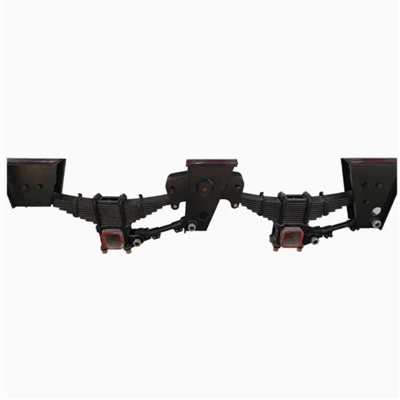 German Style SuspensionAs a manufacturer located in China, we specialize in producing high-quality suspension components for vehicles including trucks, trailers, and buses. Our German Underslung Type Air Suspension is oneAdd to Inquiry
 -
 German Equalizing BeamThe alloy steel steel used in the German balance beam, he is relative to carbon steel, whether in strength, toughness or corrosion resistance is relatively better, and now the common on the market isAdd to Inquiry
 -
 Heavy Duty German Type SuspensionIntroducing our Heavy Duty German Type Suspension, a premium upgrade engineered for superior performance and reliability. Merging German precision manufacturing with robust design, this suspensionAdd to Inquiry
 -
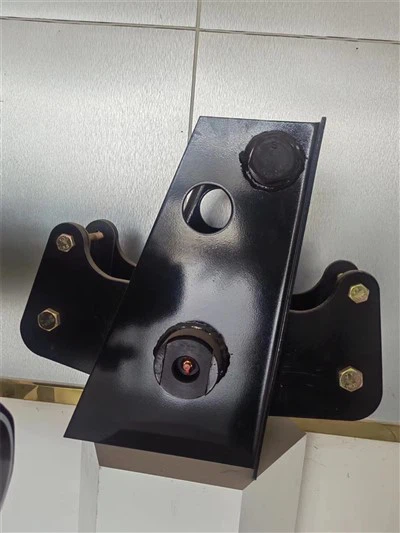 German Type Middle BracketGerman-style brackets are a popular product in the construction industry, known for their durability and strength. These brackets are made from high-quality materials and are designed to provideAdd to Inquiry
 -
 German Type Front BracketThe German-style front rack is a product that is perfect for cyclists looking for a reliable and durable solution to carry their load. The rack's design is simple yet effective, making it an idealAdd to Inquiry
 -
 German Type Rear BracketGermany's air suspension has been a game-changer in the automotive industry. This innovative technology transforms the way cars ride, handle, and perform, giving drivers and passengers a comfortable,Add to Inquiry


Why Choose Us
Our factory
Located at the foot of the world-renowned Shuibo Liangshan Mountain, the section of National Highway 220 from Jinan to Zhengzhou is a prime location. Our company is a comprehensive production enterprise that integrates processing, manufacturing, and installation. We have strong mechanical processing capabilities, strong technical strength, and complete testing methods.
Our product
Special vehicle accessories such as disc brake axle, drum brake axle, air suspension, mechanical suspension, semi-trailer support leg, traction pin, air storage cylinder, etc.
Production equipment
Xiang Hengmai CNC sawing machine, hydraulic gate type shearing machine, screw compressor, frozen compressed air dryer, open fixed table press, Xuzhou pressure machinery hydraulic press, four column hydraulic press, suspension double gun automatic welding machine, shot blasting cleaning equipment, centrifugal ventilation fan, 2 sets of Dehong environmental protection spraying equipment, 15 sets of secondary protection welding machines, and 1 set of environmental protection centralized welding smoke purification treatment equipment.
Our service
We adhere to the policy of implementing customer needs and expectations, carrying out customer satisfaction work, implementing the goal of quality first, controlling product production and market, timely communicating with customers in case of after-sales issues, and providing solutions.
As a proud owner of a German car, you know that it’ s more than just a mode of transportation. It’ s an extension of your personality and lifestyle. One of the most critical components of any vehicle is its suspension system. Not only does it ensure a smooth ride, but it also plays a significant role in your car’ s handling and overall performance. German cars are known for their high-performance capabilities, which are made possible by their superior suspension systems
These systems incorporate advanced technologies that allow for precise handling, stability at high speeds, and excellent cornering abilities. German automakers use complex suspension designs that involve multiple control arms and linkages to deliver optimal performance.
One unique characteristic of German style suspension is their adaptability. Many newer models include adaptive damping control systems that adjust the stiffness of the shock absorbers based on road conditions and driving style. This allows for a more comfortable ride on rough roads while maintaining precise handling on smoother surfaces. Another critical aspect of German style suspension is their use of high-quality materials like aluminum alloys, carbon fiber composites, and lightweight steel alloys to reduce weight without compromising strength or durability. These materials also contribute to better fuel efficiency by reducing the overall weight of the vehicle.
Regular maintenance is crucial when it comes to keeping your German car’ s suspension system in top condition. This includes regular inspections for wear and tear on components like shock absorbers, springs, ball joints, bushings, and control arms. It’ s also essential to have your alignment checked regularly as misaligned wheels can cause uneven tire wear and negatively affect handling. Finally, it’ s essential to choose the right tires for your German car. The wrong tires can negatively affect handling and ride quality. German cars are typically designed with high-performance tires that provide excellent grip and handling, but they may not be ideal for wet or snowy conditions. Consider switching to all-season or winter tires during colder months to ensure optimal performance and safety.
1.Strut
Coil over spring on the strut housing with a large upper rubber-isolated mount. The strut assembly (strut + spring) is bolted or clamped to the spindle. Springs do not typically wear or sag but the strut will get worn out and no longer hold pressure. The strut can be replaced but the entire assembly must be taken apart. Always get new mounts, bump stops, and spring pads. Reinforcement plates exist for the sheetmetal where the strut is mounted and they are strongly recommended.
2.Control arm
Often called a wishbone in parts diagrams but looks more like a boomerang. It contains two ball joints: An outer at the spindle and an inner attached through the front subframe. A rubber bushing locates the arm to the frame rail. Ball joints wear quickly and can be a safety concern. The rubber bushings get too soft, leaving the steering and handling mushy and no longer as precise as it used to be.
3.Sway bar
Located under the front frame rails and engine bay with rubber bushings. The ends are attached either to the control arms or to the strut housing. The links contain ball joints that are a known source for rattles and clunks.
4.Shock
A single shock on each side is bolted to the spindle at the bottom and through the body with a rubber mount at the top. Shocks typically last a long time but can wear out and no longer hold pressure. Unlike the front strut, the shock can be replaced on its own with minimal disassembly. The shock mount, on the other hand, is a very common failure point and may need to be replaced before the shock wears out. There are several shock mount upgrades that last longer. Reinforcement plates exist for the sheetmetal where the shock is mounted and they are strongly recommended.


5.Subframe
The entire rear German style suspension and differential, apart from the shock, is anchored by a steel subframe bolted to the trunk floor. The floor area itself is weak and cracks in the sheetmetal are common. Reinforcement plates exist for the sheetmetal and they are strongly recommended.
6.Semi-trailing arm
The other major component in the rear German style suspension. The semi-trailing arm, or just trailing arm, provides the outer mounting point for the axle shaft, upper and lower control arms, shock absorber, as well as the brake assembly. It's mounted at the front using a rubber bushing recessed into a pocket in the chassis (under the rear seat). The back of the trailing arm contains upper and lower bushings (or sealed bearings) and the axle. The forward bushings are common wear items leading to loose or "squirrely" handling. The rear upper and lower bushings are either rubber and will wear out or a innovative sealed ball joint that lasts a long time. The seal ball joint can be used as an upgrade over its rubber counterpart.
7.Upper control arm
Used to locate the spring. It attaches to the subframe on the inside with a rubber bushing and to the trailing arm with a sealed ball joint.
8.Lower control arm
Also called a wishbone or the camber arm as it's used to set the camber alignment on the rear. Also mounted with a rubber bushing on the inside or a rubber bushing or sealed ball joint on the outside. These arms are made from thin steel and are designed to bend easily to prevent damage to the rest of the German style suspension. If you have trouble getting the alignment in spec or the car sits differently on one side, it could be from a bent lower arm. It's also common to replace this with a fully-adjustable arm to gain more negative rear camber.
9.Sway bar
Runs around the back of the subframe and differential, mounted with rubber bushings, with links attaching the bar ends to the upper control arm.
Detailed Explanation of Professional Terminology of German Style Suspension
|
|
An internal suspension component consisting of the a steel ball encased in a metal, plastic, or rubber isolated cup and with a threaded stud for mounting. The ball is able to rotate within the cup and allow the suspension component to change direction. Ball joints are typically mounted to allow horizontal movement (side to side). They are a common wear item as the internal plastic or rubber isolator breaks down and can no longer contain the ball. |
|
|
Typically a formed rubber piece used to locate a component to another component. The sway bar is mounted to the body using a rubber block. Rubber is a favorite material but is often replaced with a stiffer rubber compound, urethane, Delrin, or even as rotating bearing. |
|
|
The angle of the tire in relation to a flat Earth. We have slight negative camber as a baseline - the top of the tire tilts inward. As the car corners the outside tire will spread flatter to the pavement, increasing its contact patch. It's common to add more negative camber to get more grip on the race track. Too much negative camber causes the tire to ride on its inside shoulder when going straight. |
|
|
A rear suspension component designed to control and/or adjust camber. It's the rear lower wishbone. It's made of sheetmetal and bends easily. It's designed to bend so that in an impact the arm takes all the energy and something else isn't damaged. If you notice one side of the rear is a different camber or ride height check the lower camber arm. |
|
|
A front suspension component designed to control and/or adjust camber. The camber plate often replaces the upper strut mount. More negative camber is desired for track use to improve front grip and reduce understeer. Lowered cars often need the negative camber reduced to correct for tire wear. So not all camber plates are the same. |
|
|
The rearward tilt of the front steering axis centerline, measured in degrees. The Caster is the degrees between a vertical line drawn straight up from the steering pivot point and the angle of the strut. BMWs have non-adjustable positive caster where the strut is angled backwards towards the driver. This increases stability at high speeds. Too much will make steering effort higher. |
|
|
A shock absorber with the spring mounted around the body of the shock. A MacPherson strut is technically a coil over. In the parts world, the term is reserved for performance shock and spring packages that have a threaded spring perch to allow ride height adjustments. |
|
|
A suspension component designed to maintain the desired suspension alignment during suspension movement. It will also absorb vibrations and impacts with a bushing. Multiple control arms will do a better job of controlling alignment. |
|
|
Another word for shock absorber or strut. Damper is a catch-all term that can apply to a front strut or rear shock. The damper's purpose is to control the motion of the spring and the rest of the suspension. The shock must be soft enough in compression to provide a comfortable ride but stiff enough in extension to keep the suspension from oscillating and keep the tire planted on the ground. |
|
|
A solid surface for mounting the wheel. It's often used as a reference for the attachment of other components - "the strut is mounted to the hub". Used interchangeably with the spindle. |
If you want to install a sport German style suspension on your car, you should speak to a professional about whether your particular model is suitable for the specific sport German style suspension you want. Some cars already come built with factory settings for a sport German style suspension upgrade. If your vehicle doesn’ t have these settings already, it will be advisable to discuss with your mechanic whether swapping out the parts is possible, and what kind of German style suspension kit you’ ll require.
Also, another thing to keep in mind is that sport German style suspension systems might not be suitable for family cars. When the whole family uses the same car for their daily commute and everyday activities it can be difficult to modify it to suit the preferences of everyone who uses it. It’ s not recommended to attempt to install a German style suspension kit of any kind at home due to the complexity of the task and the knowledge required to complete the installation successfully. German style suspension installation requires a thorough understanding of a vehicle’ s wheelbase, axle, and other subsystems around it.
There are several steps involved in the process like wheel alignment which require the right equipment and therefore can’ t be carried out at home. You can, however, purchase a sport German style suspension kit and get a professional to install it, as installation by an experienced automotive technician is the safest option. Warranty on the installation is another reason to get your German style suspension kit installed by a specialist as you won’ t be covered for problems if you install it yourself. Your pulls to one side when driving straight on a flat surface. You may require steering or German style suspension components to rectify a fault in the German style suspension geometry. Your tyre treads are uneven or bald. Your German style suspension and/or steering may be misaligned or bent. Bumps in the road feel harsher or your vehicle keeps bouncing after a bump in the road. This could be a sign of worn out shock absorbers.
The company was established in 2016 and has undergone 7 years of development. We adhere to the core values of "innovation, quality, integrity, and win-win", constantly breaking through ourselves and pursuing excellence. Located at the foot of the world-renowned Shuibo Liangshan Mountain, the section of National Highway 220 from Jinan to Zhengzhou is a prime location. The Beijing Hangzhou Grand Canal and the South to North Water Diversion Project flow downstream in the east of the city, while the Beijing Kowloon Railway runs directly from north to south in the west. There are three high-speed entrances and exits in the east, west, and north of Liangshan, with a superior geographical location and convenient and fast transportation.


FAQ
We're professional german style suspension manufacturers in China, specialized in providing high quality products with low price. We warmly welcome you to wholesale or buy discount german style suspension from our factory.
